
Understanding Your Treatment Options
IGSRT vs. Mohs Surgery: What’s the Difference?
If you’ve been diagnosed with basal cell or squamous cell skin cancer, you may have more than one treatment option. Two treatments you may hear about are Mohs surgery and Image-Guided Superficial Radiation Therapy (Image-Guided SRT or IGSRT).
Both can be effective treatments for certain skin cancers, but the treatment experiences are very different.
Mohs is a surgical procedure that removes the skin cancer by cutting away layers of tissue. IGSRT is a surgery-free treatment that uses low levels of X-ray energy and advanced image guidance to treat the cancer without cutting or stitches.
Understanding these differences can help you have a more informed conversation with a dermatologist about which treatment may be right for you.
What Is Mohs Surgery?
Mohs surgery is a procedure used to treat certain skin cancers. During Mohs surgery, the visible cancer and a thin layer of surrounding tissue are removed and examined under a microscope.
If cancer cells are still present, another layer of tissue is removed and examined. This process continues until the margins are clear of cancer cells.
Because Mohs is surgery, it requires cutting the skin and creates a surgical wound. Depending on the size and location of the wound, stitches, a skin flap, a skin graft or other reconstruction may be needed.
What Is Image-Guided SRT?
Image-Guided Superficial Radiation Therapy combines superficial radiation treatment with advanced imaging. IGSRT is an important part of GentleCure®, but the technology is only one part of the GentleCure Experience.
Image guidance gives your care team additional information about the tumor beneath the skin and helps guide how your skin cancer is treated. Throughout the treatment course, imaging also allows you and your care team to see how the tumor is changing over time.
GentleCure brings this advanced technology together with clinical expertise and dedicated support to provide a cancer center-level care experience right in the dermatology office.
IGSRT vs. Mohs Surgery
| Feature | GentleCure IGSRT | Mohs Surgery |
|---|---|---|
| Treatment approach | Low levels of X-ray energy | Surgical removal |
| Surgery-free | Yes | No |
| Cutting or stitches | No | Yes |
| Advanced image guidance | Yes | No |
| Anesthesia required | No | Local anesthesia |
| Surgical wound | No | Yes |
| Surgical wound care | No | Yes |
| Treatment schedule | 18-25 short visits over several weeks | Typically completed in one day, although the procedure may take several hours. Additional visits may be needed for wound care, reconstruction or follow-up care. |
| Daily activities | Patients can continue normal daily activities | Activities may be limited while the surgical wound heals, 6-8 weeks. |
| Published cure rates | 99%+1 | For basal cell skin cancer, the cure rate is up to 99% for new cases and up to 94% for recurrent cases. For squamous cell skin cancer, the cure rate is 95% to 99% for new cases and 90% for recurrent cases. 2 |
A dermatologist can help determine which treatment options are appropriate for your individual diagnosis.
How Are the Treatment Experiences Different?
Both Mohs surgery and IGSRT are used to treat certain basal cell and squamous cell skin cancers. One of the biggest differences is how the cancer is treated and what patients experience during and after treatment.
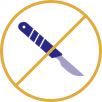
Surgery vs. surgery-free treatment
Mohs physically removes cancerous tissue through surgery, one layer at a time.
IGSRT treats skin cancer cells with low levels of X-ray energy without cutting the skin or creating a surgical wound.

One day vs. a series of visits
Mohs is typically performed in one day, although patients may spend several hours at the dermatologist’s office while tissue is removed, examined and, if necessary, additional layers are taken. Depending on the location and extent of the surgery, additional visits may be needed for wound care, reconstruction or follow-up care.
GentleCure IGSRT is delivered through a series of 18-25 short visits over several weeks. Patients return to the dermatology office for treatment but can generally continue their normal activities throughout the treatment course.
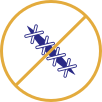
Surgical wound vs. no surgical wound
Mohs creates a wound where the cancer and surrounding tissue have been removed. Based on its size and location, the wound may be closed with stitches or require additional reconstruction and wound care while it heals.
Because IGSRT does not involve cutting, there is no surgical wound or stitches. This means patients do not need to pause their normal daily activities for surgical wound recovery.

Removing tissue vs. preserving the skin
Mohs removes cancerous tissue and a small amount of surrounding tissue until no cancer cells are seen.
IGSRT treats the cancer without surgically removing the tissue. For patients concerned about cutting, surgical wounds or changes to their appearance—particularly when a skin cancer is on the face, nose, ears or other highly visible areas—this may be an important consideration.
What Does Image Guidance Add?
One of the unique differences between GentleCure and Mohs surgery is the ability to use advanced imaging throughout the treatment course.

See beneath the surface
Advanced imaging allows your care team to see the tumor beneath the surface of the skin and determine its depth. This provides additional information beyond what can be seen by looking at the skin alone.

Guide treatment
Knowing the depth and characteristics of the tumor helps your care team determine how to target the cancer with superficial radiation. This additional information helps guide how your skin cancer is treated.

Monitor changes over time
Imaging is used throughout the treatment course to monitor how the tumor is changing and responding to treatment. You and your care team can see these changes from visit to visit as the tumor shrinks over time.
What Does the Clinical Evidence Show?
Both Mohs surgery and Image-Guided SRT have demonstrated high rates of cancer control for appropriately selected basal cell and squamous cell skin cancers.
99%+ cure rate with Image-Guided SRT1
Published clinical research evaluating 2,917 basal and squamous cell skin cancers treated with Image-Guided SRT reported a 99%+ cure rate.
Mohs is also effective2
Mohs surgery has long been used to treat basal and squamous cell skin cancers and has high cure rates.
Published research has compared how often skin cancer returns after treatment with IGSRT and Mohs surgery3. This information can help you and a dermatologist better understand the treatment options available to you.
Which Treatment Is Right for Me?
There is no single skin cancer treatment that is right for every person or every skin cancer.
Your diagnosis, tumor size and location, overall health, previous treatments and personal preferences can all play a role in determining which treatment options may be appropriate.
GentleCure may be worth discussing with your dermatologist if you:
- Want a surgery-free treatment option
- Are concerned about cutting or stitches
- Are concerned about surgical wounds or wound care
- Want to continue your normal daily activities during treatment
- Have a skin cancer in a highly visible or cosmetically sensitive area
- Want image guidance that allows you and your care team to monitor the tumor during treatment
- Cannot or prefer not to have surgery
Having options matters. Talk with your dermatologist about the benefits and considerations of each treatment and decide together which approach is right for you.
Frequently Asked Questions
Is IGSRT as effective as Mohs surgery?
Both treatments have demonstrated high rates of cancer control for basal and squamous cell skin cancers. Published research supports a 99%+ cure rate with Image-Guided SRT, while Mohs surgery also has high cure rates that vary based on factors such as the type of skin cancer and whether it has been treated previously.
A dermatologist can help you understand how these results apply to your individual diagnosis.
Does GentleCure require surgery?
No. GentleCure is a surgery-free treatment. There is no cutting or stitches and no surgical wound.
Does IGSRT leave a scar?
Because IGSRT does not involve surgically removing the skin cancer, it does not create a surgical scar. Skin changes can occur during and after radiation treatment, so talk with a dermatologist about the potential side effects and cosmetic outcomes of each treatment option.
Does Mohs surgery require anesthesia?
Mohs surgery is generally performed using local anesthesia to numb the treatment area. GentleCure does not require anesthesia.
How long does each treatment take?
Mohs is generally performed in a single day, although the process can take several hours depending on how many layers of tissue need to be removed and whether reconstruction is required.
GentleCure is delivered through a series of 18-25 short treatment sessions over several weeks.
Can I continue my normal activities during GentleCure treatment?
Yes. Because GentleCure does not create a surgical wound, patients can typically continue their normal daily activities throughout treatment.
How do I know whether GentleCure is an option for me?
GentleCure is used for eligible basal and squamous cell skin cancers. A dermatologist can evaluate your diagnosis and help determine whether Image-Guided SRT is an appropriate treatment option.
Understand Your Options Before You Decide
A skin cancer diagnosis can come with a lot of questions. Learning about your treatment options can help you feel more informed and confident when deciding with a dermatologist.
If you’re considering Mohs surgery, ask whether surgery-free GentleCure may also be an option for your skin cancer.
References
1 Yu L, Oh C, Shea CR. The treatment of non-melanoma skin cancer with image-guided superficial radiation therapy: an analysis of 2917 invasive and in situ keratinocytic carcinoma lesions. Oncol Ther. 2021;9(1):153-166. doi:10.1007/s40487-021-00138-4.
2 Cleveland Clinic: Mohs Surgery; Mohs Facts.
3 McClure EM, Sedor G, Jin Y, et al. Image-guided superficial radiation therapy has superior 2-year recurrence probability to Mohs micrographic surgery. Clin Transl Radiat Oncol. 2023;43:100678. doi:10.1016/j.ctro.2023.100678.
Everyone Deserves a Surgery-Free Treatment Option
Participate in change. Do not let radiation oncologists limit your treatment options to protect their income. Sign a FREE petition to tell Medicare and health insurers that you expect them to CONTINUE COVERING an FDA-cleared, less invasive treatment option.