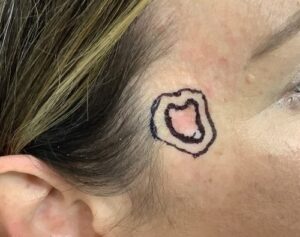
If you have a spot that keeps bleeding, scabbing, or reopening, it is normal to feel unsure about what it means. Many harmless skin issues can scab or bleed, especially if they get irritated. But a spot that repeatedly returns, does not heal, or changes over time should be evaluated by a dermatologist.
This article walks through the patterns that matter most, the most common lookalikes, and practical next steps so you can make a confident decision.
Checklist: what to watch for across your skin, the beginning signs of skin cancer.
Why a spot might bleed or scab
Skin is reactive. A spot can scab or bleed for reasons that are not cancer, such as:
- Dry, cracked skin from weather or irritation
- Small injuries from shaving, scratching, or friction
- Acne bumps, ingrown hairs, or inflamed pores
- Eczema or dermatitis flare ups
- Bug bites that get picked at
- Precancerous sun damage (which still needs attention)
The challenge is that some skin cancers also present as sores or spots that crust, scab, and come back. That is why the pattern over time matters more than a single moment.
See a visual overview of how suspicious lesions can present, review what does skin cancer look like.
The patterns that matter most
A spot is more concerning when the behavior keeps repeating, especially when it happens without a clear trigger.
Consider getting checked if the spot:
- Does not heal within 3 to 4 weeks
- Heals and returns in the exact same place
- Crusts, scabs, or bleeds repeatedly with minimal friction
- Grows or changes in color, border, or texture
- Becomes tender, painful, or persistently itchy
- Looks noticeably different from other marks on your skin
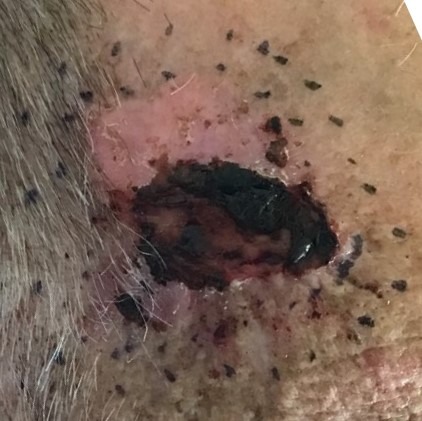
What skin cancers can look like when they scab or bleed
You do not need to self diagnose, but these examples can help you recognize when it is time to book an exam.
Basal cell skin cancer
Basal cell skin cancer can appear as a sore that will not heal, or as an area that crusts and bleeds periodically. Some people notice a spot that looks “raw” or irritated, especially on the face, scalp, neck, and shoulders.
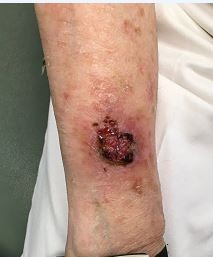
Squamous cell skin cancer
Squamous cell skin cancer can show up as a rough or scaly patch that cracks, crusts, or bleeds. It may feel more like a persistent irritated area than a classic “mole.”
Melanoma
Melanoma is often linked to changing moles, but it can also appear as a new or changing dark spot that may bleed as it progresses. Any changing pigmented spot deserves prompt evaluation.
If your scabbing spot is a mole, it helps to review the signs that separate typical moles from suspicious ones in how to tell the difference between a mole and skin cancer.
Common lookalikes that still cause scabbing and bleeding
This is where people get stuck, because several common skin issues can behave similarly. A few frequent lookalikes include:
- Pimples or inflamed pores, especially if they are repeatedly picked or irritated
- Ingrown hairs, often in shaving areas
- Warts, which can bleed if caught or picked
- Eczema or dermatitis, especially if scratching is involved
- Actinic keratosis, a precancerous rough patch from sun damage
- Skin irritation from friction, like collars, mask straps, or bra straps
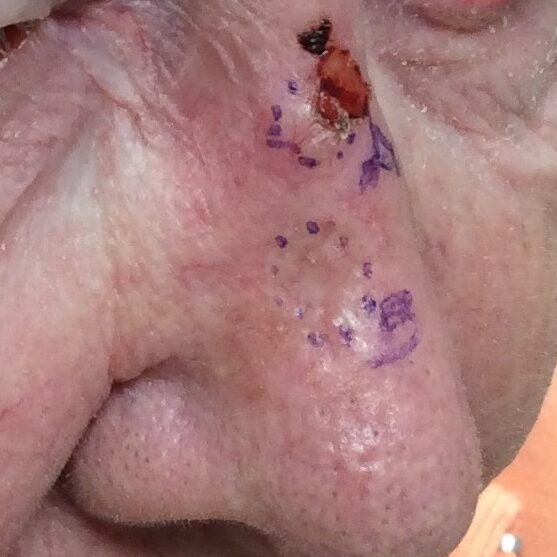
If you are trying to figure out whether an irritated bump is acne or something more, see pimple or skin cancer.
Does skin cancer always start as a mole?
No. Many people assume the only dangerous thing is a changing mole, but skin cancers can develop in different forms. Some begin as a patch, sore, or rough area rather than a mole.
If that is part of your concern, this quick explainer is helpful: does skin cancer always start as a mole?
A simple decision guide for next steps
If you are not sure what to do, use this practical approach.
Watch and track for a short window if:
- The spot clearly started after a known irritation (shaving cut, scratch, friction)
- It is improving steadily over 1 to 2 weeks
- It is not changing in size or shape
Book a dermatology appointment if:
- It does not heal within 3 to 4 weeks
- It repeatedly scabs or reopens
- It changes in any noticeable way
- It bleeds with minimal contact
- You have higher risk factors (prior skin cancer, heavy sun exposure, tanning bed history, weakened immune system)
What to document before your appointment
If you schedule a visit, bringing a few details makes the appointment more efficient.
- Take a photo in natural light, then another photo from farther away to show location
- Note when you first noticed it and whether it has changed
- Track symptoms like tenderness, itching, bleeding, or recurring scabbing
- Write down any triggers like shaving, rubbing, or sun exposure
This is not about diagnosing yourself. It is about giving the dermatologist a clear story.
If you are diagnosed with nonmelanoma skin cancer
If a diagnosis comes back as basal cell or squamous cell skin cancer, your dermatologist will review treatment options based on the type, size, and location.
For some patients, Image-Guided SRT (IGSRT) may be an option. GentleCure utilizes IGSRT, which is a non-surgical approach that can be used for certain common skin cancers. If you receive a diagnosis, you can ask your doctor whether IGSRT is appropriate for your case.
Frequently asked questions
If a spot has not healed within 3 to 4 weeks, or keeps returning in the same place, it is worth getting checked.
Yes. Pimples can bleed, especially if irritated or picked. The difference is that acne tends to resolve, while suspicious spots are more likely to persist, recur, or change.
A recurring cycle is a sign you should not ignore. Even if it improves temporarily, repeated scabbing in the same spot warrants an exam.
No. Bleeding can have many causes. The bigger signal is a persistent or recurring pattern, especially paired with change over time.
Key takeaways
A bleeding or scabbing spot is not automatically cancer, but a spot that does not heal, keeps returning, or changes over time deserves a dermatologist’s evaluation. When in doubt, track it briefly, then get clarity with a professional skin exam.