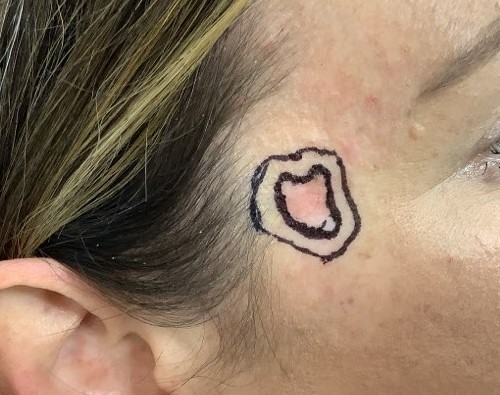
A lot of people picture skin cancer as a raised bump or a dark mole. In reality, some skin cancers can be flat, especially early on. A flat patch can look like a dry spot, a faint stain, a subtle discoloration, or a scaly area that never fully goes away.
The good news is that noticing changes early is one of the best steps you can take. This guide breaks down what “flat” can look like, which changes are most concerning, and when to get a spot checked by a dermatologist.
If you are looking for a broader overview of early warning signs, see beginning signs of skin cancer.
Yes, skin cancer can be flat
Skin cancer is not one single look. It can appear as a bump, a sore, a scab, a patch, or a spot. Some types can start or remain relatively flat for a period of time, including:
- Squamous cell skin cancer, which may appear as a rough, scaly patch or a persistent area of irritation
- Superficial basal cell skin cancer, which can look like a thin pink or red patch
- Melanoma, which can be flat and may show color variation, an irregular border, or change over time
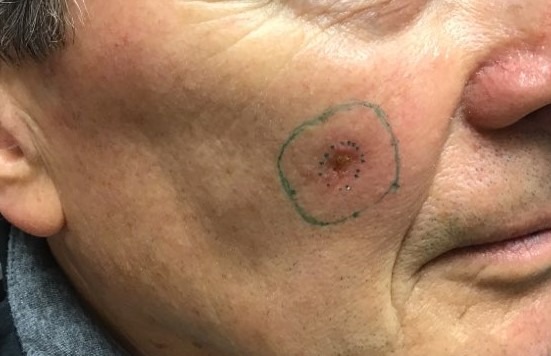
Flat does not automatically mean dangerous. Many flat spots are harmless. The key is whether the spot is changing, persistent, or behaving differently than your normal skin. If you would like to have a visual refresher on common appearances, see what skin cancer can look like.
What “flat” can look like on the skin
Flat skin cancers can be easy to dismiss because they often resemble common conditions like eczema, psoriasis, sun damage, or a healing irritation. People often describe them as:
- A dry patch that keeps coming back in the same place
- A pink, red, or tan patch with a faint outline
- A slightly scaly area that feels rough to the touch
- A flat brown spot that looks different than your other freckles or sun spots
- A thin, shiny patch that looks irritated or inflamed
- A flat spot that crusts, peels, or bleeds occasionally, especially if it repeats
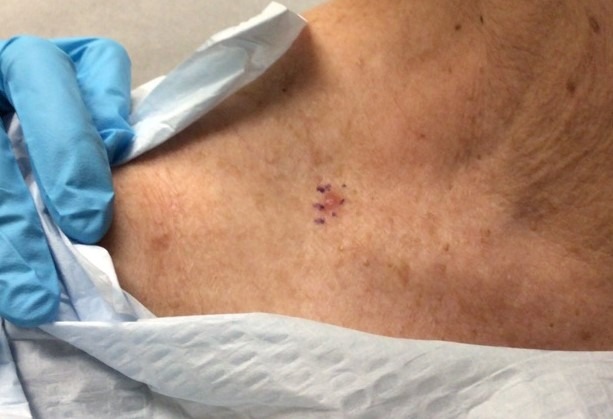
Some flat spots appear on sun-exposed areas like the face, ears, scalp, neck, shoulders, arms, and hands. Others can show up in less expected places, including the legs, trunk, and areas that do not see much sun.
Flat versus raised: why texture is only one clue
Texture is helpful, but it is not the deciding factor. Some benign spots are raised. Some cancers are flat. A better approach is to look at patterns like persistence and change.
A flat spot deserves attention when it:
- Changes in size, shape, color, or texture
- Does not heal or keeps returning in the same spot
- Crusts or scabs repeatedly
- Bleeds with little or no friction
- Feels different than surrounding skin, such as tender, itchy, or painful
- Stands out from everything else on your skin, even if subtle
If a flat patch is new and stays for weeks, or if it comes and goes but never fully resolves, it is worth a professional look.
Common flat skin cancer patterns by type
You do not need to diagnose yourself, but understanding common patterns can help you decide when to book an exam.
Flat basal cell skin cancer patterns
Basal cell skin cancer is often thought of as a pearly bump, but it can also appear as a flatter patch. It may look like:
- A thin pink or red patch
- A patch with a slightly shiny surface
- A persistent area that seems irritated
- A spot that slowly expands outward over time
Flat squamous cell carcinoma patterns
Squamous cell skin cancer can look like a rough patch, especially on sun exposed skin. It may appear as:
- A scaly or crusty patch
- A rough area that feels like sandpaper
- A flat spot that is sensitive, sore, or tender
- A patch that cracks or bleeds intermittently
Flat melanoma patterns
Melanoma can be flat and may resemble a freckle or age spot at first. Common warning signs include:
- Irregular borders
- More than one color in the same spot (brown, black, pink, red, blue, or white tones)
- A spot that looks different than your other moles or freckles
- Noticeable change over time
If you have a darker spot that is changing, or a spot that looks unlike your other moles, it is important to get it checked.
Flat spot or something harmless? Common lookalikes
Many flat spots are not cancer, and that is exactly why these areas can be easy to ignore. Common benign explanations include:
- Eczema or dermatitis
- Psoriasis
- A lingering rash or irritation
- Sun spots and freckles
- Post inflammatory hyperpigmentation (darkening after a pimple or irritation)
- Actinic keratosis, which is precancerous sun damage and should still be evaluated
Because lookalikes are so common, the safest approach is not guessing. Track it, and if it persists or changes, schedule a skin exam.
To compare multiple spot types and a broader reference point, see skin cancer spots.
A simple way to track a flat spot at home
If you are not sure whether a flat spot is changing, tracking can make the decision clearer.
Use the “photo plus timeline” method
- Take a clear photo in good natural light.
- Add a reference point like a ruler, coin, or fingertip (do not cover the spot).
- Write down the date and a few notes: itch, tenderness, scabbing, bleeding, or growth.
- Retake the photo every 2 to 4 weeks from the same distance and angle.
This is not a substitute for medical care, but it helps you describe what is happening and makes subtle changes easier to notice.
When to see a dermatologist
A good rule is to watch how the spot behaves over time. If it persists, returns, or changes, it is worth getting checked.
Consider scheduling an appointment if a flat spot:
- Lasts longer than 4 weeks without improving
- Keeps returning in the exact same place
- Changes in size, shape, color, or texture
- Bleeds, crusts, or scabs repeatedly
- Becomes painful, itchy, or tender
- Looks noticeably different from other spots on your skin
If you have a history of skin cancer, significant sun exposure, tanning bed use, a weakened immune system, or a family history of melanoma, it is smart to be even more proactive.
What happens at a skin check
Most skin exams are quick and straightforward. A dermatologist may:
- Examine the spot visually and with a dermatoscope
- Ask when you first noticed it and how it has changed
- Decide whether to monitor it, treat it, or biopsy it
If a biopsy is recommended, it is often done as a simple in office procedure.
If you are diagnosed with nonmelanoma skin cancer
If the diagnosis is basal cell or squamous cell skin cancer, your dermatologist will walk through treatment options based on the type, size, and location of the lesion.
For some patients, Image-Guided SRT (IGSRT) may be an option. GentleCure utilizes IGSRT which is a surgery-free approach that can be used for certain common skin cancers. If you receive a diagnosis, you can ask your doctor whether IGSRT is appropriate for your case.
Frequently asked questions
Yes. Melanoma can be flat, especially early on. Focus on change over time, irregular borders, and color variation.
Yes. Some skin cancers can resemble dry, scaly, or irritated patches that do not fully heal or keep returning.
If a spot persists longer than 4 weeks, returns repeatedly, or changes in any noticeable way, it is a good idea to schedule a dermatology appointment.
It can be. Flat brown spots are often harmless, but if a spot is new, changing, irregular, or looks different from your other marks, it should be evaluated.
Sun spots are usually stable and uniform. Skin cancer is more likely to change, develop irregular borders, show multiple colors, or behave like a sore that will not heal.
Key takeaways
Flat spots can be harmless, but skin cancer can also be flat. If something is new, changing, persistent, or repeatedly scabbing or bleeding, it is worth getting checked. Early evaluation helps you get clarity and, when needed, treatment at the right time.