The scalp is easy to overlook during skin checks, yet it receives strong sun exposure year-round. Catching changes early helps your care team confirm what a spot is and plan the right treatment. Below, see what the early signs of skin cancer on the scalp can look like, when to book an appointment, and gentle treatment options available through GentleCure.
Early Signs of Skin Cancer on the Scalp to Watch For
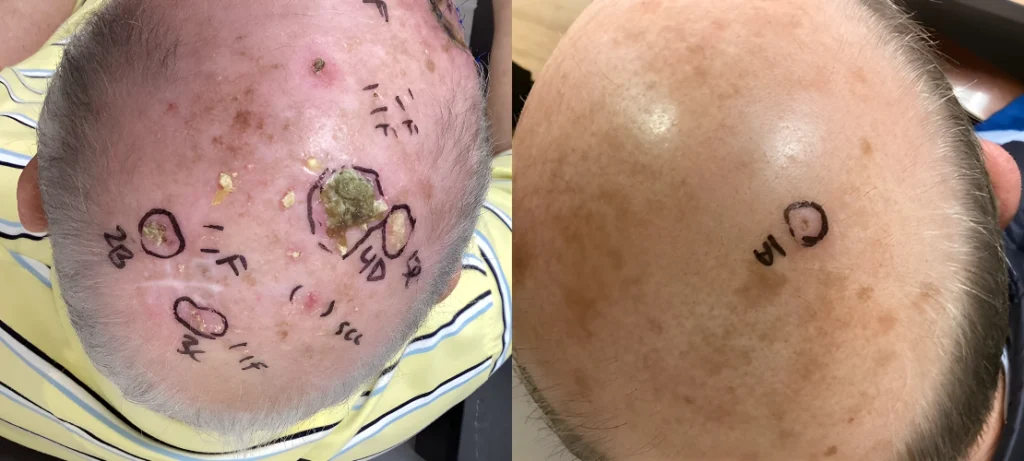
Even with hair coverage, the scalp remains vulnerable to UV rays. Early signs may include:
- A new spot that looks different from surrounding skin
- A sore that doesn’t heal or heals and returns
- Red, scaly, or crusted patches that persist
- A shiny bump that bleeds easily
- A scar-like, firm area or waxy growth
- Changes in a long-standing mole, such as size, shape, or color
Reviewing photos on GentleCure’s content hub can help you recognize suspicious spots. For a broader overview of early detection, visit the Early Signs article.
How to Check for Early Signs of Skin Cancer on the Scalp
Checking the scalp requires patience and good lighting. Follow these steps:
- Part your hair in sections to expose the skin.
- Use a handheld mirror or ask a partner or hairstylist to look.
- Pay attention to any tender, itchy, or bleeding spots.
- Take photos to track changes over time.
GentleCure’s website includes visual examples of what skin cancer can look like on the scalp. Use it while performing self-checks.
When Early Signs of Skin Cancer on the Scalp Mean It’s Time to See a Dermatologist
Book a professional exam if you notice any of the following:
- A spot that is new and persistent after 2 to 3 weeks
- A bleeding or crusting lesion that reopens
- A changing mole on the scalp
- A personal or family history of skin cancer
A dermatologist can examine the area and, if needed, perform a biopsy to confirm a diagnosis. Early professional evaluation improves treatment outcomes.
FAQ About Early Signs of Skin Cancer on the Scalp
Not necessarily. Some lesions are painless. Pain, itch, or tenderness can occur, but the most important sign is a spot that doesn’t heal or keeps changing.
Hair provides partial protection but doesn’t block all UV rays. The scalp can still develop cancer, especially along the hairline or in thinning areas.
Basal cell and squamous cell skin cancers are most common on sun-exposed areas like the scalp. Melanoma can also appear, so any changing spot should be checked by a professional.
For basal cell and squamous cell cancers, treatment options include Mohs surgery or IGSRT. IGSRT uses low-energy X-rays guided by ultrasound imaging to treat cancer precisely without surgery.
Treatment Options After Early Signs of Skin Cancer on the Scalp Are Confirmed
IGSRT (Image-Guided Superficial Radiation Therapy):
IGSRT is a surgery-free, non-invasive treatment that uses low-energy X-rays to target cancer cells while sparing healthy tissue. Clinicians use ultrasound imaging to guide treatment in real time. Many patients choose IGSRT to avoid cutting and surgical scarring. GentleCure reports 99%+ cure rates and exceptional patient satisfaction for nonmelanoma skin cancers.
Mohs Surgery:
Mohs removes cancer layer by layer under microscopic examination until all cancer cells are gone. It’s highly effective but requires surgical excision and healing.
Why the Choice Matters on the Scalp:
Because the scalp has hair follicles and curved surfaces, treatments that minimize scarring and preserve appearance are especially valuable. IGSRT offers a gentle option for these sensitive areas.
Learn more about IGSRT or compare IGSRT vs Mohs to see which approach might fit your goals.
Prevention Tips for Early Signs of Skin Cancer on the Scalp
- Wear a wide-brimmed hat outdoors.
- Use sunscreen in the scalp and hairline.
- Reapply sunscreen every two hours during long periods outside.
- Schedule regular skin checks with a dermatologist.
- Avoid tanning beds and seek shade during peak UV hours.
Next Steps if You Notice Early Signs of Skin Cancer on the Scalp
If you see something unusual on your scalp, act early. Compare treatment options and talk with a Skin Cancer Information Specialist to understand if IGSRT is right for you.