
Public Perspectives on Skin Cancer Treatment and Patient Choice
The Public Perspectives Survey explores how people think about skin cancer, screening habits, treatment decisions, patient choice, and access to different treatment options.
The survey included people with direct or family experience with nonmelanoma skin cancer, as well as people without that experience. The findings help show what matters most to respondents when considering treatment options for common skin cancers.
About the Public Perspectives Survey
GentleCure by SkinCure Oncology conducted this survey to better understand how people think about skin cancer, how often they visit a dermatologist, and what factors influence treatment decision-making.
The survey was conducted in March and April 2026 through online channels, including email campaigns, social media, and GentleCure.com.
- 1,152 total survey respondents
- 1,025 respondents had direct or family experience with skin cancer
- 127 respondents did not have, or were not sure if they had, direct or family experience with skin cancer
- Survey focused on nonmelanoma skin cancer perspectives, screening behavior, treatment preferences, patient choice, and insurance concerns
- Survey recruitment included online channels and GentleCure.com, which may attract people actively researching alternatives to Mohs surgery
Key Findings From the Public Perspectives Survey
- People with direct or family experience with skin cancer were more likely to visit a dermatologist at least once per year.
- Survey respondents placed strong importance on having multiple treatment options available, including surgical and non-surgical options.
- When evaluating treatment options, respondents prioritized cure rate, avoiding surgery, cosmetic outcomes, and insurance coverage.
- Respondents expressed concern about insurance limitations affecting treatment access and patient choice.
- The survey highlights the importance of patient autonomy and shared decision-making between patients and physicians.
Most Respondents Had Direct or Family Experience With Skin Cancer
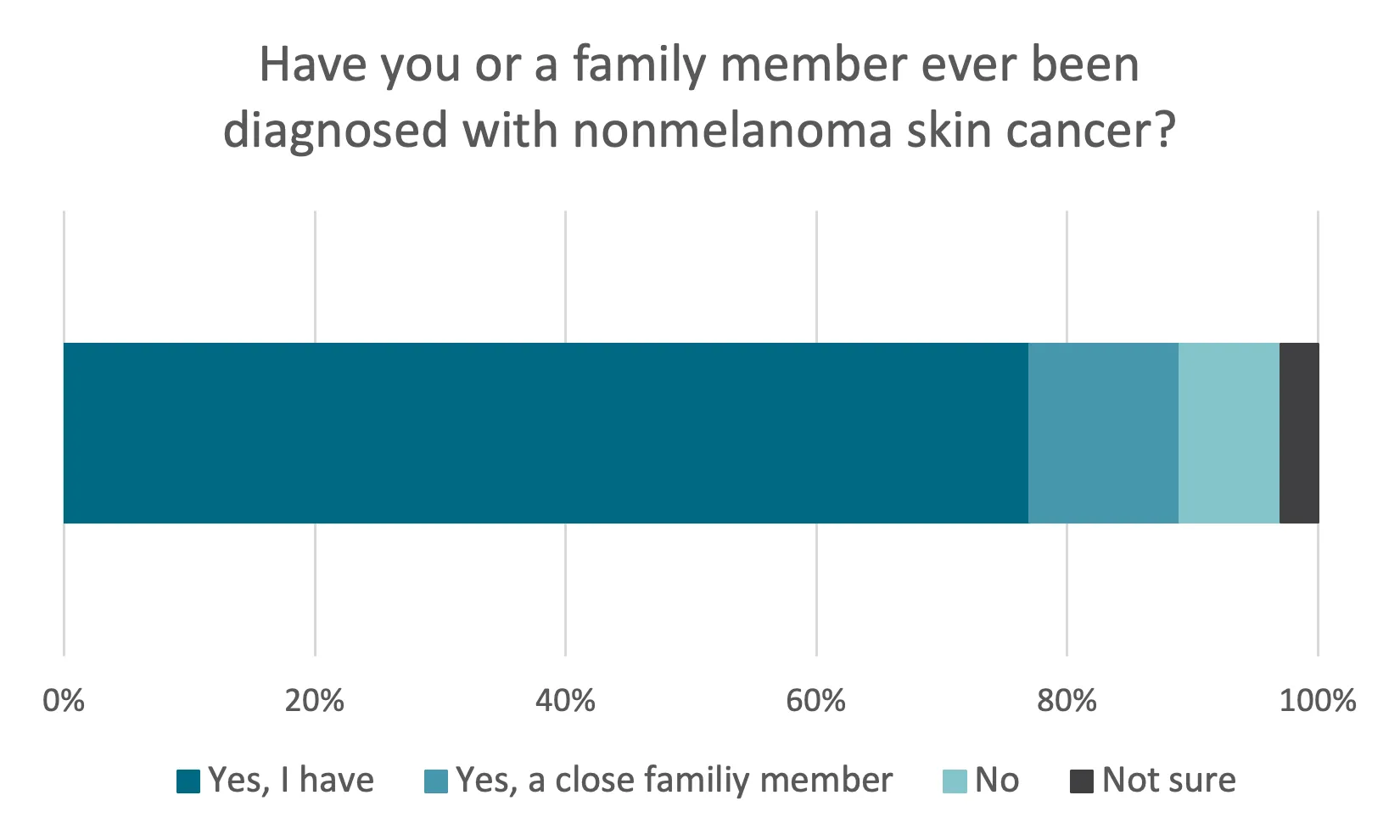
Of 1,152 survey respondents, 1,025 said they or a close family member had experienced a skin cancer diagnosis. Another 127 respondents said they had not experienced a skin cancer diagnosis or were unsure.
This question was used to segment respondents into two groups: those with skin cancer experience and those without that experience.
What This Chart Shows
The Public Perspectives Survey included 1,152 respondents. Of those, 1,025 had direct or family experience with skin cancer, while 127 did not or were unsure.
People With Skin Cancer Experience Were More Likely to Visit a Dermatologist Regularly
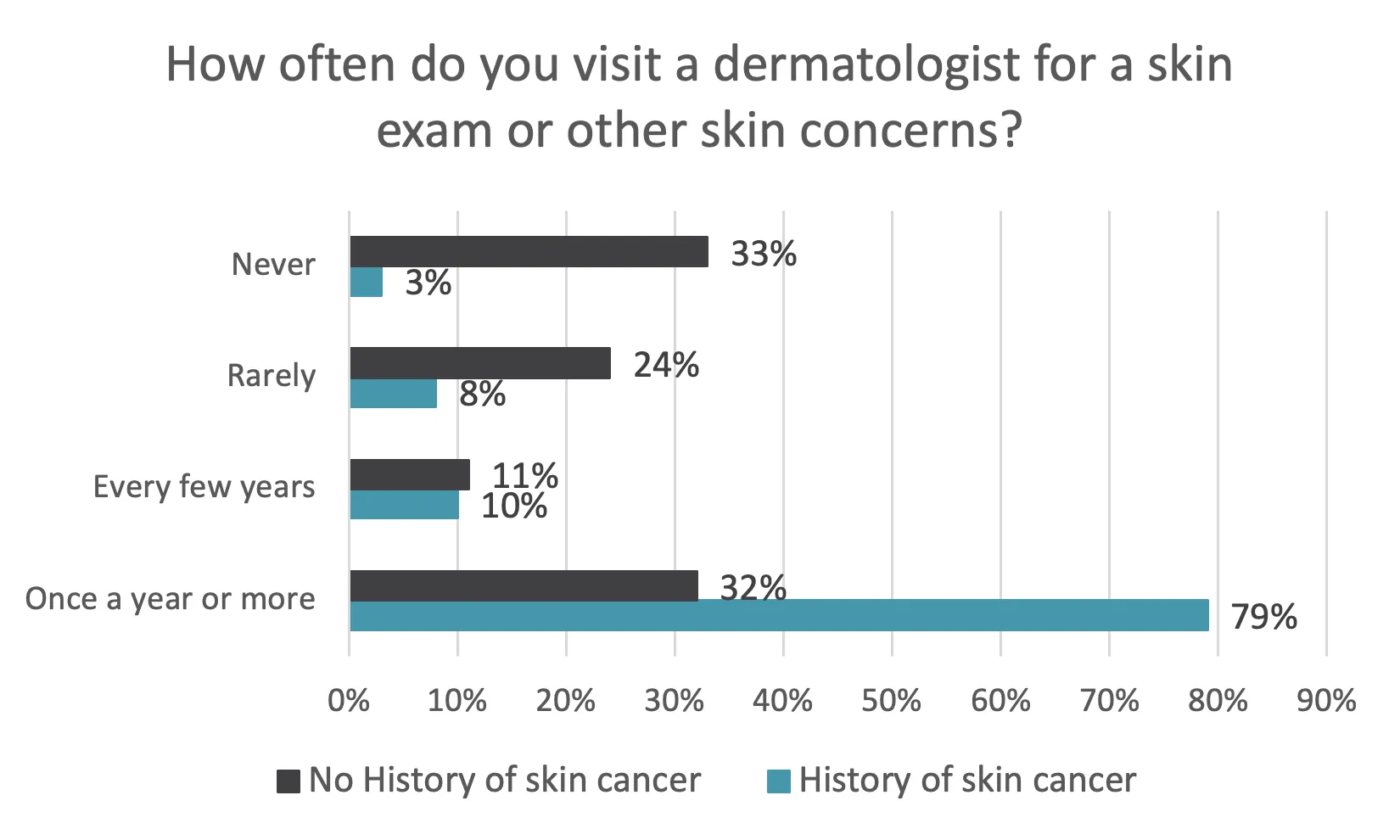
People with direct or family experience with skin cancer were more likely to visit a dermatologist for a skin exam or other skin concerns at least once per year. The survey found that 79% of respondents with skin cancer experience visited a dermatologist at least once a year, compared with 32% of respondents without that experience.
What This Chart Shows
Survey respondents with skin cancer experience were more likely to visit a dermatologist regularly. 79% of respondents with skin cancer experience visited a dermatologist at least once per year, compared with 32% of respondents without skin cancer experience.
What Influenced Dermatologist Visit Frequency?
The survey also looked at several factors that may influence how often people visit a dermatologist for a skin exam or other skin concerns. These factors included gender, age, geography, education level, and health insurance coverage.
Among respondents with skin cancer experience, some factors were associated with higher annual dermatologist visit frequency, while others showed little difference across respondent groups.
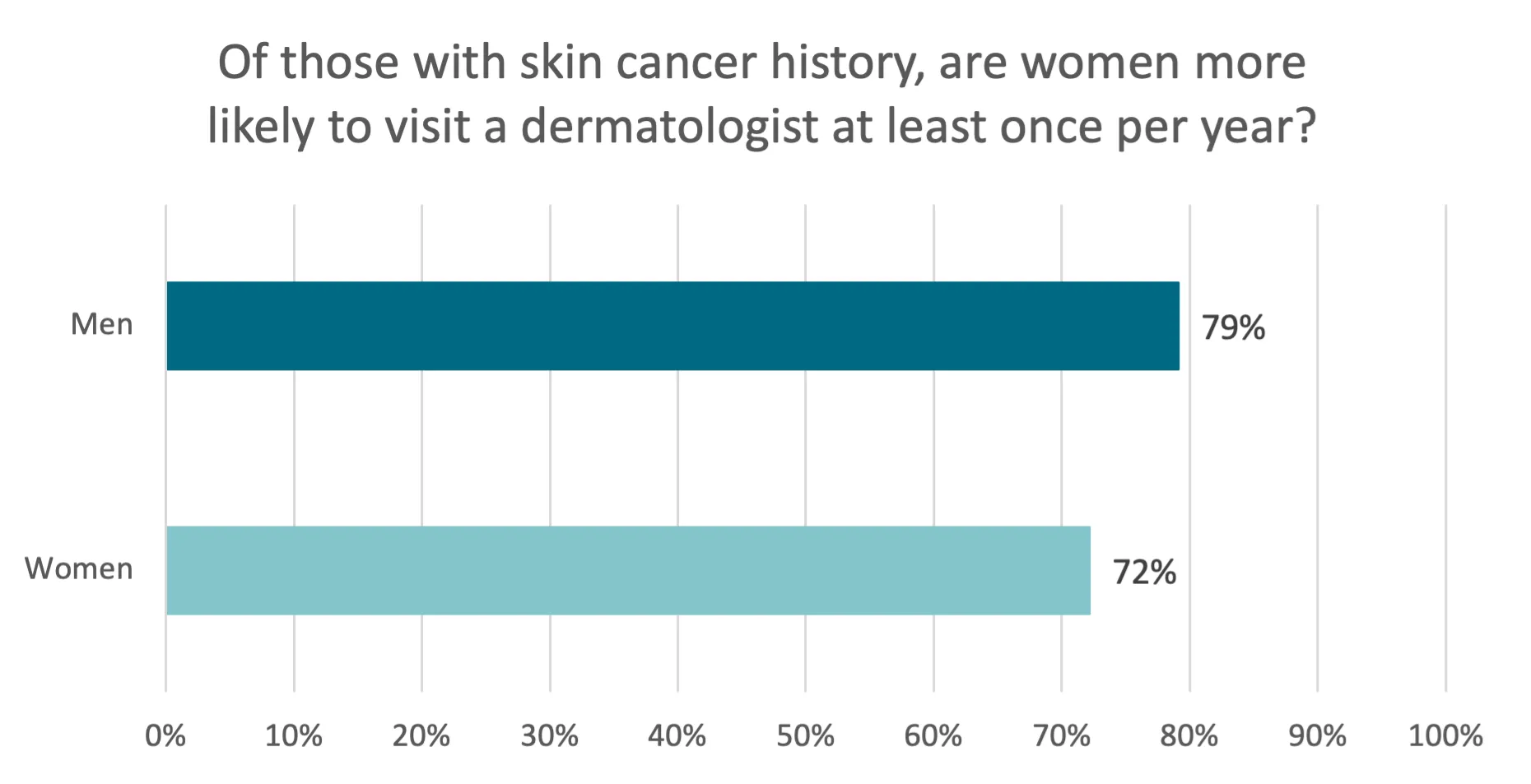
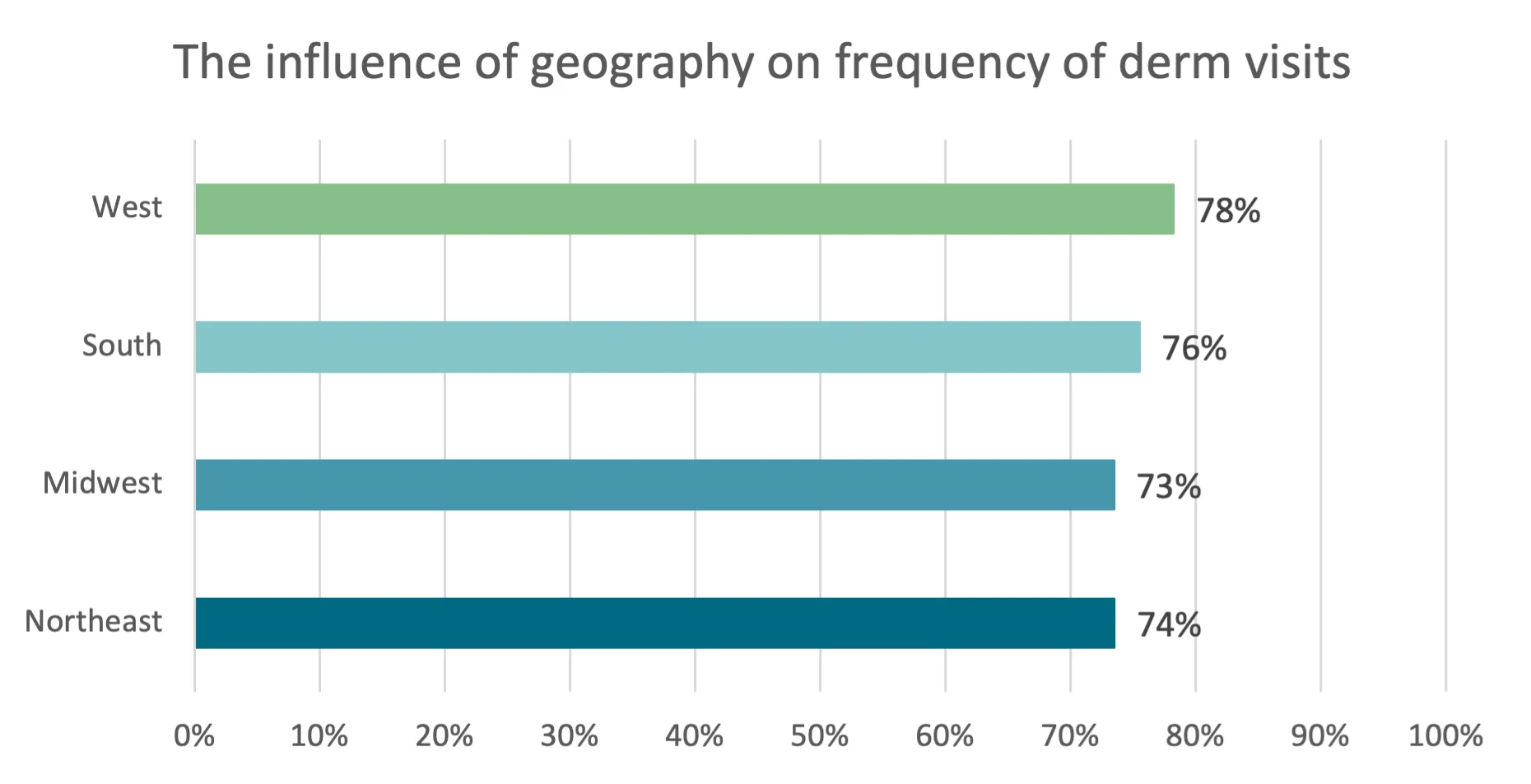
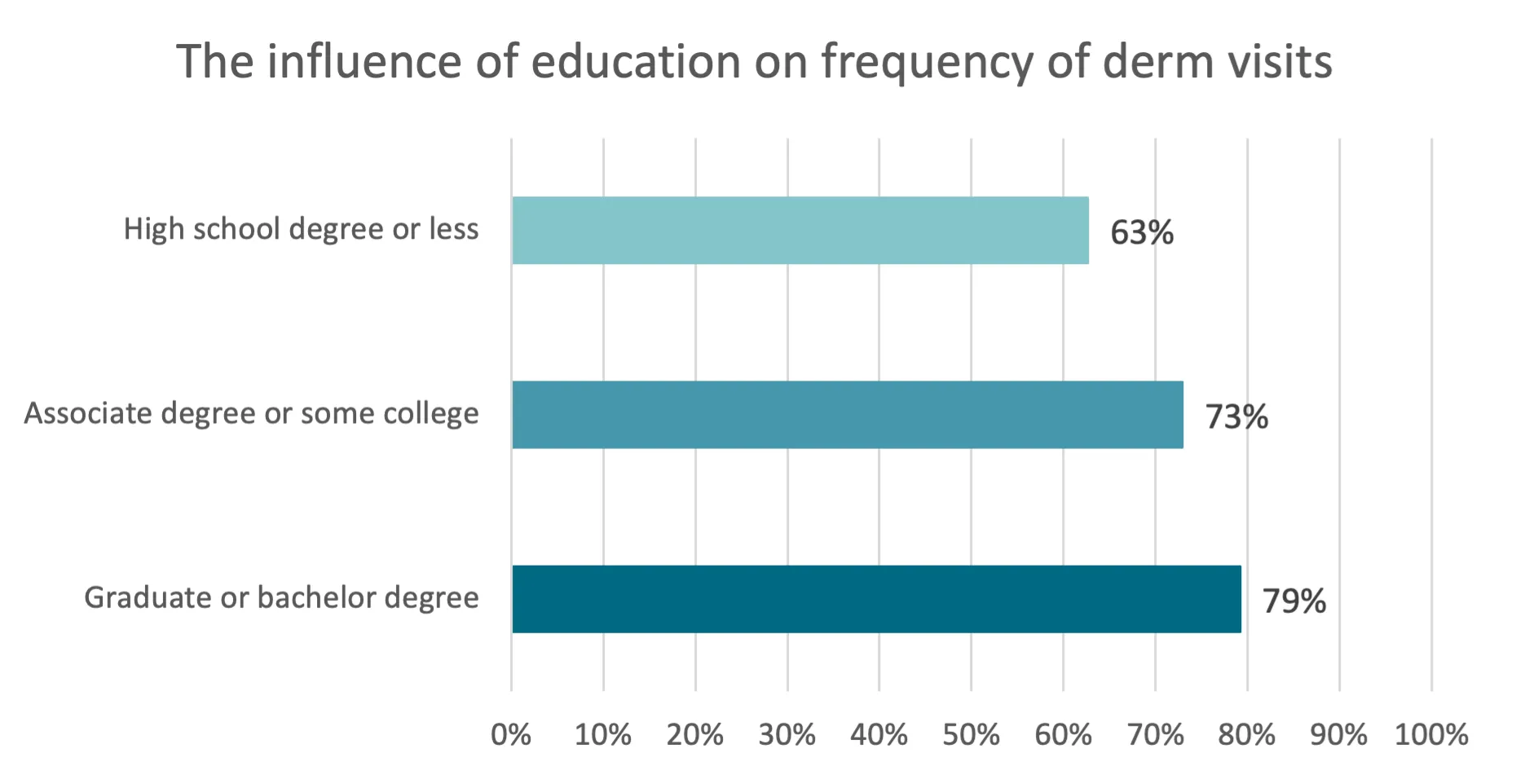
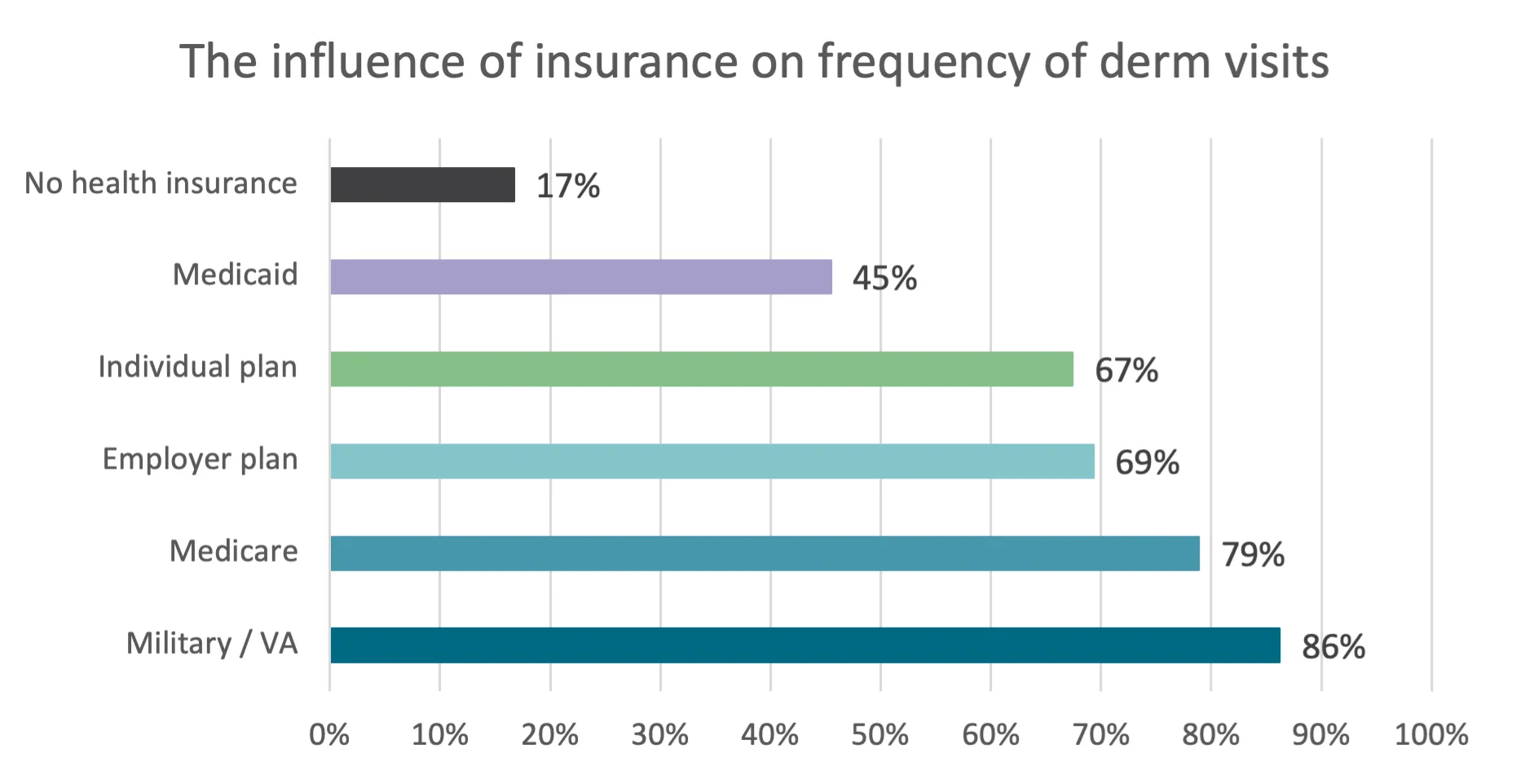
Among respondents with skin cancer experience, men were more likely than women to report visiting a dermatologist at least once per year. The survey found that 79% of male respondents with a history of skin cancer visited a dermatologist at least once per year, compared with 72% of female respondents.
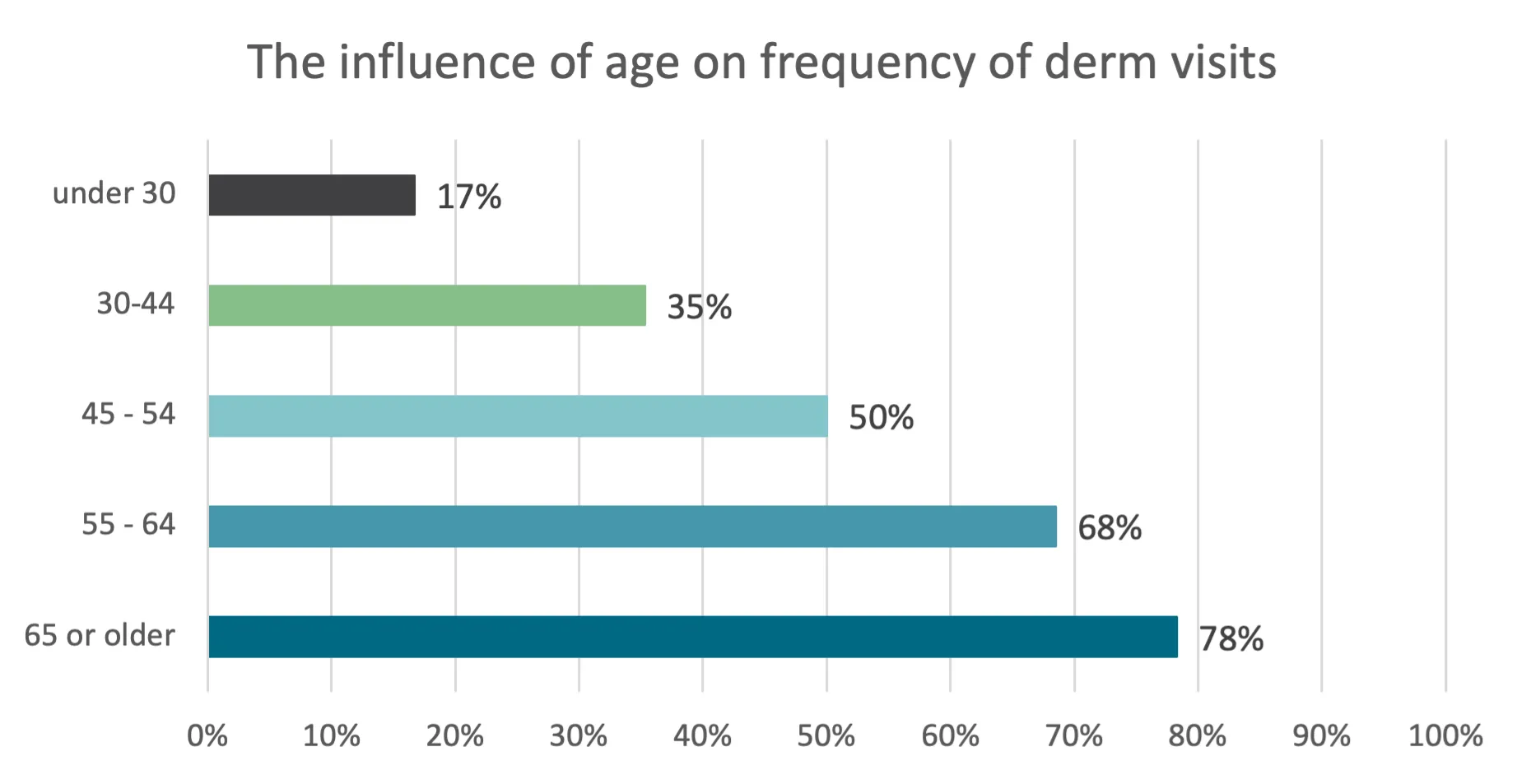
Age also influenced dermatologist visit frequency. Respondents age 65 or older were the most likely to report annual dermatologist visits, followed by respondents ages 55 to 64, 45 to 54, 30 to 44, and under 30.
Geography did not appear to have a meaningful influence on annual dermatologist visit frequency. Respondents from the Northeast, Midwest, South, and West reported similar annual visit rates.
Education level was associated with dermatologist visit frequency. Respondents with a graduate or bachelor’s degree were more likely to report annual dermatologist visits than respondents with an associate degree, some college, a high school degree, or less.
Health insurance coverage also influenced annual dermatologist visit frequency. Respondents with Military / VA coverage and Medicare were the most likely to report visiting a dermatologist at least once per year, followed by respondents with employer plans and individual plans. Respondents with Medicaid or no health insurance were the least likely to report annual dermatologist visits.
What These Charts Show
The Public Perspectives Survey found that dermatologist visit frequency was influenced by several factors, including gender, age, education level, and health insurance coverage. Men with skin cancer experience were more likely than women to report annual dermatologist visits. Older respondents were more likely than younger respondents to visit a dermatologist at least once per year. Respondents with higher education levels and stronger health insurance coverage were also more likely to report annual dermatologist visits. Geography did not appear to meaningfully influence annual dermatologist visit frequency.
People With Skin Cancer Experience Were More Concerned About Skin Cancer
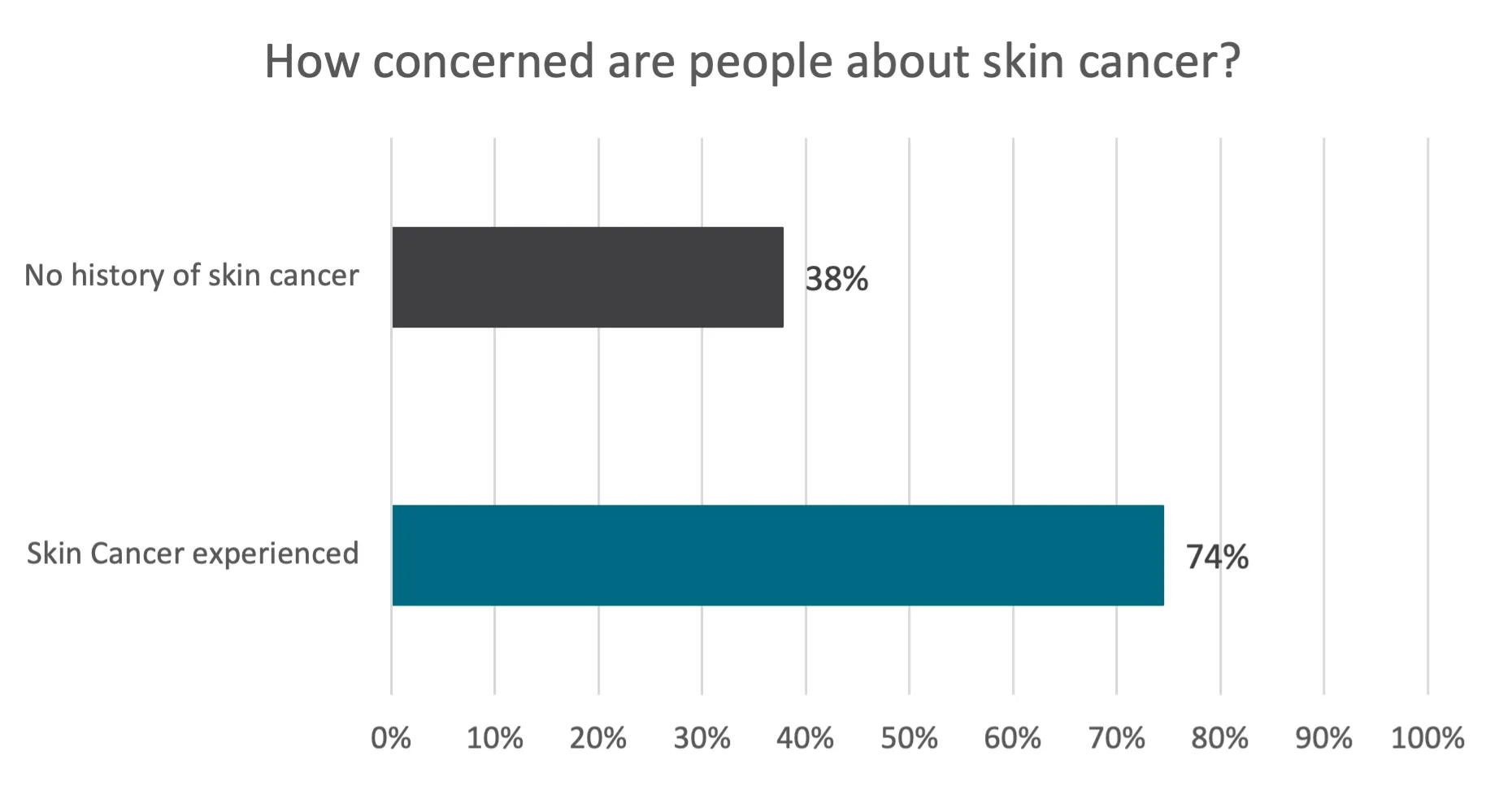
The survey found that respondents with skin cancer experience were more likely to be concerned about skin cancer than respondents without that experience. Among respondents with skin cancer experience, 74% said they were extremely or very concerned about skin cancer. Among respondents without skin cancer experience, 38% said they were extremely or very concerned.
What This Chart Shows
The Public Perspectives Survey found that concern about skin cancer was higher among respondents with skin cancer experience. 74% of respondents with skin cancer experience said they were extremely or very concerned about skin cancer, compared with 38% of respondents without skin cancer experience.
What Matters Most When Choosing a Skin Cancer Treatment?
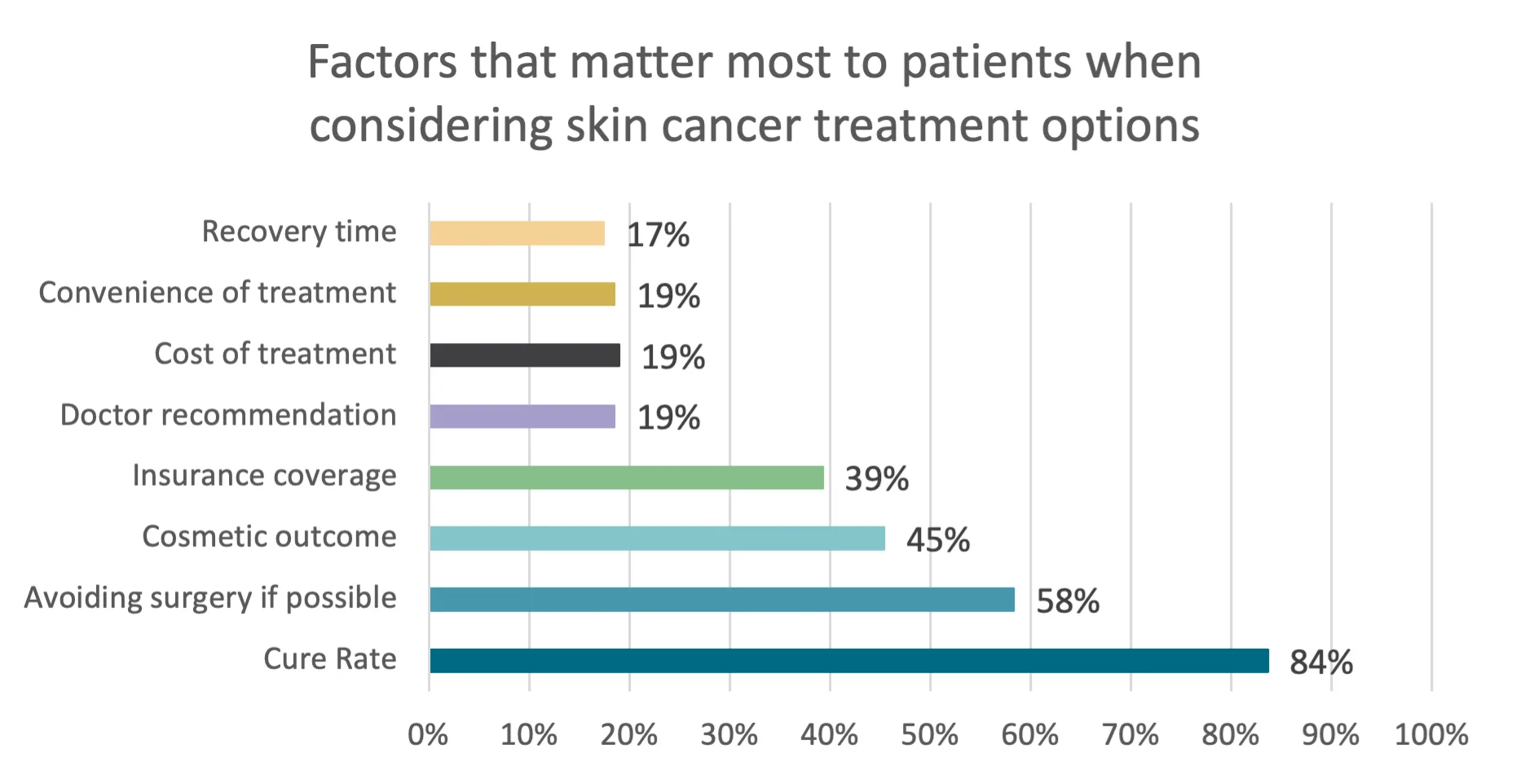
When evaluating skin cancer treatment options, respondents prioritized cure rate, avoiding surgery, cosmetic outcomes, and insurance coverage. These findings show that people may consider both medical outcomes and quality-of-life factors when evaluating treatment options.
What This Chart Shows
Public Perspectives Survey respondents prioritized cure rate, avoiding surgery, cosmetic outcomes, and insurance coverage when evaluating skin cancer treatment options.
Survey Respondents Valued Having Treatment Options
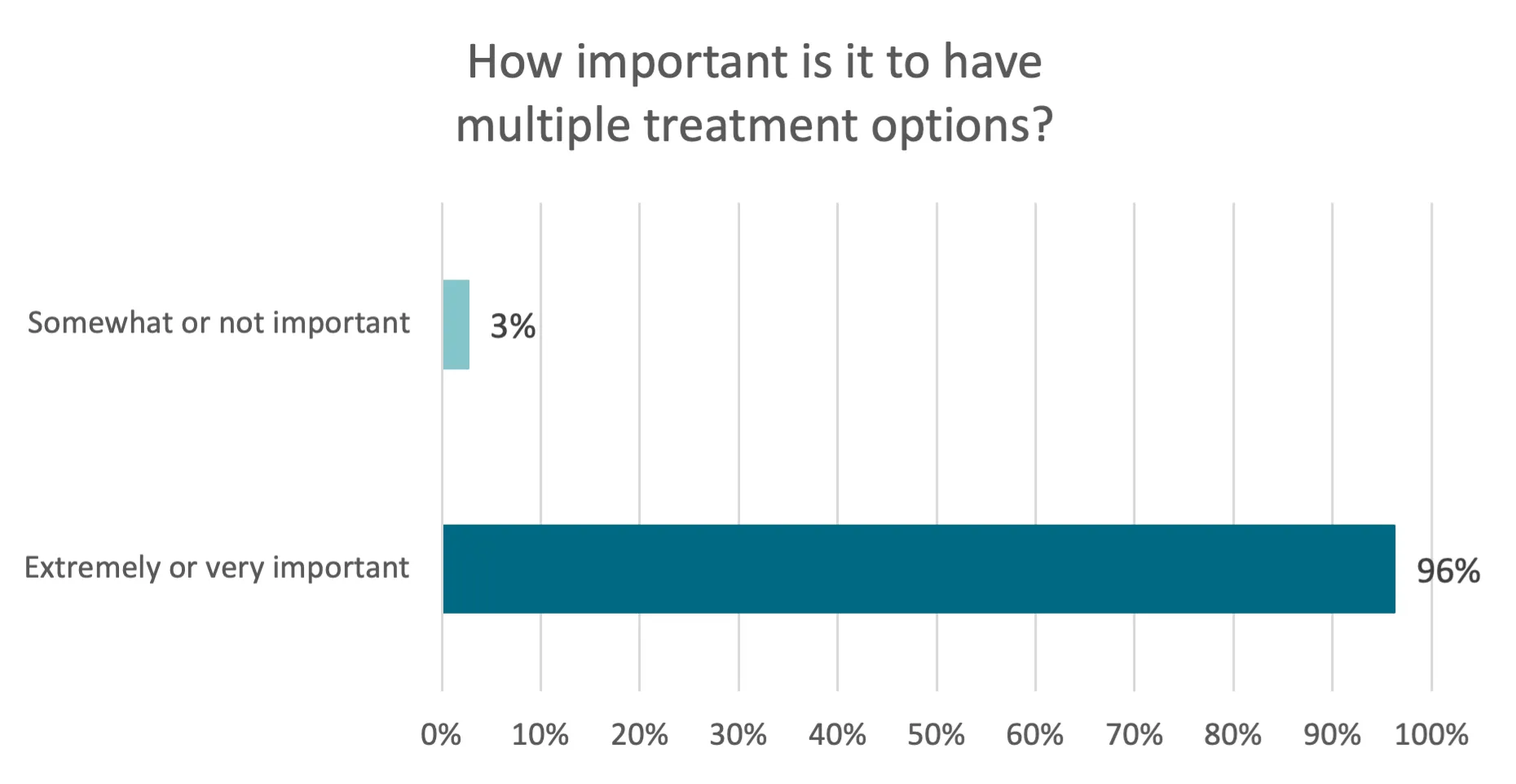
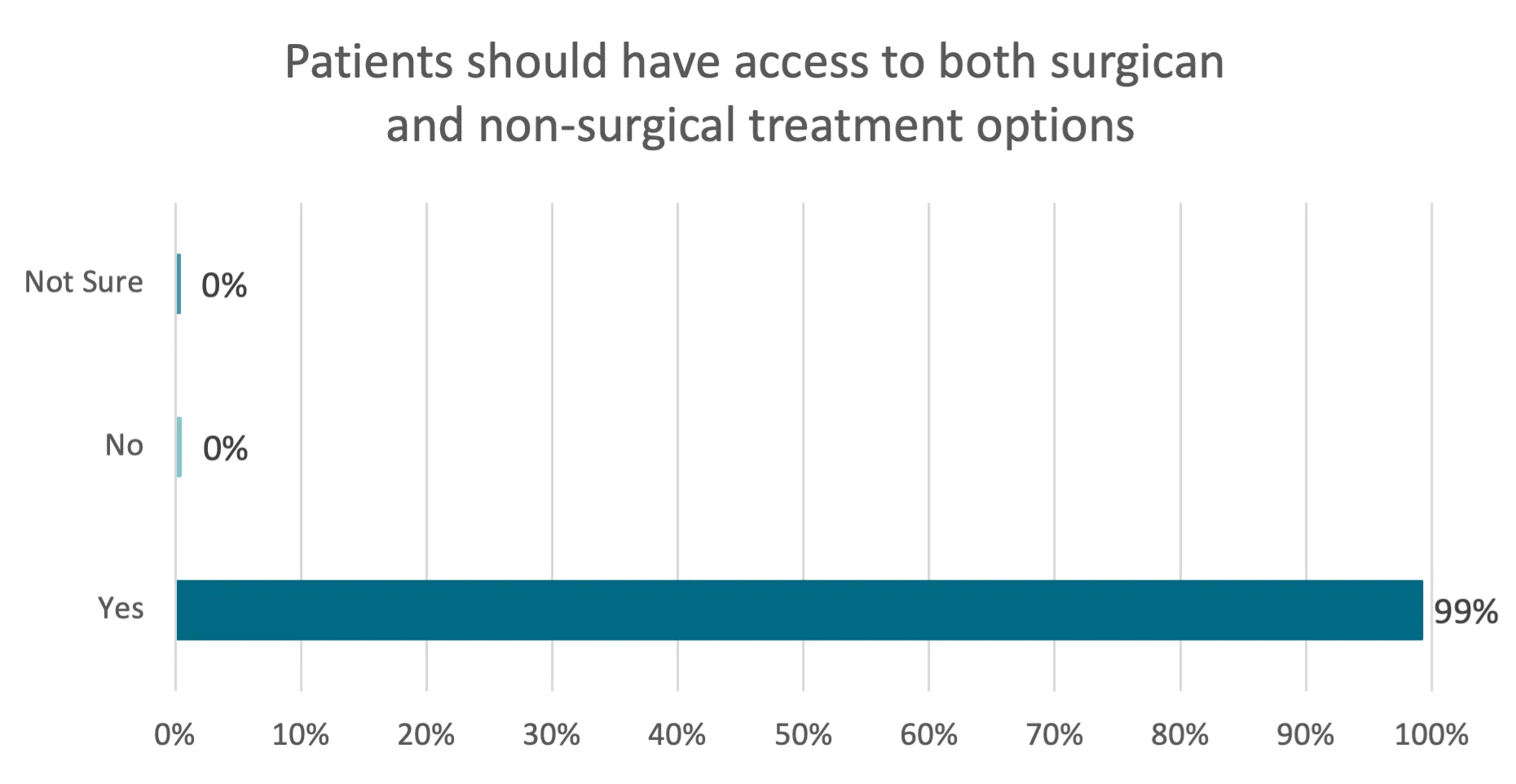
Survey responses showed a strong preference for having multiple treatment options available. Many respondents favored having access to both surgical and non-surgical treatment options, especially when treatment outcomes are comparable.
What These Charts Show
The Public Perspectives Survey found that respondents valued having multiple treatment options available for skin cancer treatment, including both surgical and non-surgical approaches.
Insurance Coverage Was an Important Concern
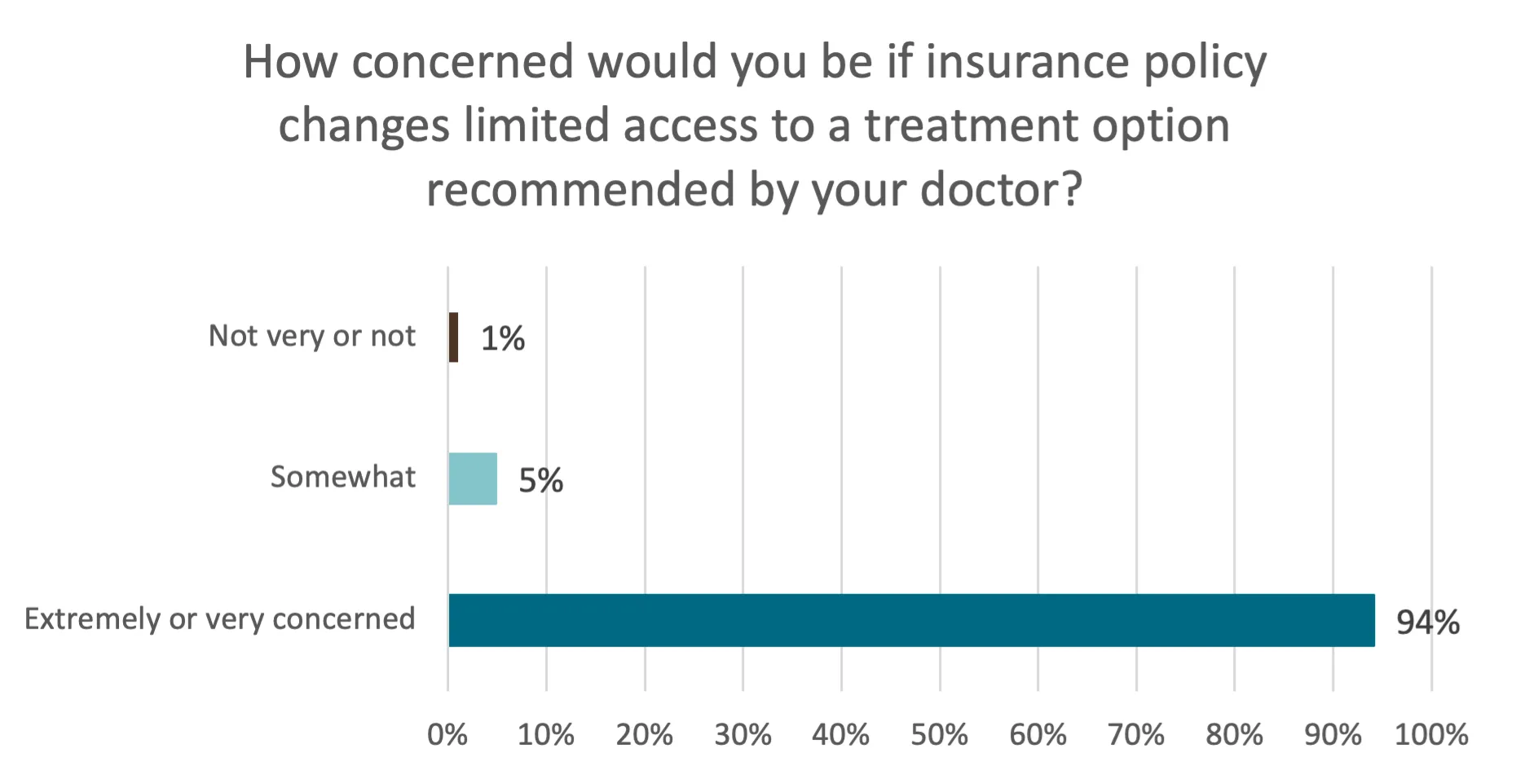
Respondents expressed concern about insurance limitations and how those limitations may affect access to treatment options. These results suggest that patients want treatment decisions to be guided by patients and physicians, not limited only by insurance restrictions.
What These Charts Show
The Public Perspectives Survey found that respondents were concerned about insurance limitations affecting treatment access and patient choice.
Download the Full Public Perspectives Survey Results
Download the full Public Perspectives Survey Results to review the complete survey findings, charts, methodology, and supporting context.
Explore More GentleCure Survey Results
Everyone Deserves a Surgery-Free Treatment Option
Participate in change. Do not let radiation oncologists limit your treatment options to protect their income. Sign a FREE petition to tell Medicare and health insurers that you expect them to CONTINUE COVERING an FDA-cleared, less invasive treatment option.
Explore Surgery-Free Skin Cancer Treatment
If you have been diagnosed with basal cell carcinoma or squamous cell carcinoma, you may have more than one treatment option to discuss with your dermatologist. GentleCure IGSRT is a surgery-free treatment option for common nonmelanoma skin cancers.