
What is the difference between low-risk and high-risk skin cancer? Low-risk skin cancer is less likely to grow deeply, return, or spread, while high-risk skin cancer may need more careful treatment planning because of its size, location, depth, type, recurrence history, or other patient-specific factors.
Understanding your risk level can help you have a more informed conversation with your dermatologist. It can also help explain why two people with the same general type of skin cancer may receive different treatment recommendations.
What Does “Risk” Mean in Skin Cancer?
In skin cancer care, “risk” usually refers to how likely a skin cancer is to grow, come back after treatment, affect nearby tissue, or spread to another part of the body.
Risk is not based on one factor alone. A dermatologist may consider several details when evaluating your diagnosis and possible skin cancer treatment options, including:
- The type of skin cancer
- The size of the spot
- How deep it appears to be
- Where it is located
- Whether it has been treated before
- Whether it has returned after treatment
- How fast it is growing
- What the biopsy shows
- Whether the patient has a weakened immune system
- Whether the area is cosmetically or functionally sensitive
This is why a biopsy and dermatology exam are important. They help guide the treatment plan.
What Is Low-Risk Skin Cancer?
Low-risk skin cancer generally refers to a skin cancer that appears less likely to grow aggressively, return after treatment, or spread. These skin cancers may be smaller, more superficial, slower growing, or located in an area where treatment is more straightforward.
A skin cancer may be considered lower risk if it:
- Is small
- Is found early
- Has not been treated before
- Has not come back after treatment
- Is not growing quickly
- Is not located near a sensitive area, such as the eyes, nose, lips, ears, hands, or genitals
- Does not show more aggressive features on biopsy
- Occurs in a patient without major immune system concerns
Low-risk does not mean “not serious.” Any skin cancer should be treated or monitored according to a dermatologist’s recommendation. Low-risk simply means the skin cancer may have fewer features that make it more likely to become complicated.
What Is High-Risk Skin Cancer?
High-risk skin cancer generally refers to a skin cancer that may have a higher chance of growing more deeply, returning after treatment, affecting nearby tissue, or spreading. High-risk skin cancers often require more detailed evaluation and treatment planning.
A skin cancer may be considered higher risk if it:
- Is large
- Is growing quickly
- Has returned after previous treatment
- Is located on a high-risk area of the body
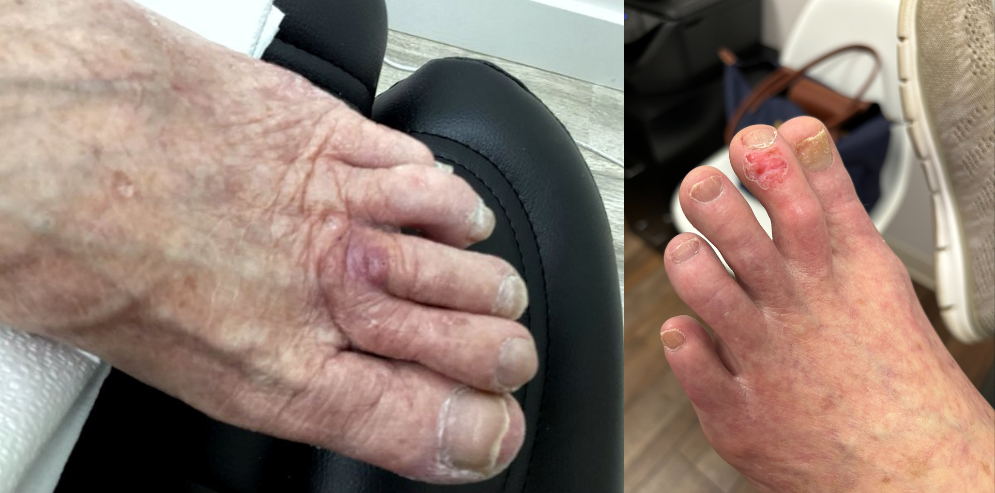
- Is near the eyes, nose, lips, ears, hands, feet, genitals, or other sensitive areas
- Has poorly defined borders
- Appears deeper or more invasive
- Shows aggressive features on biopsy
- Occurs in a patient with a weakened immune system
- Causes symptoms such as pain, bleeding, numbness, or persistent crusting
High-risk skin cancer does not always mean the cancer has spread. It means the dermatologist may need to be more careful when choosing a treatment plan.
Why Location Matters
Location is one of the biggest factors in skin cancer risk and treatment planning. Some areas of the body are more sensitive because they are visible, have thinner skin, are harder to treat, or are important for function.
Skin cancers may need extra care when they appear on the:
- Nose
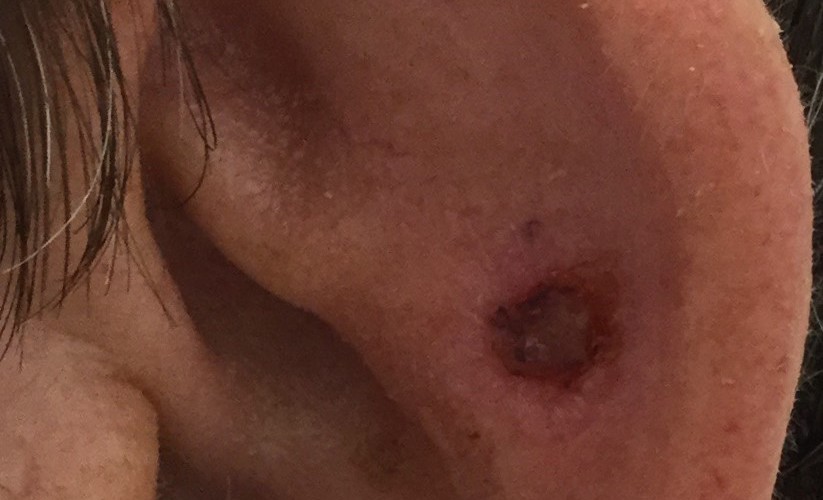
- Ears
- Lips
- Eyelids
- Forehead
- Scalp
- Hands
- Fingers
- Feet
- Toes
- Genitals
- Areas near joints
- Areas where skin has been treated before
For example, a small skin cancer on the nose may require a different treatment discussion than a similar skin cancer on the trunk. This is because the nose is a visible and functionally sensitive area where preserving healthy tissue and cosmetic outcome may be important.
Why Skin Cancer Type Matters
The type of skin cancer also affects risk level and treatment options.
Basal cell skin cancer is the most common type of skin cancer. It often grows slowly and is less likely to spread, but it can still become larger, deeper, or more difficult to treat if ignored.
Squamous cell skin cancer can sometimes grow more quickly and may have a higher chance of spreading than basal cell skin cancer, especially when high-risk features are present.
Melanoma is less common than basal cell skin cancer and squamous cell skin cancer, but it can be more aggressive. Melanoma requires prompt diagnosis and treatment planning. IGSRT is not positioned as a treatment for melanoma.
Knowing the type of skin cancer is important because each type behaves differently and may require a different approach.
Low-Risk vs High-Risk Skin Cancer: Key Differences
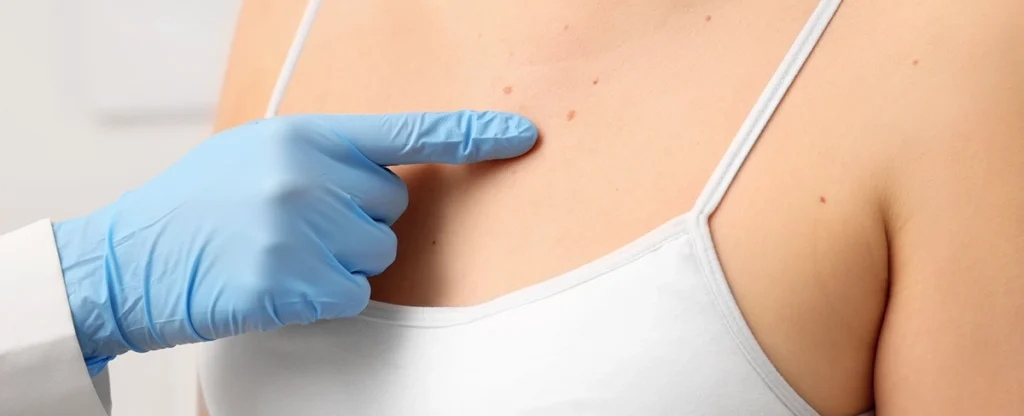
Low-risk and high-risk skin cancers are not always easy to tell apart by appearance alone. A dermatologist may need to examine the spot and review biopsy results.
| Factor | Lower-Risk Skin Cancer May Be | Higher-Risk Skin Cancer May Be |
|---|---|---|
| Size | Smaller | Larger |
| Growth pattern | Slow growing | Fast growing or changing quickly |
| Location | Easier-to-treat area | Face, ears, nose, lips, hands, feet, or other sensitive areas |
| Borders | More clearly defined | Poorly defined |
| Treatment history | First occurrence | Recurrent after treatment |
| Depth | More superficial | Deeper or more invasive |
| Symptoms | Few or no symptoms | Pain, bleeding, crusting, numbness, or tenderness |
| Patient factors | No major immune concerns | Weakened immune system or other risk factors |
This table is a general guide, not a diagnosis. Your dermatologist can explain how these factors apply to your specific case.
How Does Risk Level Affect Treatment?
Risk level can influence which treatment options your dermatologist recommends. The goal is to treat the skin cancer effectively while also considering healing, function, cosmetic outcome, and patient-specific needs.
For lower-risk skin cancers, treatment options may include:
- Surgical removal
- Mohs surgery in certain cases
- Image-Guided SRT for eligible nonmelanoma skin cancers
- Topical medication in certain cases
- Cryotherapy in certain cases
- Photodynamic therapy in certain cases
- Other approaches recommended by your provider
For higher-risk skin cancers, the dermatologist may recommend a treatment approach that allows closer margin control, more careful monitoring, or additional evaluation. Treatment may depend on the diagnosis, biopsy results, cancer type, size, depth, and location.
A higher-risk classification does not automatically mean one specific treatment is required. It means your provider may need to consider the case more carefully.
When Is IGSRT Considered?
IGSRT, also known as Image-Guided SRT, may be an option for eligible patients with certain nonmelanoma skin cancers, including basal cell skin cancer and squamous cell skin cancer.
IGSRT may be discussed when a patient wants to avoid cutting or stitches, or when the skin cancer is in a cosmetically sensitive area. It uses imaging and targeted radiation to treat certain non-melanoma skin cancers without surgery.
IGSRT is not the right option for every skin cancer. Eligibility depends on the diagnosis, cancer type, size, depth, location, medical history, and provider recommendation.
When Might Mohs Surgery Be Recommended?
Mohs surgery may be recommended for some skin cancers, especially when the cancer is in a sensitive area, has a higher risk of returning, has unclear borders, or has returned after prior treatment.
Mohs surgery removes thin layers of skin and checks each layer for cancer cells until no cancer remains. This can help preserve healthy tissue, which can be important on areas such as the face, nose, ears, lips, hands, and other sensitive locations.
Like any procedure, Mohs surgery has considerations, including wound care, healing time, scarring, and in some cases, the need for reconstruction. Your dermatologist can explain whether Mohs is appropriate for your situation.
Questions to Ask Your Dermatologist
If you have been diagnosed with skin cancer, it is reasonable to ask your dermatologist how risk level affects your treatment options. You may also review these questions to consider after your skin cancer treatments.
Helpful questions include:
- Is my skin cancer considered low risk or high risk?
- What factors make it lower risk or higher risk?
- What did the biopsy show?
- How deep or large is the skin cancer?
- Is the location considered sensitive?
- What are my treatment options?
- Which option gives the best chance of treating the cancer?
- What are the expected cosmetic outcomes?
- Will I need stitches, wound care, or recovery time?
- Is IGSRT an option for my diagnosis?
- What happens if I wait or delay treatment?
- How often should I have skin checks after treatment?
These questions can help you understand the recommendation and feel more confident about the next step.
Why Early Diagnosis Matters
Finding skin cancer early can make treatment more straightforward. Smaller and earlier skin cancers may be easier to treat and may leave fewer cosmetic or functional concerns.
You should schedule a skin cancer screening if you notice:
- A sore that does not heal
- A scab that keeps coming back
- A rough, scaly, or crusted patch
- A shiny or pearly bump
- A firm red bump
- A mole that changes in size, shape, color, or texture
- A spot that bleeds, hurts, itches, or grows
- A spot that looks different from other marks on your skin
Even if a spot seems minor, it is better to have it checked early than to wait until it becomes more difficult to treat.
FAQ: Low-Risk vs High-Risk Skin Cancer
What does low-risk skin cancer mean?
Low-risk skin cancer generally means the cancer has fewer features that make it likely to grow aggressively, return, or spread. It may be smaller, found early, more superficial, or located in an area where treatment is more straightforward.
What does high-risk skin cancer mean?
High-risk skin cancer means the cancer has features that may make it more likely to grow, return, affect nearby tissue, or spread. These features may include size, depth, location, recurrence, biopsy findings, or immune system factors.
Is low-risk skin cancer still serious?
Yes. Low-risk skin cancer still needs appropriate evaluation and treatment. “Low risk” does not mean harmless. It means the cancer may have fewer concerning features compared with higher-risk cases.
Can basal cell skin cancer be high risk?
Yes. Basal cell skin cancer is often slow growing, but it can be considered higher risk if it is large, deep, recurrent, located in a sensitive area, has aggressive biopsy features, or has poorly defined borders.
Can squamous cell skin cancer be high risk?
Yes. Squamous cell skin cancer can be higher risk in some cases, especially if it is large, deep, fast growing, recurrent, located in a sensitive area, or occurs in someone with a weakened immune system.
Is melanoma considered high risk?
Yes. Melanoma is generally considered higher risk because it can be more aggressive than basal cell skin cancer and squamous cell skin cancer. It requires prompt diagnosis and treatment planning. If melanoma is suspected, a dermatologist should evaluate it as soon as possible.
How does a dermatologist know if skin cancer is high risk?
A dermatologist may consider the type of skin cancer, size, depth, location, borders, symptoms, biopsy results, recurrence history, and patient-specific factors such as immune system status.
Does high-risk skin cancer always spread?
No. High-risk skin cancer does not always mean the cancer has spread. It means the cancer has features that may require more careful treatment planning and follow-up.
Does low-risk skin cancer require surgery?
Not always. Treatment depends on the type of skin cancer, size, depth, location, and provider recommendation. Some low-risk nonmelanoma skin cancers may be treated surgically, while others may be eligible for non-surgical options.
Is IGSRT an option for low-risk skin cancer?
IGSRT may be an option for eligible patients with certain nonmelanoma skin cancers, including basal cell skin cancer and squamous cell skin cancer. A dermatologist can help determine whether IGSRT is appropriate.
Is IGSRT an option for high-risk skin cancer?
It depends on the diagnosis, size, depth, location, and provider recommendation. Some higher-risk cases may require a different treatment approach. A dermatologist can review whether IGSRT or another option is appropriate.
What should I ask after a skin cancer diagnosis?
Ask whether your skin cancer is considered low risk or high risk, what factors affect that risk, what treatment options are available, what cosmetic outcome to expect, and whether IGSRT is an option for your diagnosis.
Learn More About Skin Cancer Treatment With GentleCure®
If you have been diagnosed with skin cancer, understanding whether your case is low risk or high risk can help guide your treatment conversation.
GentleCure uses IGSRT, also known as Image-Guided SRT, a non-surgical treatment option for certain nonmelanoma skin cancers. For eligible patients, it may help treat basal cell skin cancer or squamous cell skin cancer without cutting, stitches, or surgical scarring.
Treatment recommendations depend on the diagnosis, cancer type, size, depth, location, medical history, and provider recommendation. You can also complete the Am I a Candidate? treatment quiz to learn more.
To learn more, call 855-936-4411 to speak with a Skin Cancer Information Specialist or find a participating dermatology practice near you.