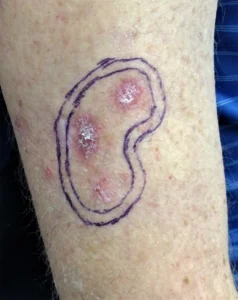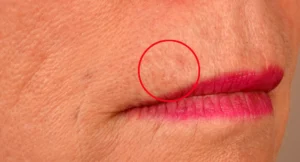
Can skin cancer look like a boil? Yes, some skin cancers can appear as a raised bump, sore, crusted spot, or irritated area that may be mistaken for a boil, pimple, ingrown hair, or skin infection. A spot that does not heal, keeps coming back, bleeds, crusts, grows, or changes should be checked by a dermatologist.
Most boils are caused by infection and often become tender, swollen, and filled with pus. Skin cancer is different, but it can sometimes create a bump or sore that looks similar at first. The key is to pay attention to how the spot behaves over time.
What Is a Boil?
A boil is a painful, swollen bump that usually develops when a hair follicle or oil gland becomes infected. Boils often look red, inflamed, tender, and raised. They may grow quickly, become filled with pus, and eventually drain.
Boils can happen anywhere on the body, but they are common in areas where there is friction, sweat, or hair. Many boils improve with time or medical care.
However, not every painful or swollen bump is a boil. A spot that does not follow the expected healing pattern should be evaluated, especially if it keeps returning or changes over time.
How Can Skin Cancer Look Like a Boil?
Skin cancer can sometimes look like a boil because it may appear as a raised bump, sore, swollen area, or crusted lesion. Some skin cancers can become tender, bleed, scab, or look irritated, which may make them seem like an infection or create uncertainty about whether the spot is a pimple or skin cancer.
Skin cancer that resembles a boil may look like:
- A raised red, pink, or flesh-colored bump
- A sore that does not heal
- A crusted or scabbed spot that keeps coming back
- A firm bump that slowly grows
- A tender or painful spot that does not improve
- A bump that bleeds, oozes, or crusts
- A lesion that looks infected but does not respond as expected
- A spot that changes in size, shape, color, or texture
The main difference is persistence. A typical boil often changes quickly and may drain or improve. A skin cancer spot may last for weeks, return in the same place, or slowly grow.
Boil vs. Skin Cancer: Key Differences
A boil and skin cancer can sometimes look similar, but there are differences that may help you know when to get checked.
A boil may:
- Appear suddenly
- Be painful, swollen, and warm
- Develop pus
- Drain and then improve
- Be linked to an infected hair follicle
- Improve with appropriate care
Skin cancer may:
- Persist for several weeks or longer
- Bleed, crust, or scab repeatedly
- Keep returning in the same place
- Grow slowly over time
- Look shiny, pearly, scaly, rough, firm, or wart-like
- Change in color, shape, size, or texture
- Not improve the way a typical boil or infection would
You should not try to diagnose the spot yourself based only on appearance. If a bump or sore does not heal or keeps returning, schedule an exam with a dermatologist.
Warning Signs That a “Boil” Could Be Something Else
A bump that looks like a boil should be checked if it does not behave like a normal skin infection.
Warning signs and possible early signs of skin cancer include:
- The bump does not heal within a few weeks
- It keeps coming back in the same location
- It bleeds, crusts, or scabs repeatedly
- It grows larger over time
- It becomes firm, shiny, pearly, rough, or scaly
- It appears on sun-exposed skin, such as the face, ears, scalp, neck, arms, or hands
- It looks different from other marks on your skin
- It is paired with a changing mole, dark spot, or uneven color
- It hurts, itches, or becomes tender without improving
- It does not respond as expected to care recommended by a healthcare provider
A spot does not have to be painful to be skin cancer. Many early skin cancers are painless, which is why changes in appearance and healing pattern are important.
What Types of Skin Cancer Can Look Like a Boil?
Different types of skin cancer can sometimes be mistaken for a boil, pimple, sore, or infection.
Basal cell skin cancer may appear as a shiny bump, pink patch, open sore, or scab that does not heal. It may bleed, crust, or return in the same place after appearing to improve.
Squamous cell skin cancer may appear as a rough, scaly patch, firm bump, crusted sore, or wart-like growth. It can sometimes look inflamed or tender.
Melanoma is less likely to look like a typical boil, but it can appear as a new or changing spot, dark bump, bleeding lesion, or mole that changes over time. Melanoma can be more serious, so any changing or unusual spot should be evaluated.
Because skin cancer can look different from person to person, a dermatologist should examine any suspicious bump, sore, or lesion.
Can Skin Cancer Look Infected?
Yes, skin cancer can sometimes look irritated, inflamed, crusted, or infected. A skin cancer spot may also bleed, ooze, or form a scab. This can make it look similar to a boil, wound, or infected bump.
However, an infection usually improves with the right care. A skin cancer spot may continue to return, bleed, crust, or change.
If you have a spot that looks infected but does not improve, or if it keeps coming back after seeming to heal, it is important to have it checked.
Can Skin Cancer Be Painful Like a Boil?
Skin cancer is often painless in the early stages, but some spots can become tender, itchy, sore, or painful. Squamous cell skin cancer, in particular, may sometimes feel tender or uncomfortable.
Pain alone does not tell you whether a bump is a boil or skin cancer. A painful bump may be an infection, cyst, ingrown hair, inflamed follicle, or another condition. But if the spot does not heal, changes, bleeds, or keeps returning, it should be evaluated.
Where Can Boil-Like Skin Cancer Appear?
A boil-like skin cancer spot can appear anywhere on the skin, but many common skin cancers develop on areas that receive frequent sun exposure.
These areas may include:
- Face
- Nose
- Ears
- Scalp
- Forehead
- Neck
- Shoulders
- Arms
- Hands
- Legs
Skin cancer can also develop in less sun-exposed areas, including the chest, back, feet, toes, or under a nail. This is why any persistent or changing spot should be taken seriously, even if it appears in a place that does not get much sun.
What Should You Do If a Bump Does Not Heal?
If a bump, sore, or boil-like spot does not heal, schedule an appointment with a dermatologist or arrange a skin cancer screening. A dermatologist can examine the area and determine whether it looks like an infection, cyst, benign growth, precancerous spot, or skin cancer.
Your dermatologist may recommend:
- A visual skin exam
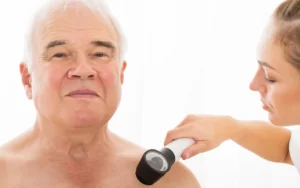
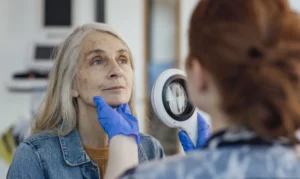
- Dermoscopy, which uses a special tool to look more closely at the spot
- Monitoring the area if it appears low-risk
- A biopsy if the spot looks suspicious
- Treatment based on the diagnosis
A biopsy is the only way to confirm whether a suspicious spot is skin cancer.
How to Check a Boil-Like Spot at Home
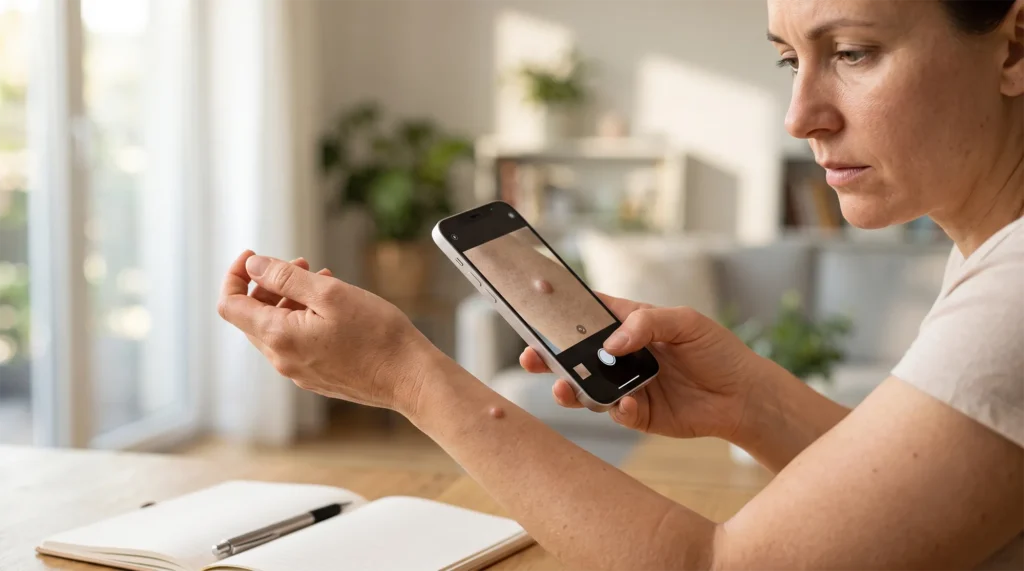
A self-check cannot replace a dermatologist exam, but it can help you notice changes sooner.
When checking a boil-like bump or sore, ask:
- How long has it been there?
- Is it getting better, worse, or staying the same?
- Has it grown larger?
- Does it bleed, crust, or scab?
- Does it return in the same place?
- Does it look shiny, pearly, rough, scaly, firm, or wart-like?
- Is there a mole or dark spot that is changing?
- Does it look different from other spots on your skin?
For moles or dark spots, use the ABCDEs:
- Asymmetry: One half of the spot does not match the other.
- Border: The edges are uneven, jagged, blurred, or poorly defined.
- Color: The spot has more than one color, such as brown, black, red, white, blue, or pink.
- Diameter: The spot is larger than a pencil eraser or continues to grow.
- Evolving: The spot changes in size, shape, color, texture, or symptoms.
The “E” for evolving is especially important. Any spot that continues to change should be checked.
How Is Skin Cancer That Looks Like a Boil Treated?
Treatment depends on the diagnosis, type of skin cancer, size, depth, location, and provider recommendation. If the spot is skin cancer, your dermatologist will discuss the treatment options that fit your individual case.
Common treatment options may include:
- Mohs surgery: A surgical technique that removes thin layers of skin and checks them for cancer cells until no cancer remains.
- Surgical removal: A procedure that removes the skin cancer along with a margin of surrounding tissue.
- Image-Guided SRT: A non-surgical treatment option for certain nonmelanoma skin cancers, including basal cell skin cancer and squamous cell skin cancer.
- Other treatments: Depending on the diagnosis, options may include topical medication, cryotherapy, photodynamic therapy, immunotherapy, or other approaches recommended by your provider.
If a spot is actually a boil, infection, cyst, or other non-cancerous condition, treatment will be different. That is why an accurate diagnosis matters.
FAQ: Can Skin Cancer Look Like a Boil?
Can skin cancer look like a boil?
Yes, some skin cancers can look like a boil, pimple, sore, or infected bump. A spot that does not heal, keeps coming back, bleeds, crusts, grows, or changes should be checked by a dermatologist.
How can I tell if a boil is skin cancer?
You cannot always tell by looking. A typical boil often improves or drains, while a skin cancer spot may persist, return, bleed, crust, or slowly grow. A dermatologist can examine the spot and determine whether a biopsy is needed.
What does skin cancer that looks like a boil look like?
It may look like a raised red, pink, or flesh-colored bump, firm sore, crusted spot, scab, wart-like growth, or open area that does not heal. It may also bleed, ooze, or return in the same place.
Can basal cell skin cancer look like a boil?
Yes, basal cell skin cancer can sometimes look like a shiny bump, open sore, pink patch, or scab that does not heal. It may be mistaken for a pimple, irritated spot, or sore.
Can squamous cell skin cancer look like a boil?
Yes, squamous cell skin cancer can appear as a firm bump, rough patch, crusted sore, or wart-like growth. It may sometimes look inflamed, tender, or irritated.
Can melanoma look like a boil?
Melanoma is less likely to look like a typical boil, but it can appear as a new or changing bump, dark spot, bleeding lesion, or mole that changes over time. Any changing or unusual spot should be evaluated.
Can skin cancer look infected?
Yes, some skin cancers can look irritated, crusted, inflamed, or infected. If a spot looks infected but does not improve or keeps coming back, schedule a dermatology exam.
Is a painful bump always a boil?
No. A painful bump can be caused by many things, including a boil, cyst, ingrown hair, infection, inflammation, or other skin condition. If it does not heal or continues to change, it should be checked.
When should I see a dermatologist for a boil-like bump?
See a dermatologist if a boil-like bump does not heal within a few weeks, keeps coming back, bleeds, crusts, grows, changes color, becomes firm, or looks different from other spots on your skin.
Does skin cancer that looks like a boil require surgery?
Not always. Treatment depends on the diagnosis, cancer type, size, depth, and location. Some skin cancers are treated surgically, while certain non-melanoma skin cancers may be eligible for non-surgical options such as IGSRT.
Is IGSRT an option for boil-like skin cancer?
IGSRT may be an option for eligible patients with certain nonmelanoma skin cancers, including basal cell skin cancer and squamous cell skin cancer. A dermatologist can help determine whether IGSRT or another treatment option is appropriate.
Learn More About Skin Cancer Treatment With GentleCure®
If you have a boil-like bump, sore, scab, or skin lesion that does not heal, the first step is getting the right diagnosis from a dermatologist.
If you have been diagnosed with certain nonmelanoma skin cancers, including basal cell skin cancer or squamous cell skin cancer, GentleCure may be an option. GentleCure uses IGSRT, also known as Image-Guided SRT, a non-surgical treatment option for certain nonmelanoma skin cancers. For eligible patients, it may help treat basal cell skin cancer or squamous cell skin cancer without cutting, stitches, or surgical scarring.
Treatment recommendations depend on the diagnosis, cancer type, size, depth, location, medical history, and provider recommendation. You can also complete the Am I a Candidate? treatment quiz to learn more.
To learn more, call 855-936-4411 to speak with a Skin Cancer Information Specialist or find a participating dermatology practice near you.