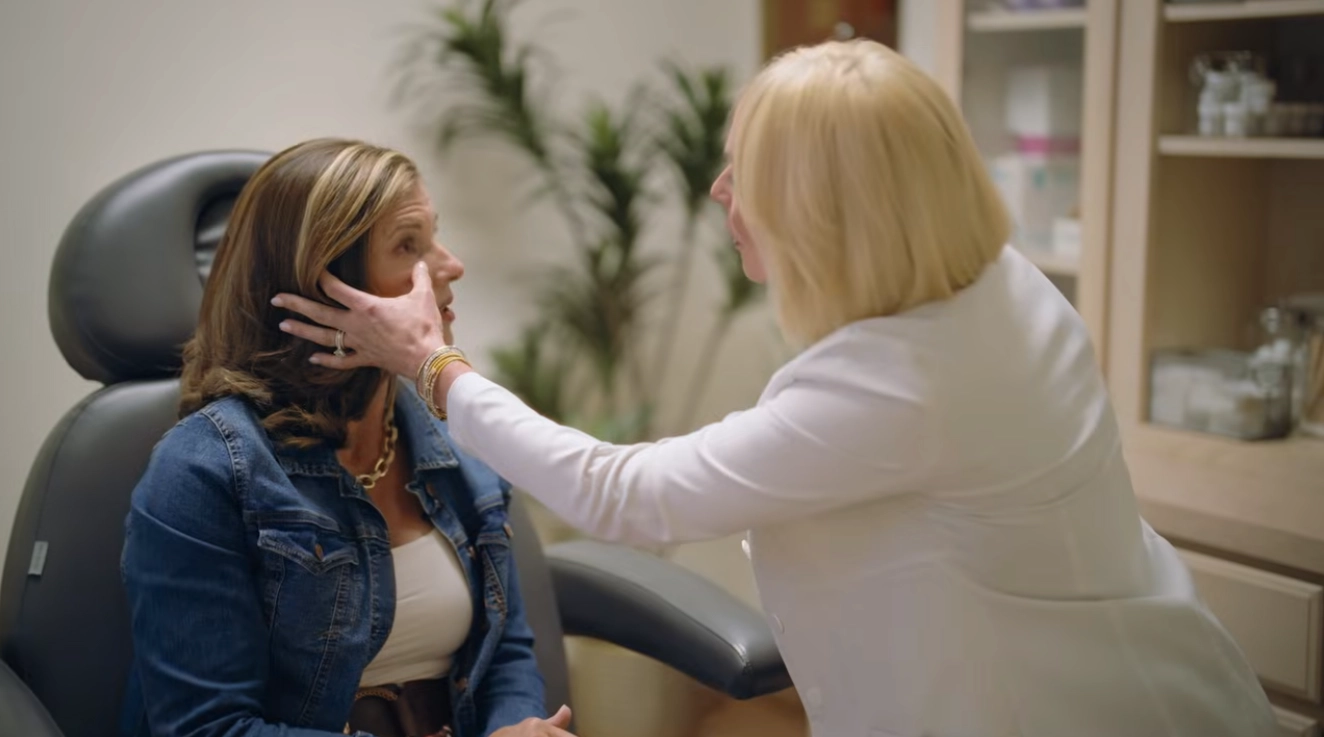
What happens during IGSRT treatment? Image-Guided Superficial Radiation Therapy (IGSRT), also known as Image-Guided SRT, is a surgery-free treatment option for certain nonmelanoma skin cancers. It uses ultrasound imaging and targeted, low-energy X-rays to treat eligible basal cell skin cancer and squamous cell skin cancer without cutting or stitches.
Treatment is typically performed in a dermatologist’s office over multiple short appointments. Before treatment begins, your care team will evaluate your diagnosis, explain the process, and develop a treatment plan.
Understanding what happens before, during, and after IGSRT can help you prepare for treatment and know what questions to discuss with your dermatologist.
How Does IGSRT Treatment Work?
IGSRT combines ultrasound imaging with superficial radiation therapy to treat certain nonmelanoma skin cancers.
The ultrasound imaging allows your care team to visualize and measure the treatment area, including the depth of the skin cancer. This information helps guide treatment planning and monitor the area throughout the treatment process.
During each session, targeted, low-energy X-rays are delivered to the affected skin. Unlike surgical treatments, IGSRT does not require cutting out the skin cancer or closing a surgical wound with stitches.
Your dermatologist will determine whether IGSRT is appropriate based on your diagnosis, the type of skin cancer, its size, location, depth, and other medical considerations.
Before Your First IGSRT Treatment Session
Before beginning Image-Guided SRT, your dermatologist will confirm your diagnosis and review whether you are a suitable candidate.
A biopsy is normally used to establish the diagnosis of skin cancer before a treatment plan is developed.
Your care team will explain the treatment process and schedule a planning appointment, sometimes called a simulation, to prepare for your sessions.
During this preparation, you may:
- Discuss your diagnosis, treatment goals, and expectations.
- Meet members of the team responsible for delivering treatment.
- Review your planned treatment schedule.
- Learn how ultrasound imaging helps guide treatment.
- Discuss potential side effects and how they will be managed.
- Ask questions about follow-up appointments and skin care.
The exact planning process may vary by practice and treatment location.
What Happens During Each IGSRT Treatment Session?
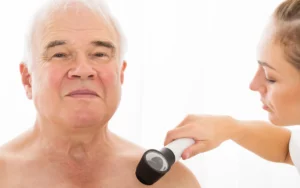
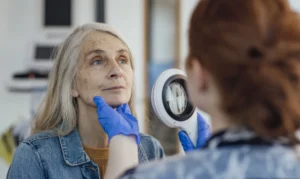
An IGSRT appointment is usually brief and takes place in the dermatologist’s office.
During a treatment session:
- You are positioned comfortably. You may sit or lie down, depending on the area being treated.
- Your care team prepares the treatment area. Protective shielding may be positioned around the area to help limit exposure to surrounding tissue.
- Ultrasound imaging is used. Your care team can assess and monitor the area being treated.
- Targeted radiation is delivered. The treatment device directs low-energy X-rays to the planned treatment area.
- Your care team monitors the session. The radiation therapist operates the equipment while observing and communicating with you as needed.
The radiation delivery itself takes only a short time. The full appointment also includes preparation and positioning.
IGSRT does not require a surgical incision or stitches. Patients generally do not need to interrupt their usual daily activities because of a surgical recovery period.
However, you may notice temporary skin irritation or other localized side effects as treatment progresses. Your care team will explain what to expect.
How Many IGSRT Treatment Sessions Are Needed?
IGSRT treatment typically involves approximately 18 to 25 short sessions over several weeks.
The exact number of appointments and the treatment schedule depend on factors such as the skin cancer’s type, size, depth, and location, as well as the treatment plan recommended by your dermatologist.
Your provider will explain the proposed schedule before treatment begins.
Completing the prescribed course and attending recommended follow-up appointments are important parts of the treatment and recovery process.
Does IGSRT Treatment Hurt?
IGSRT does not involve cutting or stitches, and the radiation delivery itself is generally not painful.
However, some patients may develop discomfort in the treated area as their skin responds to radiation. This can include irritation, tenderness, redness, or other localized changes.
Experiences vary, so it is important to report pain or skin changes to your healthcare provider rather than assuming they are expected.
Your care team can recommend appropriate measures to help manage treatment-related discomfort.
What Are the Possible Side Effects of IGSRT?
Like other medical treatments, IGSRT can cause side effects.
Most commonly reported effects involve the skin in the treatment area and may include:
- Redness or irritation
- Dryness or tenderness
- Thinning or breakdown of the treated skin
- Temporary swelling or sensitivity
- Darkening or lightening of skin pigmentation
- Hair loss within the treated area
Depending on the treatment location, additional localized effects may occur. For example, treatment near the nose may sometimes be associated with nasal dryness or nosebleeds.
Some reactions may become more noticeable as treatment progresses. Rare or longer-term complications are also possible.
Your dermatologist will monitor the treatment area, explain possible side effects, and recommend appropriate care.
What Happens After IGSRT Treatment?
After completing the prescribed IGSRT sessions, your care team will continue monitoring the treated area.
Unlike skin cancer surgery, IGSRT does not leave a surgical incision requiring stitches. However, the skin may continue to show treatment-related changes as it heals.
Common temporary effects, such as redness or irritation, normally improve within approximately two to six weeks after treatment ends, although recovery varies and some skin changes can last longer.
Your dermatologist may provide instructions about:
- Caring for the treated skin
- Managing irritation or tenderness
- Protecting the area from sun exposure
- Recognizing changes that require medical attention
- Scheduling follow-up skin examinations
Regular dermatology follow-up remains important after skin cancer treatment.
Can You Continue Normal Activities During IGSRT Treatment?
IGSRT does not require the surgical wound care or recovery period associated with skin cancer removal surgery.
Patients can generally continue their normal daily activities throughout treatment, including work, hobbies, and everyday routines.
However, your healthcare provider may recommend specific skin care precautions depending on the treatment location and how your skin responds.
Discuss any activity-related concerns with your care team so they can provide guidance appropriate to your treatment.
FAQ: IGSRT Treatment
Is Image-Guided SRT effective for skin cancer?
Image-Guided SRT is an established surgery-free treatment option for eligible patients with certain basal cell skin cancers and squamous cell skin cancers. Published clinical research supports its effectiveness in appropriately selected cases. Your dermatologist can explain the expected treatment outcomes and whether IGSRT is appropriate for your diagnosis.
What are possible side effects of Image-Guided SRT?
Possible side effects include redness, irritation, dryness, tenderness, skin thinning or breakdown, changes in pigmentation, and hair loss within the treatment area. The effects depend on the treatment location and individual response. Your care team will monitor the area and recommend appropriate skin care.
How many sessions does IGSRT take?
IGSRT typically involves approximately 18 to 25 short treatment sessions over several weeks. The exact number of appointments depends on your diagnosis and individualized treatment plan.
Is IGSRT a treatment option for older adults?
Yes. IGSRT may be an option for eligible older adults, including people who wish to discuss alternatives to surgery. Age alone does not determine eligibility. Your dermatologist will consider your diagnosis, medical history, treatment preferences, and the characteristics of the skin cancer.
How long does an IGSRT appointment take?
IGSRT appointments are generally brief. Radiation delivery takes only a short time, while the overall appointment also includes preparation, positioning, and any imaging or monitoring needed. Your treatment team can explain the expected appointment length.
Do I need anesthesia for IGSRT treatment?
IGSRT does not require anesthesia because it does not involve surgically removing the skin cancer. Your provider will explain the treatment process and address any concerns about discomfort before your first session.
Will I need follow-up appointments after IGSRT?
Yes. Your dermatologist will recommend follow-up visits to assess the treated area and monitor your skin. Regular skin examinations remain important because people who have had skin cancer can develop additional skin cancers.
Learn More About IGSRT Treatment With GentleCure
Knowing what to expect can help you feel more prepared when discussing skin cancer treatment options.
GentleCure uses IGSRT, a surgery-free treatment option for eligible patients with certain basal cell skin cancers and squamous cell skin cancers.
To learn more about the technology, treatment process, and whether IGSRT may be appropriate for your diagnosis, call 855-936-4411 to speak with a Skin Cancer Information Specialist or find a participating dermatology practice near you.