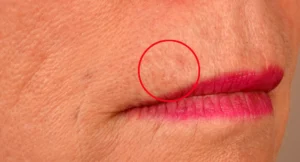
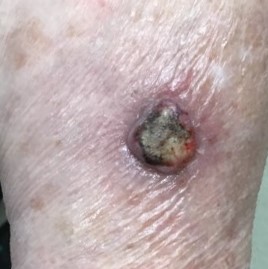
What does skin cancer on your arm look like? It may appear as a sore that does not heal, a rough or scaly patch, a shiny bump, a firm red or pink bump, a scab that keeps coming back, or a mole or spot that changes in size, shape, color, or texture.
Skin cancer on the arms can be easy to overlook because many spots may look like bug bites, scratches, dry skin, bruises, warts, or age spots. However, a persistent, changing, bleeding, crusting, or non-healing spot on the arm should be checked by a dermatologist. Reviewing the early signs of skin cancer can help you know what to watch for.
Why Skin Cancer Can Develop on the Arms
The arms are often exposed to ultraviolet (UV) rays during everyday activities, including driving, walking, gardening, golfing, exercising, working outdoors, or spending time near water. Over time, sun exposure can damage skin cells and increase the risk of skin cancer.
Skin cancer risk on the arms may be higher if you have:
- A history of sunburns
- Frequent outdoor sun exposure
- Fair or freckled skin
- A personal history of skin cancer
- A family history of skin cancer
- A weakened immune system
- A history of tanning bed use
- Many moles or irregular moles
- A spot that has been repeatedly irritated or injured
- Previous radiation exposure in the area
Skin cancer can appear on any part of the arm, including the upper arm, forearm, elbow, wrist, and areas near the hand. The forearms are especially exposed during daily activities and are a common place for sun-related skin changes.
Types of Skin Cancer That Can Appear on the Arms
Different types of skin cancer can appear on the arms. Each may look different, and the same type of skin cancer may not look identical from person to person.
Basal cell skin cancer may appear as a shiny bump, pink patch, open sore, scar-like area, or scab that does not heal. It often grows slowly but can become larger or more difficult to treat if ignored.
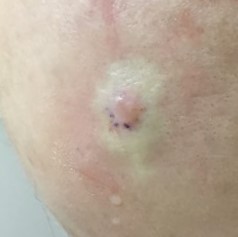
Squamous cell skin cancer may appear as a rough, scaly patch, firm red bump, crusted sore, thickened area, or wart-like growth. It can sometimes grow more quickly and should be evaluated if it persists, bleeds, crusts, or changes.
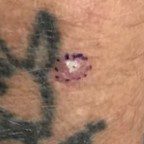
Melanoma may appear as a new or changing mole, dark spot, uneven patch, or spot with multiple colors. Melanoma can be more aggressive and should be evaluated promptly if suspected.
A dermatologist can determine whether a spot on your arm is skin cancer or another condition.
What Does Skin Cancer Look Like on Your Arm?
Skin cancer on the arm can look different depending on the type of skin cancer, the person’s skin tone, and how long the spot has been present.
Possible signs of skin cancer on the arm include:
- A sore that does not heal
- A rough, scaly, or crusted patch
- A shiny, pearly, pink, red, or flesh-colored bump
- A firm bump or thickened area
- A wart-like growth
- A scab that keeps returning
- A spot that bleeds, crusts, or oozes
- A mole or dark spot that changes
- A tender, painful, itchy, or burning area
- A spot that looks different from others on your skin
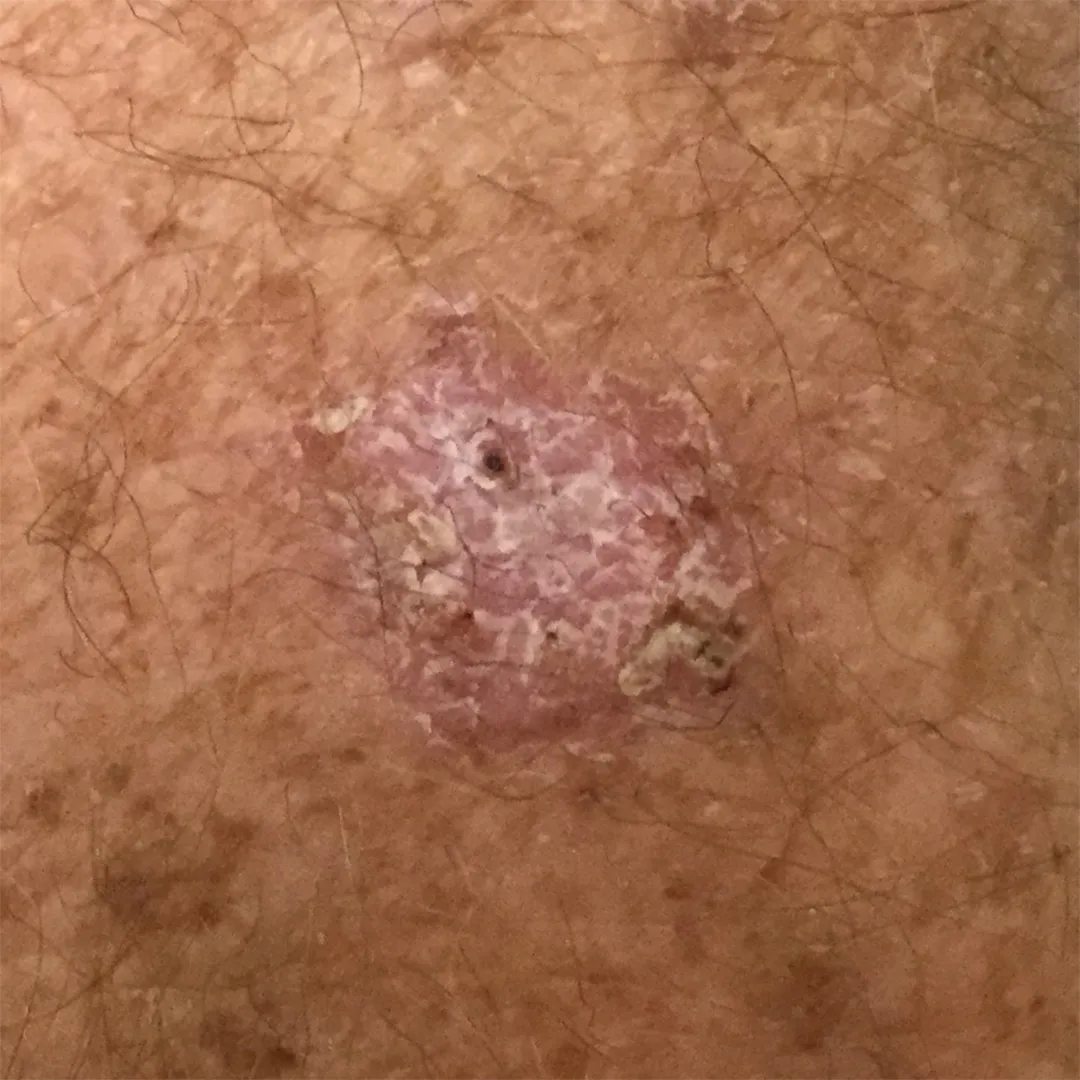
Not every spot on the arm is skin cancer. Many arm spots are caused by dryness, sun spots, bruises, bug bites, irritation, acne, warts, or minor injuries. The concern is when one spot does not heal, keeps coming back, grows, bleeds, or changes over time.
Skin Cancer on the Forearm
The forearms often receive frequent sun exposure, especially during driving, outdoor work, gardening, sports, and daily activities. Because of this, the forearms are a common place to notice sun-related spots, rough patches, and skin changes.
Skin cancer on the forearm may look like:
- A rough or scaly patch
- A red, pink, or flesh-colored bump
- A sore that does not heal
- A scab that keeps coming back
- A crusted or thickened spot
- A mole or dark spot that changes
- A spot that bleeds after minor contact
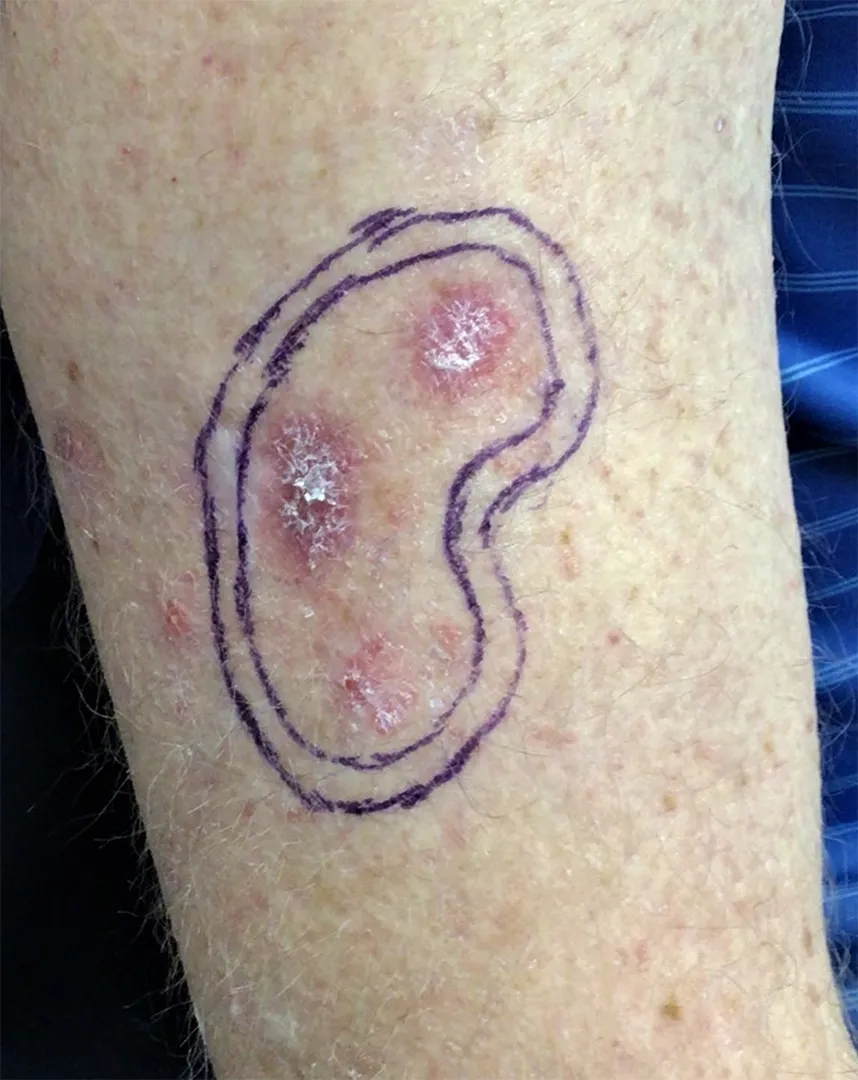
A forearm spot that remains in the same place, grows, bleeds, or changes should be checked by a dermatologist.
Skin Cancer on the Upper Arm
Skin cancer can also appear on the upper arm, including the outer arm, inner arm, and shoulder area. The outer upper arm may receive more sun exposure, while the inner upper arm may be overlooked during skin checks.
A suspicious spot on the upper arm may appear as:
- A new or changing mole
- A rough patch that does not improve
- A shiny or pearly bump
- A firm red or pink bump
- A sore that does not heal
- A scab or crusted spot that returns
- A spot that looks different from nearby marks
Even if an upper-arm spot appears in an area that does not get much sun, it should still be checked if it changes or does not heal.
Skin Cancer Near the Elbow or Wrist
The elbow and wrist can be easy to miss during sunscreen application and self-checks. These areas may also experience friction from clothing, watches, bracelets, sports gear, or daily movement, which can make irritation and skin cancer look similar at first.
Watch for:
- A sore near the elbow or wrist that does not heal
- A rough, scaly, or thickened patch
- A bump that becomes firm or tender
- A scab that keeps returning
- A spot that bleeds, crusts, or changes
- A lesion that looks different from other marks nearby
A persistent spot near a joint should be evaluated, especially if it keeps reopening or does not improve.
Can Skin Cancer on the Arm Look Like a Bug Bite or Pimple?
Yes, some skin cancers can look like a bug bite, pimple, inflamed bump, or small sore. This can make early warning signs easy to dismiss. If you’re trying to tell the difference, our guide on pimple or skin cancer covers the same warning signs in more depth.
A bug bite or pimple usually improves with time. A more concerning spot may:
- Stay in the same place for several weeks
- Grow instead of shrink
- Bleed or crust repeatedly
- Become firm, rough, or scaly
- Heal and then return
- Look different from other marks on your skin
If a bump on your arm does not behave like a typical bite or pimple, schedule a dermatology exam.
Can Skin Cancer on the Arm Look Like a Bruise or Age Spot?
Some spots on the arms are harmless bruises, sun spots, or age spots. However, melanoma and other concerning lesions can sometimes appear as dark, uneven, or changing spots.
A spot should be checked if it:
- Changes in size, shape, color, or texture
- Has uneven borders
- Has multiple colors
- Looks different from other spots
- Bleeds, itches, hurts, or grows
- Does not fade like a typical bruise
- Appears suddenly and continues to change
For moles or dark spots, the ABCDEs can help you know what to watch for.
How to Check Your Arms for Skin Cancer
Checking your arms regularly can help you notice changes sooner. Look at the front, back, inner, and outer areas of each arm in good lighting.
Check these areas:
- Shoulders
- Upper arms
- Elbows
- Forearms
- Wrists
- Backs of the hands
- Between the fingers
- Around the nails
When checking your arms, ask:
- Is there a sore that has not healed?
- Is there a scab that keeps coming back?
- Is a spot bleeding, crusting, or oozing?
- Is a rough patch staying in one place?
- Is a bump growing or becoming firm?
- Is a mole or dark spot changing?
- Does one spot look different from others nearby?
- Has the spot lasted more than a few weeks?
For moles or dark spots, use the ABCDEs:
- Asymmetry: One half of the spot does not match the other.
- Border: The edges are uneven, jagged, blurred, or poorly defined.
- Color: The spot has more than one color, such as brown, black, red, white, blue, or pink.
- Diameter: The spot is larger than a pencil eraser or continues to grow.
- Evolving: The spot changes in size, shape, color, texture, or symptoms.
The “E” for evolving is especially important. Any changing spot on your arm should be checked. For related warning signs on other parts of the arm, see skin cancer on hands.
What Does Skin Cancer Feel Like on Your Arm?
Skin cancer does not always cause symptoms. Some spots are painless, especially in the early stages. Others may feel different from the surrounding skin.
A concerning spot on the arm may feel:
- Scaly or rough
- Dry or flaky
- Tender or painful
- Itchy or irritated
- Firm or raised
- Crusted or thickened
- Like a sore that keeps reopening
A spot does not have to hurt to be skin cancer. Changes in appearance, healing pattern, and growth are often more important warning signs.
When Should You See a Dermatologist?
You should see a dermatologist if a spot on your arm does not heal, keeps coming back, grows, bleeds, crusts, hurts, itches, or changes in color, shape, size, or texture.
Schedule an exam if you notice:
- A sore that does not heal within a few weeks
- A scab that keeps returning
- A rough or scaly patch in one specific area
- A shiny, pearly, pink, red, or flesh-colored bump
- A firm bump or wart-like growth
- A changing mole or dark spot
- A spot that bleeds with minor contact
- A lesion that looks infected but does not improve
- A spot that looks different from others on your skin
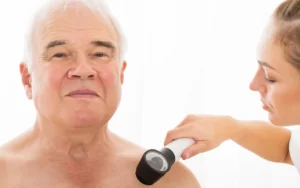
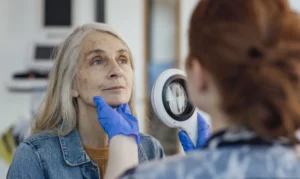
A dermatologist may examine the spot, use dermoscopy, or recommend a biopsy if the area looks suspicious. A biopsy is the only way to confirm whether a suspicious spot is skin cancer. If you are due for a skin cancer screening, this is a good time to schedule one.
How Is Skin Cancer on the Arm Treated?
Treatment for skin cancer on the arm depends on the diagnosis, cancer type, size, depth, location, biopsy findings, recurrence history, medical history, and provider recommendation.
Common treatment options may include:
- Mohs surgery: A surgical technique that removes thin layers of skin and checks them for cancer cells until no cancer remains.
- Surgical removal: A procedure that removes the skin cancer along with a margin of surrounding tissue.
- Image-Guided SRT: A non-surgical treatment option for certain nonmelanoma skin cancers, including basal cell skin cancer and squamous cell skin cancer.
- Other treatments: Depending on the diagnosis, options may include topical medication, cryotherapy, photodynamic therapy, immunotherapy, radiation therapy, or another approach recommended by your provider.
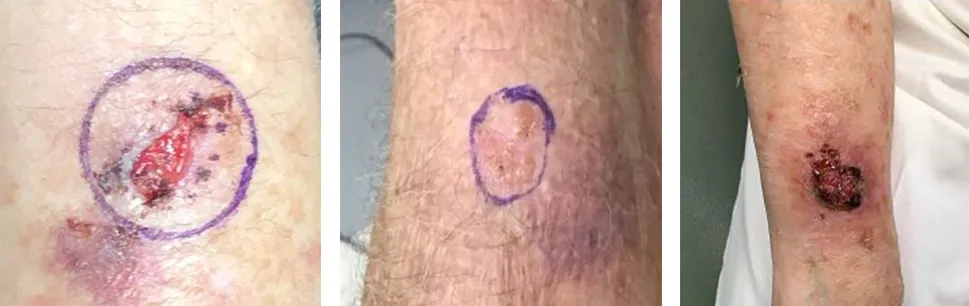
Treatment planning may consider the type of skin cancer, where it appears on the arm, how large or deep it is, and whether the spot is in an area that may affect movement, healing, downtime, or daily activities.
Is IGSRT an Option for Skin Cancer on the Arm?
IGSRT, also known as Image-Guided SRT, may be an option for eligible patients with certain nonmelanoma skin cancers, including basal cell skin cancer and squamous cell skin cancer.
For some eligible patients, IGSRT may help treat certain nonmelanoma skin cancers without cutting or stitches. It uses imaging and targeted radiation to treat the skin cancer while allowing the provider to monitor the area during treatment.
IGSRT is not appropriate for every skin cancer or every arm location. Eligibility depends on the diagnosis, cancer type, size, depth, location, medical history, and provider recommendation.
How to Help Protect Your Arms From Skin Cancer
The arms are often exposed to the sun, so consistent protection can help reduce additional UV damage.
To help protect your arms:
- Apply broad-spectrum sunscreen with SPF 30 or higher
- Reapply sunscreen every two hours when outdoors
- Reapply after swimming, sweating, or toweling off
- Wear UPF-rated long sleeves when possible
- Seek shade when UV exposure is strongest
- Avoid tanning beds, tanning booths, and sunlamps
- Check your arms regularly for new or changing spots
- Schedule regular skin exams if you have risk factors or a history of skin cancer
Pay close attention to the forearms, shoulders, backs of the hands, and areas that are often exposed during daily activities.
FAQ: Skin Cancer on Arms
What does skin cancer on the arm look like?
Skin cancer on the arm may look like a sore that does not heal, a rough or scaly patch, a shiny bump, a firm red or pink bump, a scab that keeps returning, a wart-like growth, or a changing mole or dark spot.
Can skin cancer on the arm look like a bug bite?
Yes, some skin cancers can look like a bug bite, pimple, or irritated bump. A spot that does not heal, grows, bleeds, crusts, or keeps returning should be checked by a dermatologist.
Can skin cancer on the arm look like a bruise?
Some concerning spots may look dark, uneven, or bruise-like. A spot that does not fade, changes over time, has uneven color, or looks different from other marks should be evaluated.
Is skin cancer common on the forearms?
The forearms receive frequent sun exposure, which can increase the risk of sun-related skin changes and skin cancer. A persistent or changing spot on the forearm should be checked.
Can basal cell skin cancer appear on the arm?
Yes, basal cell skin cancer can appear on the arm. It may look like a shiny bump, pink patch, open sore, scar-like area, or scab that does not heal.
Can squamous cell skin cancer appear on the arm?
Yes, squamous cell skin cancer can appear on the arm. It may look like a rough or scaly patch, firm red bump, crusted sore, thickened area, wart-like growth, or sore that does not heal.
Can melanoma appear on the arm?
Yes, melanoma can appear on the arm as a new or changing mole, dark spot, uneven patch, or spot with multiple colors. Any changing or unusual spot should be checked promptly.
What does skin cancer feel like on the arm?
Skin cancer may be painless, especially early on. Some spots may feel rough, scaly, tender, itchy, firm, raised, crusted, or like a sore that keeps reopening.
When should I see a dermatologist for a spot on my arm?
See a dermatologist if a spot does not heal within a few weeks, keeps coming back, grows, bleeds, crusts, hurts, itches, changes color, or looks different from other marks on your skin.
How is skin cancer on the arm diagnosed?
A dermatologist may examine the spot, use dermoscopy, and recommend a biopsy if it looks suspicious. A biopsy can confirm whether the spot is skin cancer or another condition.
How is skin cancer on the arm treated?
Treatment depends on the diagnosis, cancer type, size, depth, location, and provider recommendation. Options may include Mohs surgery, surgical removal, Image-Guided SRT, or other treatments recommended by your provider.
Is IGSRT an option for skin cancer on the arm?
IGSRT may be an option for eligible patients with certain nonmelanoma skin cancers, including basal cell skin cancer and squamous cell skin cancer. A dermatologist can determine whether IGSRT is appropriate for your diagnosis and arm location.
Learn More About Skin Cancer Treatment on the Arms With GentleCure
If you notice an arm sore, scab, rough patch, bump, changing mole, or spot that does not heal, schedule an exam with a dermatologist. Getting the right diagnosis is the first step toward the right treatment plan.
If you have been diagnosed with certain nonmelanoma skin cancers, including basal cell skin cancer or squamous cell skin cancer, GentleCure may be an option. GentleCure uses IGSRT, also known as Image-Guided SRT, as a non-surgical treatment option for certain nonmelanoma skin cancers. For eligible patients, IGSRT may help treat basal cell skin cancer or squamous cell skin cancer without cutting or stitches.
Treatment recommendations depend on the diagnosis, cancer type, size, depth, location, medical history, and provider recommendation. To learn more, call 855-936-4411 to speak with a Skin Cancer Information Specialist, find a participating dermatology practice near you, or take the Am I a Candidate? quiz to see whether IGSRT may be right for you.