If you have been diagnosed with basal cell or squamous cell skin cancer, you have options. Surgery is common, yet IGSRT gives many people a surgery-free way to treat cancer at the skin’s surface while protecting healthy tissue. You can learn more about how IGSRT works on our radiation treatment page. Below, compare IGSRT vs other skin cancer treatments, including how each works, expected recovery, and what to discuss with your care team.
IGSRT vs Other Skin Cancer Treatments at a Glance
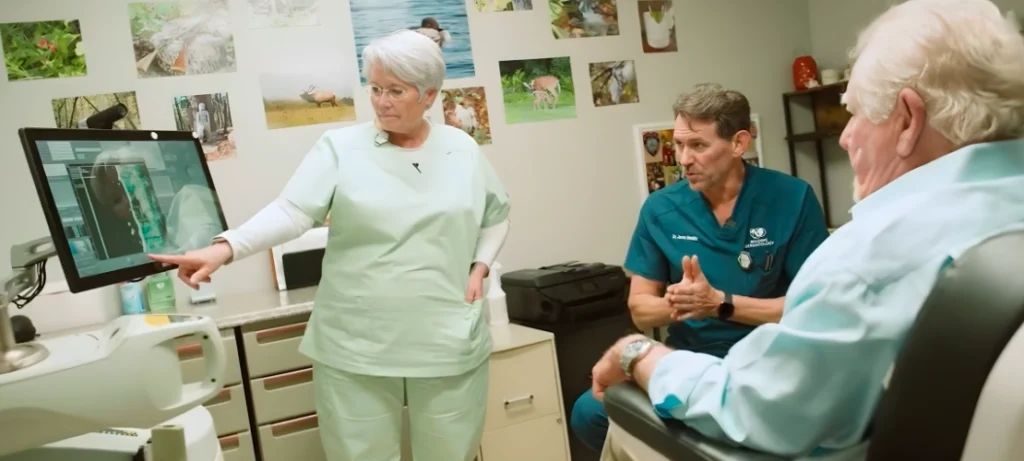
- How IGSRT works: Low-energy X-rays are delivered to the skin where the cancer sits, and ultrasound imaging guides the provider for precision. Used to treat nonmelanoma skin cancers.
- Day-to-day life: No cutting, no surgical scarring, no pain reported by most patients, and no limits to daily activities.
- Effectiveness: GentleCure cites over 99 percent cure rate for basal and squamous cell skin cancers.
IGSRT vs Other Skin Cancer Treatments: Mohs Surgery
Mohs surgery removes cancer layer by layer and examines each layer under a microscope until clear margins are reached. It is highly effective, especially for certain sites, yet it is still a surgical excision that requires local anesthesia and wound care. For a deep comparison, you can explore Mohs treatment options.
Why patients consider IGSRT instead of surgery
- Non-invasive approach with no cutting and no surgical scarring
- Convenience of short, outpatient sessions with little to no downtime
- Strong cure rates for basal and squamous cell cancers
- For a closer look at how both treatments compare side by side, visit our page on IGSRT vs Mohs.
IGSRT vs Other Skin Cancer Treatments: Standard Radiation Therapy
Traditional external beam radiation typically involves higher energy and broader treatment fields. IGSRT concentrates low-level energy at the skin level and adds real-time ultrasound guidance to focus delivery. This precision is especially helpful on the face, scalp, and neck, where cosmetic outcomes matter.
IGSRT vs Other Skin Cancer Treatments: Cryotherapy and Topical Medicines
Freezing or topical therapies like imiquimod or fluorouracil can be options for small or superficial lesions. They may not be ideal for invasive basal or squamous cell cancers due to variable depth control and cosmetic irritation. IGSRT offers physician-guided dosing and imaging throughout the course of care.
IGSRT vs Other Skin Cancer Treatments: Blue Light Therapy
Blue light therapy is effective for actinic keratoses and very superficial cases after a photosensitizing cream is applied. IGSRT is designed to treat confirmed basal and squamous cell skin cancers and uses ultrasound guidance for precision.
FAQ: IGSRT vs Other Skin Cancer Treatments
GentleCure reports over 99 percent cure rate for basal and squamous cell cancers with IGSRT. This rate is comparable to the cure rate for Mohs surgery. Your dermatologist will help you decide which option fits your diagnosis and location.
Most people experience mild to moderate skin irritation or redness in the treated area. There is very little wound care and no limits to daily activities during treatment.
IGSRT can treat several skin cancer lesions simultaneously, which can help reduce downtime compared to multiple surgeries. Your care team will confirm if you’re able to have multiple lesions treated at the same time.
IGSRT is used for nonmelanoma skin cancers, namely basal cell and squamous cell. Your doctor can recommend appropriate treatments for melanoma.
How to Choose Between IGSRT vs Other Skin Cancer Treatments
Each case is unique. Consider cancer type, location, your health, and cosmetic goals. Talk through options with your dermatologist and explore GentleCure resources: