Many people use tanning beds in winter to keep a summer glow or to prepare for vacations, but the truth is that tanning during winter still exposes your skin to harmful UV rays.
Dermatologists agree: there’s no such thing as a safe tan, whether it comes from the sun or a tanning bed.
Why People Tan in Winter
Tanning salons often promote indoor tanning as a way to boost mood or prevent sunburn before travel. However, tanning beds emit ultraviolet (UV) radiation — the same type of energy that causes skin damage and increases the risk of skin cancer.
In fact, a single tanning session can expose your skin to more UV radiation than a full day in the summer sun.
The Truth About UV Rays
There are two main types of UV rays that affect your skin:
- UVA rays penetrate deep into the skin, leading to premature aging, wrinkles, and long-term damage.
- UVB rays affect the skin’s surface and are the main cause of sunburn.
Both types damage skin cells and DNA over time, which increases the risk of developing basal cell skin cancer, squamous cell skin cancer, or melanoma.
Key Takeaways
- There’s no safe level of UV tanning.
- Even occasional tanning adds to cumulative sun damage.
- Skin damage from UV exposure is permanent and builds over time.
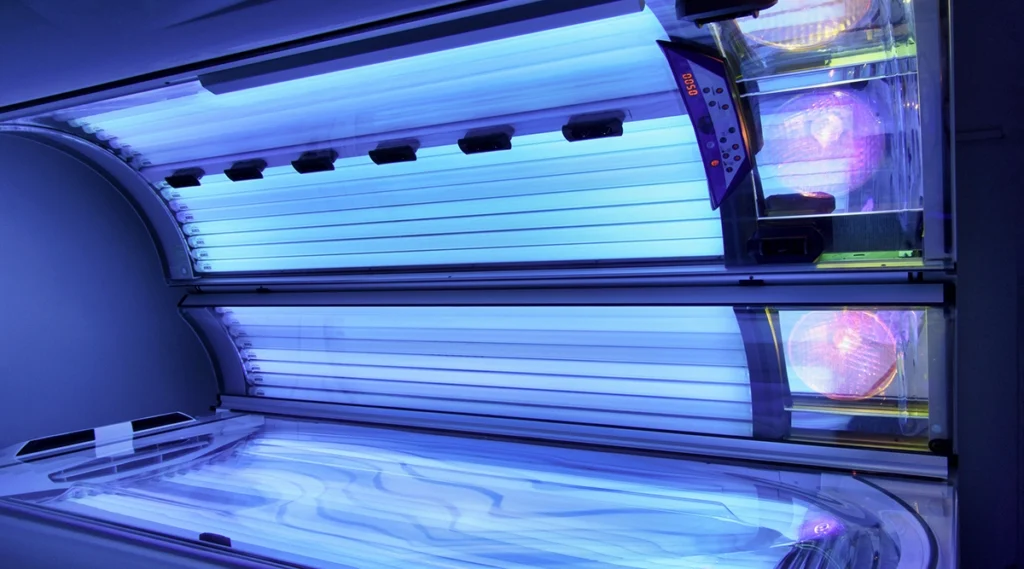
Indoor Tanning vs. Natural Sunlight
| Factor | Indoor Tanning | Natural Sunlight |
| UV Intensity | Artificially concentrated, often stronger than midday sun | Varies with time of day and season |
| Risk | High – direct UV exposure at close range | Lower with SPF protection |
| Control | Continuous, uniform exposure | Can limit with shade or sunscreen |
| Result | Temporary tan, long-term damage | Gradual exposure with proper protection is safer |
Dermatologists caution that tanning beds are one of the leading preventable causes of skin cancer among young adults.
Winter Sunlight Can Still Cause Damage
Even in cold weather, UV radiation remains strong enough to harm your skin. Snow and ice reflect sunlight, which can double your UV exposure during outdoor activities like skiing or hiking.
That’s why daily sunscreen use is just as important in winter as it is in summer.
Safer Alternatives to Tanning
If you prefer a sun-kissed glow, there are safe and dermatologist-approved ways to achieve it:
- Self-tanning lotions or sprays containing DHA (dihydroxyacetone) — safe and non-toxic.
- Gradual bronzing moisturizers that build color slowly.
- Healthy glow makeup for temporary color without UV exposure.
For the best results, exfoliate lightly and moisturize regularly to maintain an even tone.
FAQ: Tanning and Skin Health
Is tanning safer in the winter?
No. Indoor tanning and winter sun both expose your skin to UV radiation that can cause skin cancer.
Can tanning beds help with vitamin D levels?
No. The risks of UV exposure outweigh any potential vitamin D benefits. Safer sources include food, supplements, or limited natural sunlight with sunscreen.
Can tanning a few times a year cause skin cancer?
Yes. UV damage adds up with every exposure, even if tanning is occasional.
Does pre-vacation tanning protect against sunburn?
No. A “base tan” provides minimal protection and still damages the skin. Use broad-spectrum SPF instead.
Commit to Skin Protection
Protecting your skin from unnecessary UV exposure is one of the best ways to prevent skin cancer.
For those diagnosed with basal cell or squamous cell skin cancer, GentleCure / Image-Guided SRT (IGSRT) offers a surgery-free treatment option that uses low-energy X-rays guided by ultrasound imaging to precisely target and destroy cancer cells while preserving healthy skin.
Learn more: