GentleCure Blog

Welcome to the GentleCure Skin Cancer Blog

Thank you for visiting our blog. If you’re looking for information on skin cancer types, skin cancer statistics, general skin cancer facts, sun safety tips, and more information you can trust, you’ve come to the right place. At GentleCure, we are on a mission to empower those with nonmelanoma skin cancer to be educated, active participants in their treatment decisions. Providing you with a breadth of knowledge about skin cancer and its treatment is just one way we can achieve that goal. Learn more below about the types of posts you can expect to find on our blog, then find out how to get in touch with us if you would like to talk with a Skin Cancer Information Specialist.

What topics are covered in our blog?

GentleCure® blog posts will cover everything from basic skin cancer facts and skin cancer statistics to more specific information regarding nonmelanoma skin cancers like basal cell skin cancer and squamous cell skin cancer. You will find answers you can trust to questions like:

  • What is nonmelanoma skin cancer?
  • What are the symptoms of basal cell skin cancer and squamous cell skin cancer?
  • What causes basal and squamous cell skin cancers?
  • Are basal and squamous cell skin cancers deadly? What are their survival rates?
  • How are basal and squamous cell skin cancers treated?

In addition to skin cancer facts and statistics, anyone considering Image-Guided Superficial Radiotherapy (IGSRT) as a surgery-free option for treating their nonmelanoma skin cancer can find helpful information about:

  • How IGSRT works
  • What to expect during treatment with IGSRT
  • How IGSRT compares to Mohs surgery
  • Much more

While past experiences with skin cancer treatment may have left you feeling in the dark and unsure of your options, GentleCure is proud to offer a refreshing approach to nonmelanoma skin cancer treatment by providing in-depth answers to all your questions.

Latest Posts

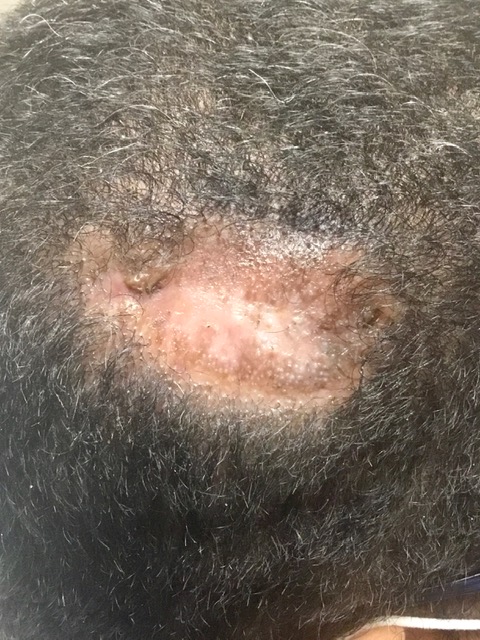
  • Skin cancer on scalp

    What Does Skin Cancer on Your Head Look Like?

    SCan you get skin cancer on your head or scalp? Yes, skin cancer can appear on the scalp, hairline, forehead, temples, neck, ears, or other areas of the head. It may look like a rough patch, red spot, scab that keeps coming back, sore that does not heal, shiny bump, wart-like growth, or mole that…Read More

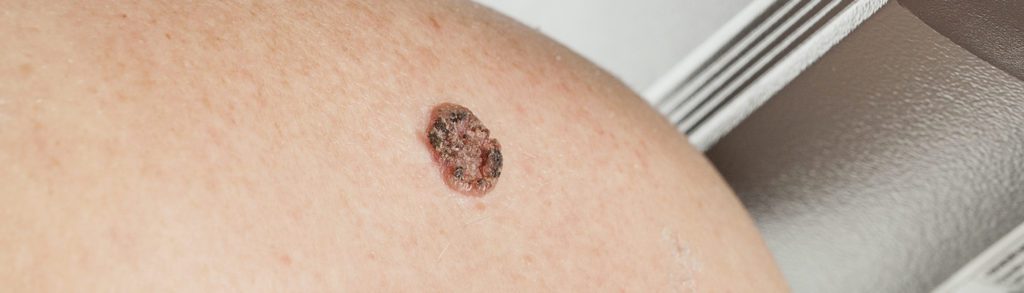
  • Doctor and patient discussing treatment options

    What Does Skin Cancer Look Like? See 8 Real Examples

    Depending on what kind of non-melanoma skin cancer you have and where it appears on the body, skin cancer looks like a variety of sores, lesions, or troublesome raised areas. Early detection is the best form of defense against skin cancer, so in addition to receiving annual skin screenings, use this library of skin cancer…Read More

  • IG-SRT Machine

    Radiotherapy vs. Chemotherapy

    Cancer takes on many forms, leading to a variety of treatment methods to target the source. However, how should you know if you should go with radiotherapy or chemotherapy? What are the radiotherapy side effects? How do they compare to chemotherapy side effects? To understand the differences between radiotherapy vs. chemotherapy, as well as radiotherapy…Read More

  • Skin cancer on lower leg

    How Skin Cancer Appears on Ankles

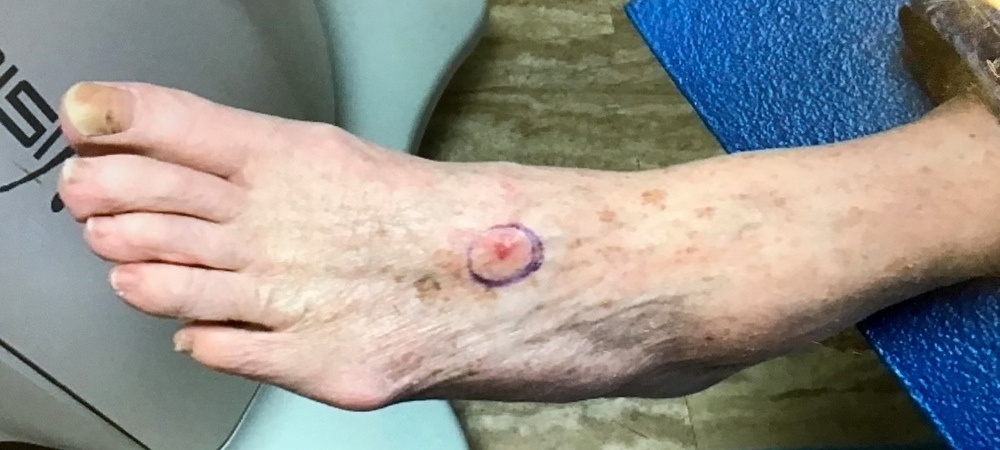
    While most skin cancer appears on the upper half of the body, particularly on the face, head, and neck, you can get skin cancer on your ankle as well. Ankles are more likely to see sun exposure than the rest of your leg, putting them at higher risk. But what does skin cancer look like…Read More

  • Keratinizing squamous cell carcinoma

    Carcinoma vs. Sarcoma

    What is the difference between carcinoma and sarcoma? While they are both related to cancerous tumors, a closer look at carcinoma vs. sarcoma proves that they don’t share much else in common. To understand what separates these two forms of cancer and how they spread, let’s look at their defining characteristics and how they spread. …Read More

  • Infiltrative basal cell skin cancer

    What is Infiltrative Basal Cell Skin Cancer?

    Infiltrative basal cell skin cancer is a variant of basal cell skin cancer, one of the most common skin cancers. This specific type presents differently than other basal cell skin cancers, in that it forms in thin, small clusters, making it more difficult to spot. How dangerous is infiltrative basal cell skin cancer? Learn more…Read More

  • Skin cancer on eyelid

    How Skin Cancer Appears on Eyelids

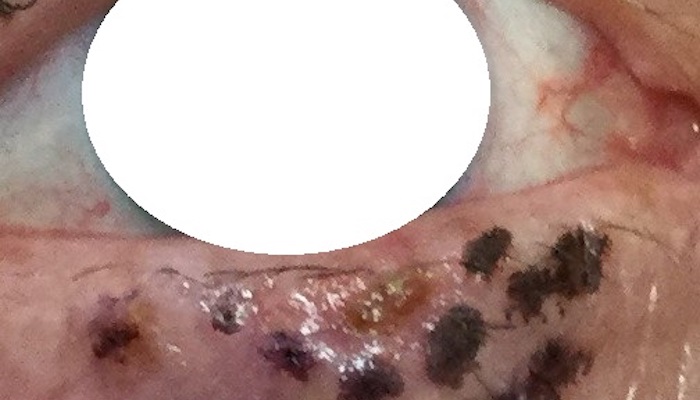
    Can you get cancer on your eyelid? Unfortunately yes; skin cancer on the eyelid is possible, especially since the skin around your eye is thinner than most other areas and therefore more prone to cell damage. What does skin cancer on the eyelid look like? We’ll answer these questions and more with this rundown.  Can…Read More

  • Doctor and patient talking

    Metaplasia vs. Dysplasia

    Researching skin cancer often brings up an entire new vocabulary of scientific terms that can be challenging to understand. When reading about how skin cells become cancerous, you may be asking yourself, “what are metaplasia and dysplasia?” We’re breaking down the differences between metaplasia vs. dysplasia in this guide. What is Metaplasia?  Metaplasia refers to…Read More

  • Dermatologist inspecting a patient's skin

    What is Bowen’s Disease?

    Bowen’s disease is a rare skin disorder that affects the outermost layer of the skin. While the exact causes are unknown, the Bowen’s disease skin disorder is considered as a precursor to squamous cell skin cancer, and is typically classified as a precancerous condition. As with most skin conditions, early detection is one of the…Read More

  • Crusted lesion near the ear circled to show a skin cancer warning sign

    What Does Skin Cancer Look Like on the Face?

    A scaly patch along the hairline is one of several ways skin cancer can appear on the face.Photo Credit: Robert S. Haber, MD What does skin cancer look like on the face? It may appear as a sore that does not heal, a rough or scaly patch, a shiny bump, a firm red or pink…Read More

  • Radiotherapy vs. Mohs Surgery

    If you’ve been diagnosed with skin cancer and are researching treatment options for basal cell or squamous cell skin cancer, you’ll want to compare radiotherapy vs. Mohs surgery. The major difference between the two is that Mohs surgery is more invasive and requires cutting, while radiotherapy is less invasive and requires no cutting. The team…Read More

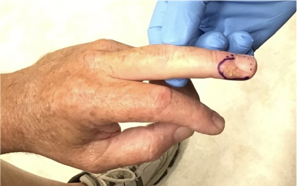
  • Side view of senior man after MOHS surgery

    How to Care for a Wound After Mohs Surgery

    Mohs surgery for skin cancer leaves a wound that may or may not be stitched up depending on its size and depth. In order for the wound to heal properly, proper wound care is essential. Without effective aftercare, bleeding and infection may result. Find out how to care for a wound after Mohs surgery, below….Read More

For more information on skin cancer treatment options, speak with a Skin Cancer Information Specialist today.