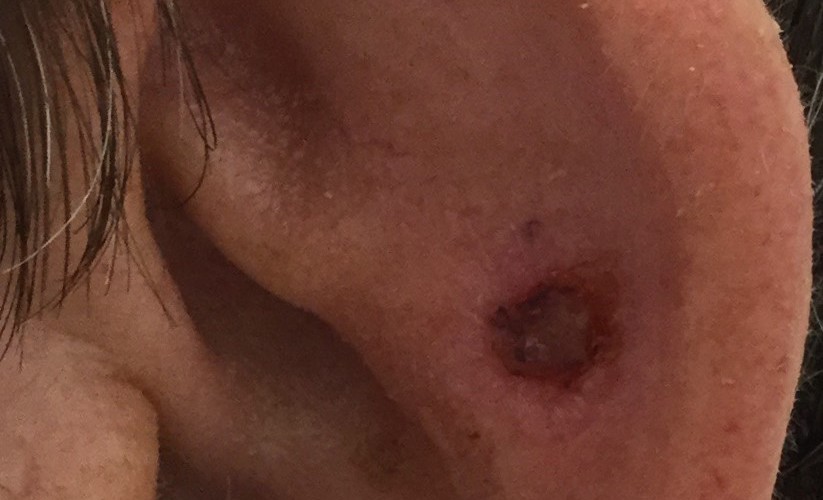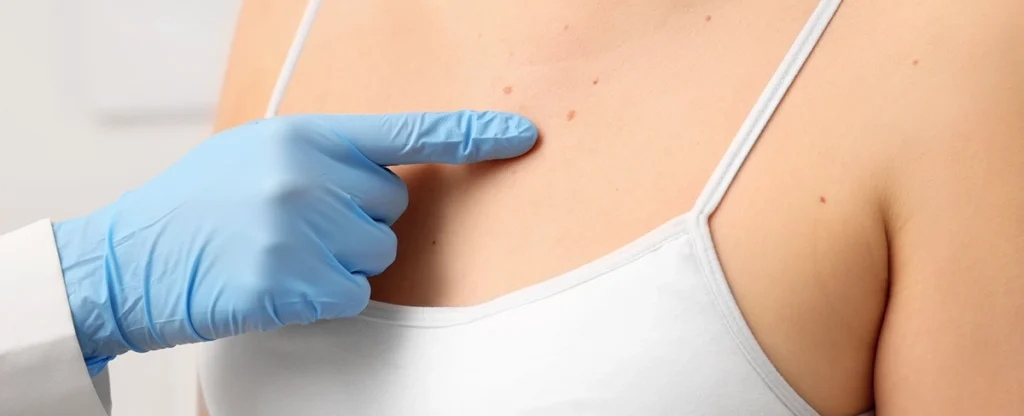
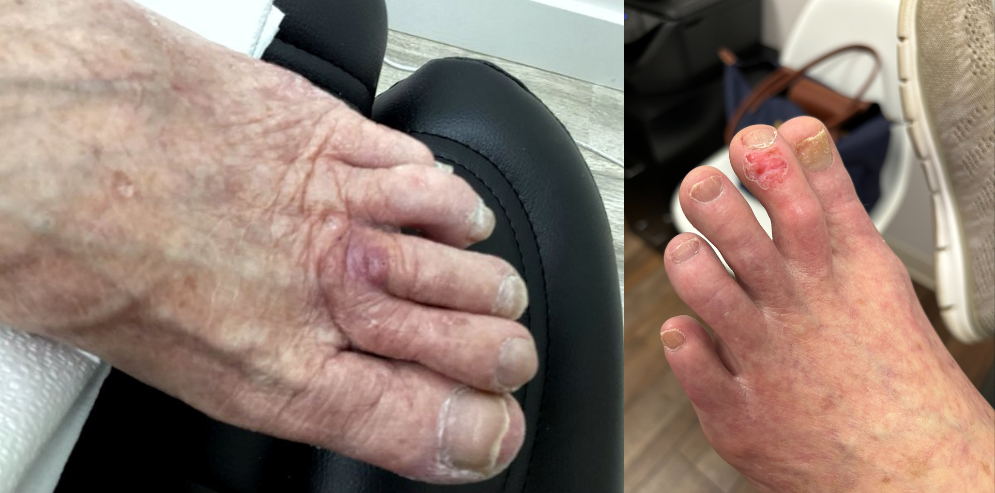
Can you get skin cancer on your toes? Yes, skin cancer can appear on the toes, between the toes, under the toenail, or on the top, bottom, or sides of the foot. It may look like a changing mole, dark spot, rough patch, sore that does not heal, wart-like growth, scab, or discolored area under a toenail.
Although toes are not always exposed to the sun, skin cancer can still develop in this area. Because toe and foot changes are often mistaken for bruises, warts, calluses, nail fungus, or irritation from shoes, any new, changing, or non-healing spot should be checked by a dermatologist or podiatrist.
Signs of Skin Cancer on the Toes
Skin cancer on the toes can be easy to miss because people may not check their feet as closely as their face, arms, or legs. Some spots may look harmless at first, especially if they resemble a wart, blister, bruise, callus, or ingrown toenail.
Signs of skin cancer on the toes may include:
- A mole on the toe that changes in size, shape, color, or texture
- A dark, black, brown, red, pink, or multi-colored spot
- A sore on the toe that does not heal
- A scab, crusted area, or wound that keeps coming back
- A rough, scaly, or irritated patch
- A firm bump or wart-like growth
- A painful, itchy, bleeding, or tender spot
- A dark streak or discolored area under the toenail
- A spot between the toes that changes or does not heal
- A lesion that looks like a callus, wart, blister, or ulcer but does not improve
Basal cell skin cancer may appear as a pearly bump, pink patch, or sore that does not heal. Squamous cell skin cancer may look like a rough, scaly patch, firm bump, wart-like growth, or crusted sore. Melanoma can appear as a changing mole, dark spot, or nail streak and may occur even in areas with limited sun exposure.
What Does Skin Cancer on the Toe Look Like?
Skin cancer on the toe may look different depending on the type of skin cancer and where it appears. It can show up on the skin around the toe, between the toes, near the nail, under the toenail, or on the bottom of the toe.
Skin cancer on the toe may look like:
- A dark spot or mole that changes over time
- A red, pink, brown, black, or unevenly colored lesion
- A rough or scaly patch that does not go away
- A sore, ulcer, or open area that does not heal
- A scab that repeatedly forms in the same place
- A wart-like or callus-like growth
- A dark streak under the toenail
- A nail that changes color, lifts, cracks, or looks damaged without a clear injury
A spot on the toe does not have to be painful to be concerning. Many early skin cancers are painless. If a toe spot changes, grows, bleeds, crusts, or does not heal, schedule a skin cancer screening.
Skin Cancer Under the Toenail
Skin cancer can appear under the toenail, although this is less common. Melanoma under the nail may look like a dark brown or black streak, patch, or discoloration. It may also cause the nail to lift, split, bleed, or change shape.
A dark line under the toenail does not always mean skin cancer. It can be caused by injury, infection, or other conditions. However, it should be checked if it:
- Appears without a known injury
- Gets wider, darker, or changes over time
- Extends onto the skin around the nail
- Affects only one nail
- Is paired with bleeding, pain, nail lifting, or a non-healing sore
Because toenail melanoma can be mistaken for a bruise or nail fungus, it is important to have persistent or changing nail discoloration evaluated by a dermatologist or podiatrist.
Skin Cancer Between the Toes
Skin cancer can also appear between the toes. This area is often overlooked during self-exams and may be mistaken for irritation, athlete’s foot, a blister, or a wound caused by friction.
A spot between the toes should be checked if it does not heal, keeps returning, bleeds, crusts, grows, changes color, or becomes painful. Any mole, sore, scaly patch, or unusual mark between the toes that looks different from the surrounding skin should be evaluated.
When checking your skin, separate the toes and look closely at the spaces between them, the sides of each toe, and the skin near the toenails.
Types of Skin Cancer on the Toes and Feet
The main types of skin cancer that can appear on the toes and feet are basal cell skin cancer, squamous cell skin cancer, and melanoma.
Basal cell skin cancer is less common on the feet than on sun-exposed areas, but it can still occur. It may appear as a shiny or pearly bump, pink patch, open sore, or scab that keeps coming back.
Squamous cell skin cancer is one of the more common types of skin cancer found on the feet. It may look like a rough patch, firm bump, thickened area, wart-like growth, or sore that does not heal. On the toes, it can sometimes be mistaken for a wart, callus, or ulcer.
Melanoma can appear on the toes, soles of the feet, or under the toenails. It may look like a dark, uneven, or changing spot. Some melanomas on the feet may not be dark and can appear pink, red, or skin-colored, which can make them harder to recognize.
Any suspicious or changing spot on the toes or feet should be checked by a medical professional.
How to Check Your Toes for Skin Cancer
Because skin cancer on the toes can be missed, include your feet and toes during regular skin self-exams. Look at the top of the feet, soles, toenails, sides of the toes, and spaces between the toes.
Use the ABCDEs to check moles or dark spots:
- Asymmetry: One half of the spot does not match the other.
- Border: The edges are irregular, jagged, blurred, or poorly defined.
- Color: The spot has more than one color, such as brown, black, red, white, blue, or pink.
- Diameter: The spot is larger than a pencil eraser or continues to grow.
- Evolving: The spot changes in size, shape, color, texture, or symptoms.
The “E” for evolving is especially important. A mole, nail streak, sore, scab, or spot on the toe that changes or does not heal should be evaluated.
Risk Factors for Skin Cancer on the Toes
Skin cancer can develop on the toes even if they do not receive frequent sun exposure. Still, UV exposure can contribute to skin cancer risk, especially for people who wear open-toed shoes, sandals, or go barefoot outdoors.
You may have a higher risk of skin cancer on the toes or feet if:
- You have a personal or family history of skin cancer
- You have many moles or irregularly shaped moles
- You have fair or freckled skin
- You burn easily or have had multiple sunburns
- You use tanning beds, tanning booths, or sunlamps
- You spend time barefoot or in open-toed shoes outdoors
- You have a weakened immune system
- You have had previous skin cancer on another area of the body
- You have a spot, mole, or nail change that continues to evolve
Even without these risk factors, skin cancer can still develop on the toes. Any new, changing, or non-healing spot should be taken seriously.
How to Help Prevent Skin Cancer on the Toes
You cannot prevent every case of skin cancer, but protecting your skin and checking your feet regularly can help lower your risk and support earlier detection.
To help protect your toes and feet:
- Apply broad-spectrum sunscreen with SPF 30 or higher to exposed feet and toes
- Reapply sunscreen every two hours when outdoors, especially after sweating or swimming
- Avoid tanning beds, tanning booths, and sunlamps
- Wear shoes that cover your feet during prolonged sun exposure
- Check the tops, bottoms, sides, and spaces between your toes
- Look for nail changes, dark streaks, or spots under the toenails
- Schedule regular skin exams if you are at higher risk
Do not rely only on sun protection. Because some toe and foot skin cancers can develop in less sun-exposed areas, regular skin checks are still important.
Treatment for Skin Cancer on the Toes
Treatment for skin cancer on the toes depends on the type of skin cancer, size, depth, exact location, and your overall health. A dermatologist may recommend a biopsy to confirm the diagnosis before choosing a treatment plan.
Common treatment options may include:
- Mohs surgery: A surgical technique that removes thin layers of skin and checks them for cancer cells until no cancer remains.
- Surgical removal: A procedure that removes the skin cancer along with a margin of surrounding tissue.
- Image-Guided SRT: A surgery-free treatment option for certain nonmelanoma skin cancers, including basal cell skin cancer and squamous cell skin cancer. It uses ultrasound imaging and targeted radiation to treat cancer cells without cutting or stitches.
- Other treatments: Depending on the diagnosis, options may include topical medication, cryotherapy, photodynamic therapy, immunotherapy, or other approaches recommended by your provider.
Because the toes and feet are important for movement, healing, and comfort, treatment planning should consider the diagnosis, function, cosmetic outcome, and provider recommendation.
FAQ: Skin Cancer on the Toes
Yes, skin cancer can appear on the toes, between the toes, under the toenail, or on the top, bottom, or sides of the foot. It may look like a changing mole, dark spot, sore, scab, wart-like growth, or rough patch.
Skin cancer on the toe may look like a dark spot, changing mole, rough patch, sore that does not heal, scab, firm bump, wart-like growth, or discolored area under a toenail.
Early signs may include a new or changing mole, a sore that does not heal, a scaly patch, a dark spot, a nail streak, or a bump that grows, bleeds, crusts, or becomes painful.
Yes, skin cancer can appear under the toenail. It may look like a dark streak, brown or black patch, nail discoloration, nail lifting, bleeding, or a nail change that does not improve.
A black spot on the toe is not always skin cancer, but it should be checked if it is new, changing, uneven, bleeding, painful, or different from other spots on your skin.
Yes, skin cancer can appear between the toes. It may look like a sore, mole, scaly patch, irritated area, or spot that does not heal. This area should be included in skin self-exams.
Yes, some skin cancers on the toe or foot can look like a wart, callus, blister, or ulcer. A spot that does not improve, keeps returning, grows, bleeds, or changes should be evaluated.
Squamous cell skin cancer is one of the more common skin cancers found on the foot. Basal cell skin cancer and melanoma can also occur on the toes and feet.
Skin cancer on the toes can become more serious if it is not diagnosed and treated. Melanoma can be more aggressive, and squamous cell skin cancer can spread in some cases. Early evaluation is important.
Treatment may include Mohs surgery, surgical removal, Image-Guided SRT, topical treatments, cryotherapy, photodynamic therapy, or other options. The right treatment depends on the diagnosis, cancer type, size, depth, and location.
Image-Guided SRT may be an option for eligible patients with certain nonmelanoma skin cancers, including basal cell skin cancer and squamous cell skin cancer. It is a surgery-free treatment that uses targeted radiation and ultrasound imaging without cutting or stitches.
See a dermatologist or podiatrist if a spot on your toe changes, grows, bleeds, crusts, hurts, itches, does not heal, or looks different from the rest of your skin. You should also schedule an exam for a dark nail streak or toenail change that does not improve.
Learn About Treatment for Skin Cancer on Your Toes With GentleCure®
If you’ve been diagnosed with skin cancer on your toe or foot, GentleCure® may be an option for certain nonmelanoma skin cancers, including basal cell skin cancer and squamous cell skin cancer. GentleCure uses Image-Guided SRT, a surgery-free treatment that targets cancer cells without cutting or stitches.
Treatment recommendations depend on the diagnosis, cancer type, size, depth, location, medical history, and provider recommendation. To learn more, call 855-936-4411 to speak with a Skin Cancer Information Specialist or find a participating dermatology practice near you.