When is non-surgical skin cancer treatment an option? It may be an option for eligible patients with certain nonmelanoma skin cancers, including basal cell skin cancer and squamous cell skin cancer. Eligibility depends on the diagnosis, cancer type, size, depth, location, medical history, and provider recommendation.
Surgery is a common and effective treatment for many skin cancers, but it is not the only option in every case. Some patients may want to know whether they can avoid cutting, stitches, or wound care when it is medically appropriate.
This article explains the main factors that help determine whether a non-surgical treatment option may be considered and when to ask your dermatologist about IGSRT. You can also take the Am I a Candidate? quiz as an initial step.
What Does Non-Surgical Skin Cancer Treatment Mean?
Non-surgical skin cancer treatment refers to treatment that does not remove the skin cancer through cutting or surgical excision.
Depending on the diagnosis, non-surgical skin cancer treatment options may include:
- Image-Guided SRT
- Topical medications
- Cryotherapy
- Photodynamic therapy
- Radiation therapy
- Other provider-recommended treatments
Each option has a different purpose. Some treatments are used for precancerous spots or very superficial skin cancers. Others may be considered for certain nonmelanoma skin cancers.
Non-surgical does not mean casual, cosmetic, or less medical. It simply means the treatment approach does not involve surgically cutting out the cancer.
Which Skin Cancers May Be Considered for Non-Surgical Treatment?
Non-surgical treatment is most commonly discussed for certain nonmelanoma skin cancers, especially basal cell skin cancer and squamous cell skin cancer.
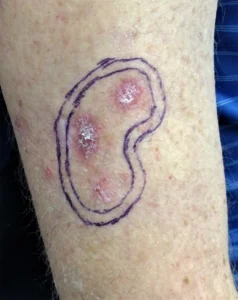
Basal cell skin cancer often grows slowly, but it can still become larger or more difficult to treat if ignored. Depending on the size, depth, subtype, and location, some basal cell skin cancers may be eligible for non-surgical treatment.
Squamous cell skin cancer may also be eligible for non-surgical treatment in certain cases. Eligibility depends on the diagnosis, risk level, size, depth, location, biopsy findings, and provider recommendation.
Melanoma is different. Melanoma can be more aggressive and usually requires prompt, specialized treatment planning. IGSRT is not positioned as a treatment for melanoma.
The diagnosis should always guide the treatment conversation.
When Might Non-Surgical Treatment Be an Option?
Non-surgical treatment may be considered when the skin cancer type, location, and patient factors make it appropriate.
Your dermatologist may discuss a non-surgical option when:
- The diagnosis is basal cell skin cancer or squamous cell skin cancer
- The skin cancer is considered appropriate for non-surgical treatment
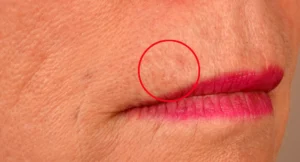
- The lesion is in a cosmetically sensitive area
- The patient wants to avoid cutting, stitches, or surgical scarring if medically appropriate
- Surgery may be less desirable because of healing, wound care, or medical concerns
- The skin cancer is in an area where preserving appearance is important
- The patient wants to compare surgical and non-surgical options
- The dermatologist believes a non-surgical approach fits the diagnosis
This does not mean every basal cell skin cancer or squamous cell skin cancer qualifies. The specific details of the case matter.
To take an initial next step, you can review GentleCure’s Am I a Candidate? quiz.
Why Diagnosis Comes First
Before deciding whether non-surgical treatment is appropriate, a dermatologist needs to confirm what the spot is.
Many skin conditions can look similar, including:
- Benign growths
- Irritated bumps
- Cysts
- Precancerous spots
- Basal cell skin cancer
- Squamous cell skin cancer
- Melanoma
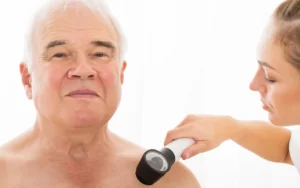
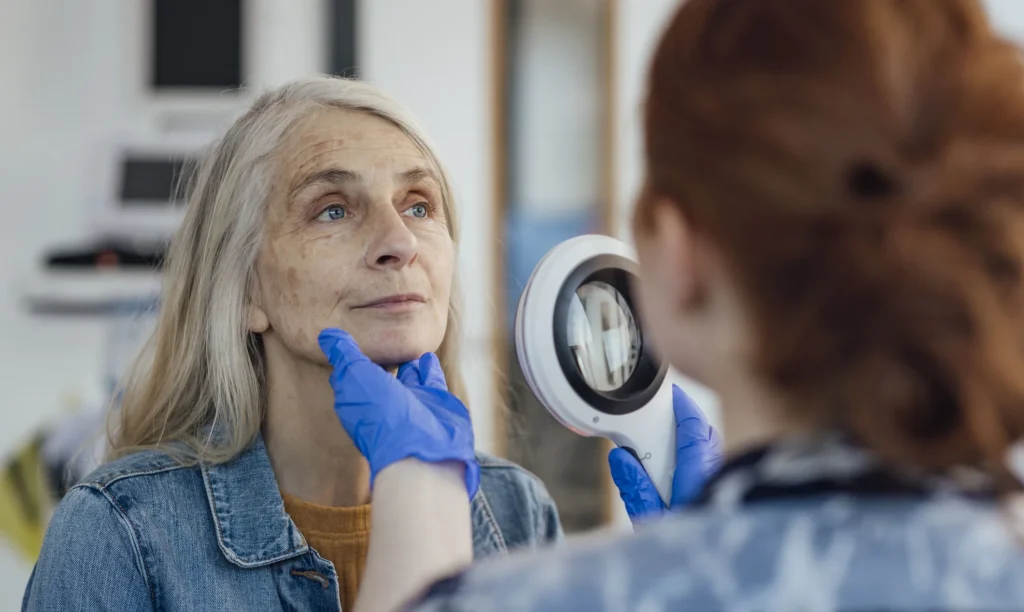
A dermatologist may recommend a skin exam, dermoscopy, or biopsy. A biopsy is often needed to confirm the type of skin cancer and guide treatment planning.
Once the diagnosis is clear, your provider can explain whether surgery, IGSRT, or another treatment option may be appropriate.
Factors That Affect Whether Non-Surgical Treatment Is Appropriate
Treatment decisions are based on more than the skin cancer name. A dermatologist may consider several clinical and patient-specific factors before recommending a treatment plan.
Important factors include:
- Type of skin cancer
- Size of the lesion
- Depth of the cancer
- Location on the body
- Whether the borders are clear or poorly defined
- Whether the skin cancer is new or recurrent
- Whether the area has been treated before
- Biopsy findings
- Immune system status
- Medications and medical history
- Cosmetic concerns
- Functional concerns
- Healing and wound care concerns
- Patient preference
- Provider recommendation
For example, a small nonmelanoma skin cancer on a visible part of the face may lead to a different treatment conversation than a deeper or recurrent skin cancer on another part of the body.
Body Areas Where Non-Surgical Treatment May Be Discussed
Location can be an important part of the treatment conversation. Some areas are more visible, sensitive, or difficult to heal. In these cases, patients may want to understand whether a non-surgical option is available.
Non-surgical treatment may be discussed for certain eligible skin cancers on areas such as:
- Nose
- Ears
- Forehead
- Face
- Scalp
- Neck
- Hands
- Legs
- Other cosmetically sensitive areas
Location alone does not determine eligibility. The cancer type, size, depth, risk level, and provider recommendation still matter.
When Is IGSRT Considered?
IGSRT, also known as Image-Guided SRT, is a non-surgical treatment option for certain nonmelanoma skin cancers, including basal cell skin cancer and squamous cell skin cancer.
For eligible patients, IGSRT may be considered when the patient wants to avoid cutting or stitches, or when the skin cancer is in a cosmetically sensitive area. IGSRT uses imaging and targeted radiation to treat certain nonmelanoma skin cancers over a series of visits.
IGSRT is not appropriate for every patient or every skin cancer. Eligibility depends on the diagnosis, cancer type, size, depth, location, medical history, and provider recommendation.
Anyone who wants to explore whether IGSRT may be right for them can take the treatment quiz.
When Might Surgery Still Be Recommended?
Non-surgical treatment is not always the right choice. Surgery may still be recommended for many skin cancers, especially when the cancer has high-risk features.
Surgery may be recommended when:
- The skin cancer is large or deep
- The borders are poorly defined
- The cancer has returned after previous treatment
- The biopsy shows aggressive features
- The location requires precise margin control
- The provider believes surgery offers the most appropriate treatment plan
- Melanoma is suspected or diagnosed
Mohs surgery may be recommended for some skin cancers, especially in sensitive areas or higher-risk cases. Surgical removal may also be appropriate depending on the diagnosis.
A good treatment plan should be based on the specific case, not only on the patient’s desire to avoid surgery.
How to Know if You May Be a Candidate for Non-Surgical Treatment
The only way to know whether non-surgical treatment is appropriate is to have your diagnosis reviewed by a qualified provider. However, there are a few situations where it may be worth asking about IGSRT or other non-surgical options.
You may want to ask about non-surgical treatment if:
- You have been diagnosed with basal cell skin cancer or squamous cell skin cancer
- You want to avoid cutting or stitches if medically appropriate
- The skin cancer is in a cosmetically sensitive area
- You are concerned about wound care or healing after surgery
- You have medical concerns that may make surgery less desirable
- You want to compare surgical and non-surgical options
- Your dermatologist believes non-surgical treatment may be appropriate
You can also take GentleCure’s Am I a Candidate? quiz to see whether IGSRT may be right for you before speaking with a Skin Cancer Information Specialist or participating dermatology practice.
Questions to Ask Your Dermatologist
If you are interested in non-surgical treatment, ask your dermatologist direct questions about your diagnosis and eligibility. You may also review these questions to consider after your skin cancer treatments.
Helpful questions include:
- What type of skin cancer do I have?
- Is it basal cell skin cancer, squamous cell skin cancer, melanoma, or another diagnosis?
- Is my skin cancer considered low risk or high risk?
- How large and deep is it?
- Is the location cosmetically or functionally sensitive?
- What treatment options are appropriate for my diagnosis?
- Is non-surgical treatment appropriate in my case?
- Is IGSRT an option for me?
- Why would surgery be recommended?
- What are the benefits and limitations of each option?
- What cosmetic outcome can I expect?
- What follow-up will I need after treatment?
The answers to these questions can help you understand why a provider recommends one treatment option over another.
Why Early Evaluation Matters
Early diagnosis can make treatment planning easier. Smaller or earlier skin cancers may have more treatment options than skin cancers that have grown, changed, or returned after treatment.
Schedule a skin cancer screening if you notice:
- A sore that does not heal
- A scab that keeps coming back
- A rough, scaly, or crusted patch
- A shiny or pearly bump
- A firm red bump
- A wart-like growth
- A mole that changes
- A spot that bleeds, hurts, itches, or grows
- A spot that looks different from others on your skin
A dermatologist can determine whether the spot needs monitoring, biopsy, or treatment.
FAQ: Non-Surgical Skin Cancer Treatment
Is non-surgical skin cancer treatment an option?
Yes, non-surgical treatment may be an option for eligible patients with certain skin cancers, especially some nonmelanoma skin cancers such as basal cell skin cancer and squamous cell skin cancer.
Can skin cancer be treated without surgery?
Some skin cancers can be treated without surgery, but not all. Eligibility depends on the diagnosis, cancer type, size, depth, location, medical history, and provider recommendation.
What is IGSRT?
IGSRT, also known as Image-Guided SRT, is a non-surgical treatment option for certain nonmelanoma skin cancers. It uses imaging and targeted radiation to treat eligible basal cell skin cancers and squamous cell skin cancers without cutting, stitches, or downtime.
Who may be a candidate for IGSRT?
A candidate may be someone diagnosed with certain nonmelanoma skin cancers, such as basal cell skin cancer or squamous cell skin cancer, when a provider determines that IGSRT is appropriate based on the cancer type, size, depth, location, and medical history.
Is IGSRT an option for basal cell skin cancer?
IGSRT may be an option for eligible patients with certain basal cell skin cancers. A dermatologist can determine whether it is appropriate based on the diagnosis, location, size, depth, and other clinical factors.
Is IGSRT an option for squamous cell skin cancer?
IGSRT may be an option for eligible patients with certain squamous cell skin cancers. Treatment decisions depend on risk level, size, depth, location, biopsy findings, and provider recommendation.
Is IGSRT used for melanoma?
IGSRT is not positioned as a treatment for melanoma. Melanoma can be more aggressive and usually requires prompt, specialized treatment planning.
Is non-surgical treatment better than Mohs surgery?
Not necessarily. The best treatment depends on the type of skin cancer, size, depth, location, risk level, and provider recommendation. Mohs surgery may be best for some cases, while non-surgical options may be appropriate for others.
How do I know if non-surgical treatment is right for me?
A dermatologist can determine whether non-surgical treatment is appropriate after reviewing your diagnosis, cancer type, size, depth, location, medical history, and treatment goals. You can also take GentleCure’s Am I a Candidate? quiz as an initial step.
Should I ask for a second opinion before choosing treatment?
A second opinion may be helpful if you are unsure about your diagnosis, treatment plan, surgery recommendation, cosmetic outcome, or whether non-surgical treatment may be appropriate.
What should I do after a skin cancer diagnosis?
Ask your provider what type of skin cancer you have, whether it is low risk or high risk, what treatment options are available, and whether IGSRT or another non-surgical option may be appropriate.
Learn More About Non-Surgical Skin Cancer Treatment With GentleCure®
If you have been diagnosed with certain nonmelanoma skin cancers, you may have more than one treatment option. A dermatologist can help you understand whether surgery, IGSRT, or another treatment approach is appropriate for your case.
GentleCure offers IGSRT, also known as Image-Guided SRT, a non-surgical treatment option for certain nonmelanoma skin cancers. For eligible patients, it may help treat basal cell skin cancer or squamous cell skin cancer without cutting, stitches, or downtime.
Treatment recommendations depend on the diagnosis, cancer type, size, depth, location, medical history, and provider recommendation. To learn more, call 855-936-4411 to speak with a Skin Cancer Information Specialist, find a participating dermatology practice near you, or take the Am I a Candidate? quiz to see whether IGSRT may be right for you.