When should you get a second opinion for skin cancer treatment? You may want one if you feel unsure about your diagnosis, treatment plan, surgery recommendation, cosmetic outcome, recovery time, or whether non-surgical options may be appropriate. A second opinion can help you feel more informed before moving forward.
Getting a second opinion does not mean you distrust your dermatologist. It means you want to understand your diagnosis, compare appropriate options, and feel confident about the next step, especially if the skin cancer is on a visible, sensitive, or functionally important area.
What Is a Second Opinion for Skin Cancer?
A second opinion is when another qualified healthcare provider reviews your skin cancer diagnosis, biopsy results, treatment recommendation, and medical history.
The goal is not always to change the plan. Sometimes a second opinion confirms the original recommendation. Other times, it may clarify your risk level, explain additional treatment options, or help you understand why one approach is preferred.
A second opinion may include:
- Reviewing your biopsy or pathology report
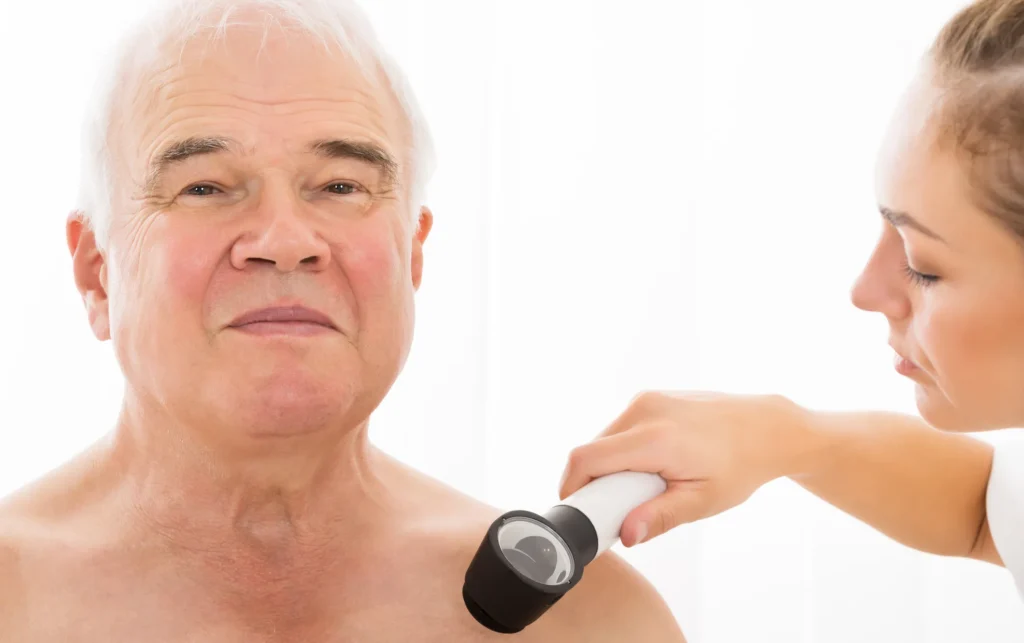
- Examining the skin cancer site
- Looking at the size, location, and visible borders
- Reviewing your medical history and medications
- Discussing prior skin cancers or treatments
- Comparing appropriate treatment options
- Explaining healing, recovery, and cosmetic expectations
- Answering questions about surgery or non-surgical treatment
This can be especially helpful if you feel rushed, confused, or unsure about what your diagnosis means.
When Should You Consider a Second Opinion?
You may want to consider a second opinion if your diagnosis or treatment plan feels unclear. This is especially true when the recommended treatment involves surgery on a visible or sensitive area, or when you want to understand whether other medically appropriate skin cancer treatment options exist.
A second opinion may be helpful if:
- You do not fully understand your biopsy results
- You are unsure what type of skin cancer you have
- You were told surgery is needed and want to understand why
- You want to compare surgical and non-surgical options
- You are concerned about scarring, stitches, or wound care
- The skin cancer is near the eyes, nose, lips, ears, scalp, hands, fingers, toes, or genitals
- The cancer has returned after previous treatment
- The spot is large, deep, fast-growing, or high risk
- You have a weakened immune system
- You have several treatment options and are unsure how to compare them
- You want to know whether IGSRT may be appropriate
- You feel uncomfortable moving forward without more information
A second opinion should not create unnecessary delays. If your provider says treatment is urgent, ask how quickly you need to act and whether there is time for another review.
Why Second Opinions Matter for Visible or Sensitive Areas
Skin cancer treatment decisions can affect both health and appearance. This is why patients often seek a second opinion when skin cancer appears on a visible, sensitive, or functionally important area.
These areas may include:
- Nose
- Ears
- Lips
- Eyelids
- Forehead
- Scalp
- Hands
- Fingers
- Feet
- Toes
- Areas near joints
- Areas where the skin has been treated before
In these locations, patients may want to understand how each treatment option could affect scarring, wound care, healing time, function, and cosmetic outcome.
A second opinion can help you ask more specific questions before choosing treatment.
Second Opinion Before Mohs Surgery
Mohs surgery is commonly recommended for certain skin cancers, especially those on cosmetically or functionally important areas, recurrent skin cancers, or cancers with higher-risk features. It can be an effective treatment option for many basal cell skin cancers and squamous cell skin cancers.
You may want a second opinion before Mohs surgery if:
- You want to understand why Mohs was recommended
- You want to compare Mohs surgery with other appropriate options
- You are concerned about stitches, wound care, or downtime
- The skin cancer is on your face, nose, ear, lips, scalp, hand, or another sensitive area
- You have medical concerns that may affect healing
- You want to know whether IGSRT may be appropriate
- You want clarity on expected recovery and follow-up
A second opinion may confirm that Mohs surgery is the best choice. It may also help you better understand the differences between IGSRT and Mohs surgery and whether a non-surgical option could be appropriate for your specific diagnosis.
Second Opinion for Non-Surgical Skin Cancer Treatment
Some patients seek a second opinion because they want to know whether skin cancer can be treated without surgery. Non-surgical treatment may be an option for certain nonmelanoma skin cancers, but it is not appropriate for every diagnosis.
A second opinion can help clarify:
- Whether your skin cancer type may qualify for non-surgical treatment
- Whether the size, depth, and location make non-surgical treatment appropriate
- Whether the cancer has high-risk features
- Whether surgery is strongly recommended
- Whether IGSRT is an option
- What follow-up would be needed after treatment
- What outcome you can reasonably expect
Non-surgical treatment should still be medically appropriate. The goal is not simply to avoid surgery, but to choose a treatment that fits the diagnosis, risk level, location, and patient needs.
You can also take GentleCure’s Am I a Candidate? quiz as an initial step before speaking with a Skin Cancer Information Specialist or participating dermatology practice.
What Information Should You Bring to a Second Opinion?
Bringing the right information can make a second opinion more useful. Before the appointment, ask your current provider for copies of your records.
Helpful information may include:
- Biopsy or pathology report
- Photos of the skin cancer, if available
- Dermatology visit notes
- Previous treatment records
- List of current medications
- Medical history
- History of previous skin cancers
- History of radiation treatment in the area
- Information about immune system conditions or organ transplant history
- Questions about treatment options, recovery, and cosmetic outcome
The biopsy report is especially important because it confirms the diagnosis and may include details that affect treatment planning.
Questions to Ask During a Second Opinion
A second opinion is your chance to understand the diagnosis, compare appropriate options, and clarify the treatment plan. You may also review these questions to consider after your skin cancer treatments.
Helpful questions include:
- What type of skin cancer do I have?
- Is it basal cell skin cancer, squamous cell skin cancer, melanoma, or another diagnosis?
- Is my case considered low risk or high risk?
- What factors affect my risk level?
- How large and deep is the skin cancer?
- Is the location cosmetically or functionally sensitive?
- Why was this treatment recommended?
- What are my treatment options?
- Is surgery necessary in my case?
- Is Mohs surgery appropriate for this diagnosis?
- Is IGSRT an option for me?
- What are the benefits and limitations of each option?
- What cosmetic outcome can I expect?
- What recovery or wound care should I expect?
- What follow-up will I need after treatment?
- What happens if I delay treatment?
These questions can help you compare recommendations more clearly.
How to Compare Skin Cancer Treatment Recommendations
When comparing treatment recommendations, it is important to look beyond convenience alone. The best treatment is the one that is appropriate for your diagnosis and gives you a strong chance of treating the skin cancer while considering healing, function, appearance, and your health needs.
Factors to compare include:
- Confirmed diagnosis
- Whether the cancer is low risk or high risk
- Size and depth
- Location on the body
- Whether the margins need close evaluation
- Number of visits required
- Need for cutting or stitches
- Expected healing time
- Wound care needs
- Cosmetic outcome
- Follow-up schedule
- Whether the treatment is appropriate for your medical history
- Provider experience with the treatment
If recommendations are different, ask each provider to explain why they prefer one option for your case.
Should You Get a Second Opinion for Basal Cell Skin Cancer?
You may want a second opinion for basal cell skin cancer if the treatment plan is unclear, the cancer is on a sensitive area, or you want to know whether non-surgical treatment may be appropriate.
Basal cell skin cancer often grows slowly, but it should still be treated appropriately. If ignored, it can become larger, deeper, or more difficult to treat.
A second opinion may help you understand:
- Why surgery or Mohs surgery was recommended
- Whether IGSRT may be an option
- Whether the location affects treatment choice
- What cosmetic outcome to expect
- What follow-up is needed after treatment
Should You Get a Second Opinion for Squamous Cell Skin Cancer?
You may want a second opinion for squamous cell skin cancer if the case is high risk, recurrent, on a sensitive area, or if you are unsure about the recommended treatment.
Squamous cell skin cancer can sometimes grow more quickly than basal cell skin cancer and may require more careful treatment planning, especially when high-risk features are present.
A second opinion may help you understand:
- Whether the cancer is low risk or high risk
- Whether the biopsy shows concerning features
- Whether surgery, Mohs surgery, IGSRT, or another option is appropriate
- Whether additional evaluation is needed
- What follow-up schedule is recommended
Should You Get a Second Opinion if Melanoma Is Suspected?
If melanoma is suspected or diagnosed, it is important to follow your provider’s guidance promptly. Melanoma can be more aggressive than common nonmelanoma skin cancers and may require specialized treatment planning.
A second opinion may be appropriate for melanoma, especially if you want confirmation from a specialist or have questions about treatment. However, do not delay care without discussing timing with your provider.
IGSRT is not positioned as a treatment for melanoma.
Can a Second Opinion Change Your Treatment Plan?
Yes, a second opinion can sometimes change the treatment plan. It may confirm the first recommendation, suggest another option, clarify the diagnosis, or help you better understand the reason behind a recommended treatment.
A second opinion may lead to:
- Confirmation that the original treatment plan is appropriate
- A different treatment recommendation
- Additional biopsy or pathology review
- More clarity about risk level
- A discussion of non-surgical treatment options
- A better understanding of cosmetic or healing expectations
- More confidence before moving forward
Even if the recommendation stays the same, a second opinion can still be valuable because it may help you feel more informed.
How to Ask for a Second Opinion
You can ask directly and respectfully. Many patients seek second opinions, and healthcare providers are used to these requests.
You might say:
“I’d like to better understand my treatment options before moving forward. Can I get a copy of my biopsy report and records for a second opinion?”
Or:
“Before scheduling treatment, I’d like to ask whether there is time for a second opinion and how soon treatment should begin.”
It is also reasonable to ask your provider whether waiting for a second opinion is safe in your case. Some skin cancers should be treated more quickly than others. If you have not yet received a confirmed diagnosis, a skin cancer screening may be an appropriate first step.
FAQ: Second Opinion for Skin Cancer Treatment
Should I get a second opinion for skin cancer treatment?
You may want a second opinion if you are unsure about your diagnosis, treatment plan, surgery recommendation, cosmetic outcome, recovery time, or whether non-surgical treatment may be appropriate.
Is it normal to get a second opinion before Mohs surgery?
Yes. Some patients seek a second opinion before Mohs surgery to better understand why it was recommended, what recovery may involve, and whether other options may be appropriate.
Can I get a second opinion after a biopsy?
Yes. A second opinion after biopsy can help confirm the diagnosis and explain which treatment options fit your specific skin cancer type, size, depth, and location.
What should I bring to a skin cancer second opinion?
Bring your biopsy or pathology report, dermatology notes, photos if available, previous treatment records, medication list, medical history, and questions about treatment options.
Can a second opinion confirm whether I need surgery?
Yes. A second opinion can help explain whether surgery is recommended, why it may be appropriate, and whether non-surgical options may be considered for your case.
Can I ask about IGSRT during a second opinion?
Yes. If you have been diagnosed with certain nonmelanoma skin cancers, you can ask whether IGSRT is an option. Eligibility depends on cancer type, size, depth, location, medical history, and provider recommendation.
Is IGSRT an option instead of Mohs surgery?
IGSRT may be an option for eligible patients with certain nonmelanoma skin cancers, while Mohs surgery may be recommended for other cases. The right choice depends on the diagnosis, risk level, location, and provider recommendation.
Should I take the Am I a Candidate? quiz before getting a second opinion?
You can take the Am I a Candidate? quiz as an initial step if you want to explore whether IGSRT may be worth discussing. A provider still needs to review your diagnosis and medical details before making a treatment recommendation.
Should I delay skin cancer treatment to get a second opinion?
Do not delay treatment without asking your provider. Some skin cancers can wait briefly for another review, while others may need more urgent treatment. Ask how soon treatment should begin.
Will my dermatologist be upset if I ask for a second opinion?
Most healthcare providers understand that patients may want a second opinion before making treatment decisions. Asking for your records and more information is a normal part of patient care.
Can a second opinion change my skin cancer diagnosis?
It can happen, especially if the biopsy or pathology is reviewed again. More commonly, a second opinion helps clarify risk level, treatment options, and the reason for a recommended plan.
Should I get a second opinion for basal cell skin cancer?
A second opinion may be helpful if the basal cell skin cancer is on a sensitive area, the treatment plan is unclear, or you want to ask about non-surgical options.
Should I get a second opinion for squamous cell skin cancer?
A second opinion may be helpful if the squamous cell skin cancer is high risk, recurrent, on a sensitive area, or if you want to compare surgery, IGSRT, and other treatment options.
Learn More About Skin Cancer Treatment Options With GentleCure®
A second opinion can help you better understand your diagnosis, treatment options, and what to expect before moving forward. It can also help you ask whether a non-surgical option may be appropriate for your case.
GentleCure uses IGSRT, also known as Image-Guided SRT, a non-surgical treatment option for certain nonmelanoma skin cancers. For eligible patients, it may help treat basal cell skin cancer or squamous cell skin cancer without cutting, stitches, or surgical scarring.
Treatment recommendations depend on the diagnosis, cancer type, size, depth, location, medical history, and provider recommendation. To learn more, call 855-936-4411 to speak with a Skin Cancer Information Specialist, find a participating dermatology practice near you, or take the Am I a Candidate? quiz to see whether IGSRT may be right for you.