
What is the difference between actinic keratosis and squamous cell skin cancer? Actinic keratosis is a precancerous skin growth caused by long-term UV damage. Squamous cell skin cancer is a type of skin cancer that can sometimes develop from untreated actinic keratosis.
Both conditions often appear on sun-exposed skin and may look rough, scaly, crusted, red, pink, or irritated. Because they can look similar, a dermatologist should evaluate any persistent, changing, bleeding, painful, or non-healing spot.
What Is Actinic Keratosis?
Actinic keratosis is a precancerous skin growth that develops after long-term exposure to ultraviolet (UV) radiation from the sun or indoor tanning. It is sometimes called solar keratosis.
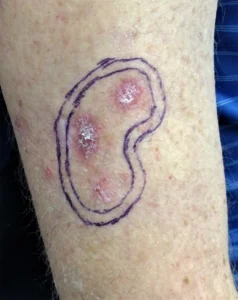
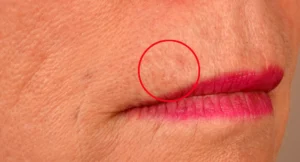
Actinic keratoses often appear as rough, dry, scaly, or crusted patches. They may be easier to feel than see, especially in the early stages. Some people describe them as feeling like sandpaper.
Actinic keratosis is not the same as skin cancer, but it matters because some actinic keratoses can turn into squamous cell skin cancer over time. Treating actinic keratosis can help reduce the chance that it becomes more serious.
What Is Squamous Cell Skin Cancer?
Squamous cell skin cancer is a common type of skin cancer that begins in squamous cells, which are found in the outer layer of the skin.
Squamous cell skin cancer often appears on sun-exposed areas, such as the face, ears, scalp, lips, neck, arms, hands, and legs. It may look like a rough patch, firm bump, crusted sore, wart-like growth, or open sore that does not heal.
Squamous cell skin cancer can usually be treated effectively when found early. However, it can become more serious if it grows deeper, returns after treatment, or spreads. This is why early diagnosis and treatment are important.
Why Actinic Keratosis and Squamous Cell Skin Cancer Are Often Compared
Actinic keratosis and squamous cell skin cancer are often compared because they are both linked to UV damage and often appear on similar parts of the body. They can also look and feel similar.
A rough, scaly patch on the face, scalp, ear, hand, or arm may be actinic keratosis, but it may also be an early skin cancer or another skin condition. Since appearance alone is not always enough to tell the difference, a dermatologist may recommend monitoring, treatment, a skin cancer screening, or a biopsy.
The main difference is that actinic keratosis is considered precancerous, while squamous cell skin cancer is cancer.
Actinic Keratosis vs Squamous Cell Skin Cancer: Key Differences
| Feature | Actinic Keratosis | Squamous Cell Skin Cancer |
|---|---|---|
| What it is | A precancerous skin growth | A type of skin cancer |
| Main cause | Long-term UV damage | UV damage and other risk factors |
| Common appearance | Rough, dry, scaly, crusted, pink, red, or skin-colored patch | Firm bump, rough patch, crusted sore, wart-like growth, or non-healing sore |
| Common locations | Face, scalp, ears, lips, neck, forearms, hands | Face, ears, scalp, lips, neck, arms, hands, legs, and other areas |
| Symptoms | May feel rough, tender, itchy, or irritated | May bleed, crust, grow, hurt, or fail to heal |
| Cancer status | Precancerous | Cancerous |
| Treatment goal | Remove or treat abnormal cells before they progress | Treat the skin cancer and reduce risk of recurrence or spread |
This table is a general guide. A dermatologist can determine what a specific spot is and whether a biopsy is needed.
What Does Actinic Keratosis Look Like?
Actinic keratosis can vary in appearance. It may be small or widespread, flat or slightly raised, and pink, red, tan, brown, or skin-colored.
Common signs of actinic keratosis include:
- A rough, dry, or scaly patch
- A crusted area that does not go away
- A patch that feels like sandpaper
- A pink, red, tan, brown, or skin-colored spot
- A tender, itchy, burning, or irritated area
- A rough patch on the face, scalp, ears, lips, hands, or forearms
- A spot that improves and then returns
Actinic keratoses may be easier to feel than see. If you notice a rough patch that keeps returning or does not improve, schedule a dermatology exam.
What Does Squamous Cell Skin Cancer Look Like?
Squamous cell skin cancer can also appear in several ways. It may start as a rough patch, firm bump, crusted sore, or thickened area.
Common early signs of skin cancer that may be associated with squamous cell skin cancer include:
- A firm red or pink bump
- A rough, scaly, or crusted patch
- A sore that does not heal
- A wart-like growth
- A thickened or raised area
- A spot that bleeds, crusts, or oozes
- A tender, painful, or itchy lesion
- A spot that grows or changes over time
Squamous cell skin cancer may develop from actinic keratosis, but it can also appear without a known previous precancerous spot.
When Should You Be Concerned About Actinic Keratosis?
Actinic keratosis should be evaluated because it is a sign of sun-damaged skin and can sometimes progress to squamous cell skin cancer.
You should schedule a dermatology exam if a rough or scaly spot:
- Does not go away
- Keeps coming back
- Becomes painful or tender
- Bleeds, crusts, or oozes
- Grows or becomes thicker
- Changes color, size, or texture
- Appears on the face, scalp, ears, lips, neck, hands, or forearms
- Looks different from other spots on your skin
Do not try to remove or scrape off a suspicious spot at home. A dermatologist can determine whether it is actinic keratosis, squamous cell skin cancer, or another condition.
Can Actinic Keratosis Turn Into Squamous Cell Skin Cancer?
Yes, some actinic keratoses can turn into squamous cell skin cancer. Not every actinic keratosis will become cancer, but it is not possible to know by looking which ones will progress.
This is why dermatologists often recommend treating actinic keratoses rather than ignoring them. Treatment can remove abnormal cells and reduce the chance of progression.
Having actinic keratoses can also be a sign that your skin has had significant UV damage. People with actinic keratoses may need regular skin checks and consistent sun protection.
How Are Actinic Keratosis and Squamous Cell Skin Cancer Diagnosed?
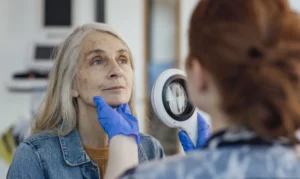
A dermatologist may diagnose actinic keratosis by examining the skin. In some cases, the dermatologist may use a dermatoscope, a tool that helps look more closely at the skin.
If a spot looks suspicious, has changed, is thick, painful, bleeding, or does not heal, a biopsy may be recommended. During a biopsy, a small sample of tissue is removed and examined to determine whether the spot is actinic keratosis, squamous cell skin cancer, or another condition.
A biopsy can help guide the right treatment plan.
How Is Actinic Keratosis Treated?
Treatment for actinic keratosis depends on the number of spots, their location, appearance, and your provider’s recommendation.
Common treatment options may include:
- Cryotherapy: Freezing the spot with liquid nitrogen.
- Topical medication: Prescription creams or gels that treat abnormal cells.
- Photodynamic therapy: A treatment that uses a light-sensitive medication and a special light source.
- Curettage: A procedure that removes the abnormal area by scraping.
- Laser treatment: A treatment that may be used in selected cases.
- Chemical peel: A treatment that may be used for some widespread sun-damaged areas.
Your dermatologist can recommend the best approach based on your skin, the number of lesions, and your risk factors.
How Is Squamous Cell Skin Cancer Treated?
Treatment for squamous cell skin cancer depends on the diagnosis, cancer size, depth, location, biopsy findings, recurrence history, and overall health. Your dermatologist can explain how to treat squamous cell skin cancer based on your individual diagnosis.
Common treatment options may include:
- Mohs surgery: A surgical technique that removes thin layers of skin and checks them for cancer cells until no cancer remains.
- Surgical removal: A procedure that removes the skin cancer along with a margin of surrounding tissue.
- Image-Guided SRT: A non-surgical treatment option for certain nonmelanoma skin cancers, including squamous cell skin cancer.
- Other treatments: Depending on the diagnosis, options may include topical medication, cryotherapy, photodynamic therapy, radiation therapy, immunotherapy, or other approaches recommended by your provider.
Treatment should be guided by a dermatologist or healthcare provider who can evaluate the specific skin cancer and recommend the right next step.
Is IGSRT Used for Actinic Keratosis or Squamous Cell Skin Cancer?
IGSRT, also known as Image-Guided SRT, is not positioned as a treatment for actinic keratosis. Actinic keratosis is usually treated with options such as cryotherapy, topical medication, photodynamic therapy, curettage, laser treatment, or other approaches recommended by a dermatologist.
IGSRT may be an option for eligible patients with certain nonmelanoma skin cancers, including squamous cell skin cancer and basal cell skin cancer. Image-Guided SRT uses imaging and targeted radiation to treat certain nonmelanoma skin cancers without cutting, stitches, or surgical scarring.
Eligibility depends on the diagnosis, cancer type, size, depth, location, medical history, and provider recommendation.
How to Help Reduce Your Risk
Because both actinic keratosis and many squamous cell skin cancers are linked to UV damage, sun protection is important.
To help reduce your risk:
- Use broad-spectrum sunscreen with SPF 30 or higher
- Reapply sunscreen every two hours when outdoors
- Reapply after swimming, sweating, or toweling off
- Wear a wide-brimmed hat
- Wear sunglasses with UV protection
- Use sun-protective clothing when possible
- Seek shade when UV exposure is strongest
- Avoid tanning beds, tanning booths, and sunlamps
- Check your skin regularly for new or changing spots
- Schedule regular skin exams if you have risk factors or a history of skin cancer
Sun protection cannot reverse all previous UV damage, but it can help reduce additional damage and support early detection.
FAQ: Actinic Keratosis vs Squamous Cell Skin Cancer
Is actinic keratosis the same as squamous cell skin cancer?
No. Actinic keratosis is a precancerous skin growth, while squamous cell skin cancer is a type of skin cancer. Some actinic keratoses can turn into squamous cell skin cancer over time.
What does actinic keratosis look like?
Actinic keratosis may look like a rough, dry, scaly, crusted, pink, red, tan, brown, or skin-colored patch. It often appears on sun-exposed areas such as the face, scalp, ears, lips, hands, and forearms.
What does squamous cell skin cancer look like?
Squamous cell skin cancer may look like a firm bump, rough patch, crusted sore, wart-like growth, thickened area, or sore that does not heal. It may bleed, crust, grow, or become tender.
Can actinic keratosis turn into skin cancer?
Yes, some actinic keratoses can turn into squamous cell skin cancer. Not every actinic keratosis becomes cancer, but dermatologists often recommend treatment because it is not possible to know which spots will progress.
How can I tell the difference between actinic keratosis and squamous cell skin cancer?
You may not be able to tell the difference by looking. Both can appear rough, scaly, crusted, or irritated. A dermatologist can examine the spot and may recommend a biopsy if it looks suspicious.
Should actinic keratosis be treated?
Often, yes. Dermatologists commonly treat actinic keratosis to remove abnormal cells and reduce the chance that it becomes more serious. The right treatment depends on the number, location, and appearance of the spots.
Is actinic keratosis dangerous?
Actinic keratosis is not skin cancer, but it is considered precancerous. It should be evaluated because some actinic keratoses can progress to squamous cell skin cancer.
Is squamous cell skin cancer dangerous?
Squamous cell skin cancer can become more serious if it is not diagnosed and treated. Many cases are treated effectively when found early, but some can grow deeply, return, or spread.
Does actinic keratosis require surgery?
Not usually. Actinic keratosis is often treated with cryotherapy, topical medication, photodynamic therapy, curettage, laser treatment, or other dermatologist-recommended options. Surgery may be considered in certain cases if there is concern for skin cancer.
Does squamous cell skin cancer require surgery?
Not always. Some cases are treated surgically, while certain nonmelanoma skin cancers may be eligible for non-surgical options such as IGSRT. Treatment depends on the diagnosis, size, depth, location, and provider recommendation.
Is IGSRT an option for actinic keratosis?
IGSRT is not positioned as a treatment for actinic keratosis. Actinic keratosis is usually treated with other dermatologist-recommended approaches.
Is IGSRT an option for squamous cell skin cancer?
IGSRT may be an option for eligible patients with certain nonmelanoma skin cancers, including squamous cell skin cancer. A dermatologist can help determine whether IGSRT or another treatment is appropriate.
Learn More About Skin Cancer Treatment With GentleCure®
If you have a rough, scaly, crusted, bleeding, or non-healing spot, the first step is getting the right diagnosis from a dermatologist. Actinic keratosis and squamous cell skin cancer can look similar, but they are not the same and may require different treatment approaches.
If you have been diagnosed with certain nonmelanoma skin cancers, including squamous cell skin cancer or basal cell skin cancer, GentleCure may be an option. GentleCure uses IGSRT, also known as Image-Guided SRT, a non-surgical treatment option for certain nonmelanoma skin cancers. For eligible patients, it may help treat squamous cell skin cancer or basal cell skin cancer without cutting, stitches, or surgical scarring.
Treatment recommendations depend on the diagnosis, cancer type, size, depth, location, medical history, and provider recommendation. You can also complete the Am I a Candidate? treatment quiz to learn more.
To learn more, call 855-936-4411 to speak with a Skin Cancer Information Specialist or find a participating dermatology practice near you.